Lately, I’ve found myself in a steady rhythm of conversations with managed service providers (MSPs), and they tend to open the same way. A pause, a sigh, and then something along the lines of, “Our customers are all over the place.”


And they are. Some are circling public cloud, curious but not entirely convinced. Others jumped in headfirst a few years ago, persuaded by promises of simplicity and savings … only to discover that the reality is a bit more complicated. Costs crept up. Performance didn’t quite hold. Compliance became a moving target. Then there are the newer businesses, eager to get it right from the outset but unsure where “right” actually begins.
No MSP will find this surprising. The role of an MSP has always been to meet customers where they are. The only difference now is that “where they are” sits somewhere between on prem, cloud and a quiet plea for someone to simply make it all work.
A recent conversation brought this into sharp focus. An MSP told me about a long-standing customer who was drawn in by the promise of ease and efficiency and moved to a well-known public cloud provider. They were back, just six months later. Costs had doubled. Latency issues persisted. And extracting their data to try something else felt daunting if not prohibitive.
This isn’t an isolated case. Public cloud is a powerful tool, but it isn’t the answer to everything, and MSPs know that instinctively. The harder part is helping customers understand that hybrid isn’t a compromise but a thoughtful way to bring together performance, cost and control in a way that actually works.
The MSPs who are succeeding here are doing something quite simple, though not easy. They are giving their customers a genuine choice. Not a theoretical choice, but a practical one that’s usable and flexible. Workloads run where they make the most sense, and they can move when circumstances change.
That might mean placing performance-sensitive applications on bare metal; keeping sensitive data in a private cloud; running modern services through Kubernetes; and maintaining clean, reliable connections into public cloud environments where appropriate. One MSP put it rather nicely to me. He said, “I don’t sell cloud or on prem. I sell confidence.” It’s a line that captures the essence of what hybrid should feel like.
None of this works if hybrid becomes too complex. The real art lies in making it feel cohesive. When it does, businesses gain predictable costs, consistent performance and the ability to support customers across environments without introducing unnecessary friction. Just as importantly, MSPs retain a sense of control. They are not beholden to a single vendor’s pricing model or roadmap. They can adapt.
Hybrid cloud, in this sense, is not merely a technical architecture. It is a commercial opportunity. Providers are no longer selling infrastructure in isolation. They are offering guidance, design and ongoing stewardship.
That shift changes the conversation, and:
- Opens the door to recurring revenue via managed services;
- Creates space for higher-value engagements around compliance, performance tuning and data governance; and
- Strengthens margins because what’s being delivered is something far more nuanced than a simple cloud resale.
Customers, for their part, are not looking for instructions. Clarity is, in fact, what they seek. They want someone who can help them navigate it without locking them into a corner — someone who truly understands the interplay between performance, cost and control.
This is where MSPs have a quiet but significant advantage. They understand the balance. They can offer the strength of dedicated infrastructure, the elasticity of cloud and a degree of predictability that many organizations have been missing.
It is worth taking a moment to pause here to ask a few careful questions before committing to any one approach:
- How does the business handle latency-sensitive workloads?
- What does scaling really look like, both up and down?
- What guarantees sit behind availability?
- Where does the data live, under whose jurisdiction?
- How easily can it be moved? What does that movement cost over time?
- How well does everything connect?
The answers, more often than not, lead to the same place. Hybrid cloud is not a compromise. It is a point of control. A way of bringing together performance, cost and compliance into something that is not only workable but quietly, confidently fit for the future.
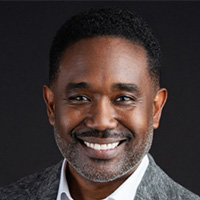 Richard Copeland is the chief executive officer of Leaseweb USA. He is responsible for managing the company’s business across nine data center locations throughout the United States while executing and developing the company’s vision and strategy in the region. For more than 20 years, Copeland has held key sales leadership and account management roles within Leaseweb USA and Verizon Business. He holds a Bachelor of Science from Virginia Commonwealth University. He is passionate about working with his team to achieve company goals, maintaining employees’ work-life balance and ensuring customer satisfaction.