For the last several years, Arizona’s semiconductor momentum has largely been measured through expansion announcements, investment totals and construction updates. New fabs. New suppliers. New projects moving into the state are helping Arizona position itself as one of the country’s largest semiconductor hubs. But at the recent SEMI Arizona Chapter Breakfast Forum, the conversation felt different.





The breakfast was hosted at Edwards Vacuum’s Chandler facility, and much of the discussion centered on the less visible parts of the semiconductor industry. Water planning. Long-term power demand. Supplier logistics. Packaging capacity. The kinds of things that become unavoidable once semiconductor manufacturing moves beyond construction and into long-term production planning.
For years, much of Arizona’s semiconductor conversation centered on attraction. Could the state land fabs? Could it compete with Texas, Oregon or overseas manufacturing regions? Those questions have changed because Arizona no longer has to prove it can attract semiconductor manufacturing. It already has and at a scale few states can match.
What happens after the fabs arrive?
The discussion throughout the morning was not centered on whether Arizona has enough water or power today. Much of it focused on how the state continues planning for growth already underway. Chandler Mayor Kevin Hartke noted that more than 320 semiconductor supply chain companies already operate in the region. He also pointed to the fact that Chandler has decades of infrastructure planning and water recycling investments that positioned the city for advanced manufacturing long before the current semiconductor surge.
Winning fabs brought the industry here. Keeping all of it running over the next decade is a different challenge entirely.
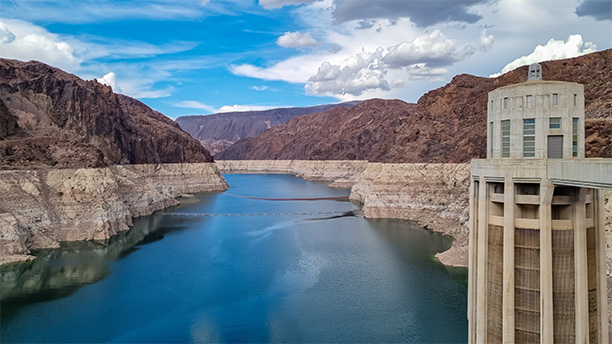
Planning was the main theme that emerged throughout the breakfast discussions. APS discussed long-term power planning tied to semiconductor growth. Water remained part of the conversation, though not in the way Arizona is often portrayed nationally. Kathryn Sorensen, Ph.D., director of research and professor of practice at ASU’s Kyl Center for Water Policy, spoke plainly about the stress on the Colorado River and the need for careful long-term water planning. She also put semiconductor water use into context, noting that large industrial users are part of the conversation, but not the state’s largest water users. The discussion was less about whether Arizona can support semiconductor manufacturing today and more about how infrastructure, recycling and resource planning keep pace as fabs, suppliers and packaging operations expand. Schneider Electric focused on supply chain resilience and what it takes to keep manufacturing moving when suppliers, materials and production timelines are increasingly interconnected.
The industry leaders at the breakfast repeatedly returned to the idea of proximity. Keeping suppliers closer to manufacturing facilities. Expanding packaging and research capabilities locally. Building stronger coordination between universities, utilities providers, manufacturers and logistics operations already tied to semiconductor production.
Suppliers continue opening operations near semiconductor facilities in Chandler and north Phoenix. Universities are expanding semiconductor research, packaging and microelectronics programs. Workforce discussions are moving beyond engineering roles and into technical operations, facilities management and infrastructure support positions needed to keep these sites operating continuously. Housing and mixed-use developments tied to semiconductor growth are also beginning to take shape near major manufacturing corridors, including projects like Halo Vista in north Phoenix.
The discussions looked less like recruitment pitches and more like long-range planning conversations. Speakers focused heavily on what Arizona still needs to build around the semiconductor industry, not simply how to attract more of it.
“Growth at this scale requires stronger collaboration, faster knowledge sharing, and the ability to solve challenges together,” Edwards Vacuum General Manager Lee Short said during the forum.
By the end of the morning, the conversation was no longer centered on whether Arizona can attract semiconductor manufacturing. The room was focused on what still needs to be built around it.