Data about generational giving is plentiful: Millennials are outpacing Gen X donors with their philanthropic contributions; Gen X donors are the most active volunteer cohort; Gen Z donors are ramping up their generosity; boomers will transfer $124 trillion dollars of wealth between now and 2048.


It’s common practice for nonprofits to examine generational differences, and for good reason. Such statistics offer telling details about how to approach different donor groups. The 2026 Giving USA Special Report on Generations and Giving further concludes:
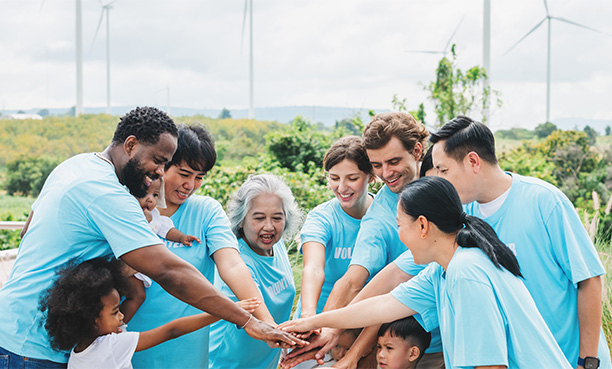
- Millennials and Gen Z donors (known as Next-Generation) get involved with causes first — volunteering or attending events — before contributing financially.
- Boomers and Gen Xers give across a wider range of causes, while Next Gens concentrate their philanthropy.
- Next Gen donors consider their engagement and overall contributions to community as part of their philanthropy, e.g. volunteering, as well as their consumer choices (buying only from sustainable companies). They also seek investment advisors to guide them toward socially responsible companies.
While this insight is critical, there’s another side to the coin. To optimize giving, executives sitting on nonprofit boards must consider a donor’s life stage as well.
Life-Stage Considerations
It’s no surprise that college graduates behave differently from donors in their high-income-earning years. Even those just-into-retirement and those with structured retirements will exercise their philanthropic muscles differently. Consider Gen X Adam Goodman and Gen Z Sydney Silver.
Goodman, 57, third-generation owner and CEO of Phoenix-based commercial furniture dealer Goodmans, can attest to an uptick in his volunteer work now, as well as increased giving, given that his children are grown. He says when his kids were young, he was much more restrictive in how much he could engage. “Now I’m raising my hand for more and more opportunities.”
As an executive who sits on several boards and recently completed concurrent chairmanships on three, Goodman understands the impact of life-stages on fundraising. “As people age, their interest in leaving a legacy and making an impact becomes more profound.”
People’s thoughts, he says, turn from ‘creating a nest egg’ to finding purpose. “When you’ve accumulated wealth, you start to think about how you can make an impact.” Goodman, in fact, pivoted the entire purpose of his company. While Goodmans still sells furniture, the “why” behind the company has evolved: to make an impact in the community.
Goodman admits that conversations with older donors are markedly different from those with young people beginning their philanthropic journeys. Later life-stage donors have more discretionary income and are often willing to talk about blended giving strategies of outright gifts, planned gifts and multi-year commitments.
Silver, 23, at the beginning stages of her philanthropy, says the biggest contribution her generation can make right out of college is donating time. She has volunteered at a rescue ranch and in her college community in Texas. “I have friends that love to go down to the soup kitchens or donate their clothes as a group.”
Through a family foundation created by her grandparents, Silver has another unique opportunity to engage in philanthropy. She, and cousins — when they turn 18 — are encouraged to select philanthropic causes to support.
“The things that are important to us change based on where we are in life at a particular time,” Silver says. As her cousins transition from high school to college or move to different towns and understand the associated struggles, they support mental health causes that Silver, herself, once championed. “They’re seeing the struggles their friends are having — and the community — and want to focus there.”
With a bachelor’s degree in special education, and now in graduate school, Silver says her personal growth and exposure to new people and topics has changed her philanthropic focus. She has recently supported the Central Texas Food Bank and Best Buddies, a special education partnering program.
She makes the point that no generation should be stereotyped, noting that friends in her Colorado hometown support different causes — education, constitutional rights — while friends in Texas support local causes that include food insecurity and rural farming initiatives.
Generational Giving: Myths vs. Reality
When it comes to preferred communication methods with various generations, a number of misconceptions exist.
- Older donors don’t communicate online. False. While millennials and Gen Z do have a preference for online and mobile giving, Gen X and boomers utilize the technology also.
- Direct mail is not a useful strategy with young people. False. Younger generations treat “snail-mail” as a novelty and actually pay more attention to it.
- Video communiques are just for the young. False. Video has proven the best vehicle for nonprofits to tell their stories across all generations.
Interpreting the Trends
When executives sitting on nonprofit boards are fundraising or diversifying prospect and donor bases — or even focusing on board or volunteer development — generational research should be top of mind.
Consider life-stage, too, and dismiss the blanket stereotypes: That young people don’t give. That Hispanic Americans support only their families and churches. That a gay prospective donor is interested only in LGBTQ+ issues.
Donors are, after all, multi-dimensional individuals with varied interests who want a real relationship with the nonprofits they support. Listen to them.
Richard Tollefson is founder and president of The Phoenix Philanthropy Group, an Arizona-based international consulting firm serving nonprofit organizations as well as institutional and individual philanthropists.
Did You Know: Generations by the Numbers: Baby Boomers (1946–1964) * Gen X (1965–1980) * NextGen: Millennials (1981–1996) & Gen Z (1997–2012) * Gen Alpha (2013–mid 2020s)