 Most founders don’t struggle because they’re unclear. They struggle because they’re carrying more than any one leader was ever meant to hold.
Ask any seasoned entrepreneur how they built their company and you’ll rarely hear a clean, linear story. You’ll hear about grit, ingenuity, instinct and the pressure of building something bigger than yourself. You’ll hear about doing whatever it took — because that’s what building required. But buried inside those stories is a far more consequential truth: Somewhere along the way, many founders stopped building a business and quietly became the business.






This is the part of entrepreneurship rarely examined in business media, yet it’s the dynamic I see most often when advising founders through the inflection points of scaling, succession and exit. Most aren’t actually struggling with strategy. They’re struggling with identity.
They’ve run the business brilliantly. But no one ever taught them how to evolve their leadership at the same pace as the organization they were building. And when that evolution lags — when the business outgrows the leadership structure anchoring it — the consequences show up everywhere.
Teams look to the founder for decisions that should belong elsewhere. Growth requires more effort, not less. The company’s valuation stalls even as revenue climbs. And behind the scenes, the founder begins to feel a quiet tension: pride in what they’ve created mixed with fatigue from holding too much of it.
For women founders, this tension is even more pronounced. We often lead relationally. We build through connection, culture and presence. That becomes our strength — and, eventually, our sticking point. When your leadership is the stabilizing force of the business, stepping out feels impossible. And so, women do what they’ve been conditioned to do: They carry more. They adapt. They stretch. They stay longer than they intended because the alternative feels like abandoning something they love.
What’s often interpreted as burnout is, in truth, misalignment. A misalignment between who the founder has been and who the next chapter requires them to become.
Every founder I’ve worked with hits this moment in some form. I call it the Threshold. It’s the Mile 26.1 moment — the place where everything you’ve built collides with everything you haven’t yet allowed yourself to imagine. The place where the questions begin to shift. Where the future becomes harder to ignore. Where even the strongest leaders feel the tug between responsibility and desire.
And this is where the biggest misunderstanding about exit shows up.
Exit isn’t an end. It’s not even a transaction.
Exit is a leadership evolution.
It begins long before a sale is on the table. It begins the moment a founder starts asking, “What would it look like to lead differently? To build a company that can grow without leaning on me? To create value that isn’t tied to my presence? To choose what comes next rather than feel forced into it?”
What many founders don’t realize is that the most transferable, valuable, and scalable businesses are built by leaders who stop operating inside the business and start leading above it. When that shift happens, everything changes. Decision-making speeds up. Teams become stronger. Pressure decreases. And the business becomes more attractive to buyers because the risk decreases the moment the founder stops being the central operating system.
Yet strategy alone can’t create that shift. It begins internally, with a single reframing:
You are not the operator. You are the asset.
When founders begin leading from this truth, their entire approach to building and transitioning the business changes. They stop asking, “How do I get through this quarter?” and start asking, “What creates long-term, transferable value? What strengthens this company independent of me? What role am I uniquely meant to play — and what roles must I release?”
This is where exit readiness becomes far more than a plan. It becomes a design decision.
A founder who is exit-ready isn’t someone preparing to walk away tomorrow. She is someone who has built a company that offers her choice. The choice to sell. The choice to scale. The choice to step into a different role. The choice to stay because she wants to, not because she has to.
And the truth that too few founders are told: Optionality is the highest form of freedom in business.
When I exited my own company, I learned firsthand what happens when a founder hasn’t disentangled her identity from the organization she built. I learned what it feels like to be deeply capable operationally but unprepared emotionally. I learned how easy it is to over-function, to hold too much, to believe the company can’t run without you — even when it can.
I also learned what becomes possible when a founder stops negotiating with herself, names what’s true, and builds an enterprise instead of a dependency.
This is the work I do now: helping founders evolve into the leaders their next chapter requires. Helping them create businesses that are scalable, valuable and transferable. Helping them step back without losing the culture they shaped. Helping them build legacies that don’t collapse the moment they step out of the room.
When this evolution happens — inside the leadership and the business — something powerful emerges. The founder returns to herself. The business becomes stronger than the founder’s capacity to carry it. And the future becomes something to design, not fear.
Because the real purpose of exit planning isn’t selling. It’s liberating the founder. It’s giving her the structure, support, and clarity to choose what she wants next.
It’s creating the conditions for wealth, legacy and freedom.
It’s honoring the truth behind the success: Founders don’t burn out from building. They burn out from holding what was never meant to be theirs alone.
We are entering a new era of leadership — one where founders are no longer praised for how much they can endure but for how intentionally they can design a company that thrives beyond them.
That’s the story I want more founders to hear.
And it’s the one I believe will change the future of women-led enterprise.
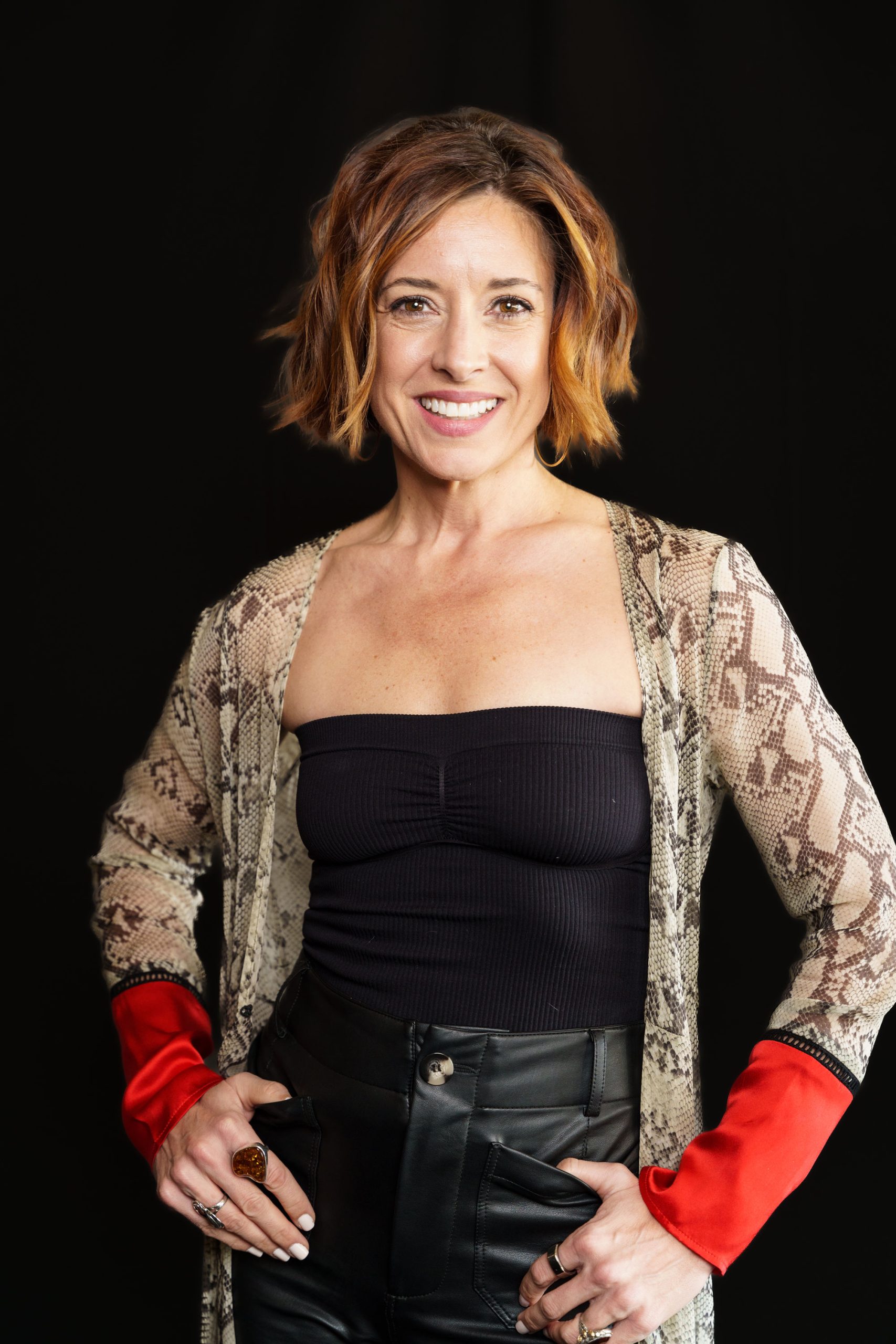 Cari Kenzie, CEPA, is the founder of KINZA.