Franchising is an important part of the Arizona economy, enabling entrepreneurs to operate independently owned businesses under established brands and to leverage the strength of proven business systems, operational support and brand recognition. Business owners, therefore. have reason to pay attention to the proposed American Franchise Act, which seeks to reduce uncertainty in the franchisor/franchisee relationship and could significantly affect franchise businesses across Arizona and throughout the United States.






At the heart of the issue is the unique nature of franchising. Franchisors typically establish brand standards, operational procedures, marketing requirements and quality controls that franchisees must follow. These requirements protect the franchisor’s trademarks and reputation, promote system consistency and safeguard the investments of both franchisors and franchisees.
Joint employment is a legal doctrine under which two separate businesses may be treated as employers of the same workers based on the degree of control each possesses or exercises over employment-related matters. Over the last decade, federal regulators have repeatedly revised the circumstances under which a business may be deemed a “joint employer” of another business’s employees. These questions are important because joint-employment can expose a franchisor to liability arising from a franchisee’s employment practices. If a franchisor is deemed a joint employer of its franchisees’ employees, it may face liability under labor and employment laws involving hiring, firing, discipline, scheduling, wages, benefits, workplace policies and collective bargaining.
In some periods, the NLRB’s “joint employment” analysis has focused on whether a business actually exercised direct control over employment decisions. In others, the Board has considered indirect control or even the reserved contractual right to influence employment-related matters as sufficient to create joint employment. These shifting standards have created challenges for franchise systems attempting to structure long-term business relationships and compliance programs. Much of the support for the American Franchise Act stems from frustration over these repeated changes in federal joint-employer policy from one presidential administration to the next and the resulting uncertainty for franchise systems trying to make long-term business decisions.
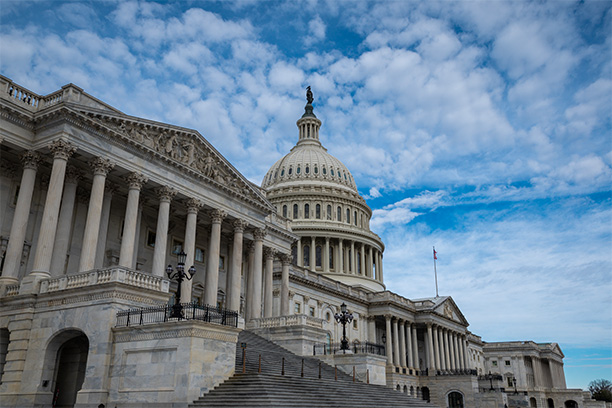
The American Franchise Act was introduced in Congress in September 2025 as bipartisan legislation designed to establish clear federal standards for determining when a franchisor may be considered a joint employer of a franchisee’s employees. It is advancing through Congress but has not yet been enacted. On July 21, 2026, the House Committee on Education and Workforce ordered H.R. 5267 reported to the full House. A companion measure remains pending in the Senate. The legislation must still be passed by both chambers in identical form and signed by the President before becoming law.
Under the proposed law, a franchisor would only be considered a joint employer if it “possesses and exercises substantial direct and immediate control” over “one or more essential terms and conditions of employment of the employees of the franchisee.”
Although joint-employer liability is sometimes characterized primarily as a concern for franchisors, it also has important implications for franchisees. Many franchisees oppose expansive joint-employer standards because such rules blur the distinction between independent business ownership and corporate management. Franchisors facing increased liability for employment decisions may be compelled to exercise greater control over hiring, discipline, compensation and workplace policies of their franchisees. That greater level of franchisor oversight may be viewed by franchisees as reducing the autonomy that makes franchising an attractive form of business ownership.
The American Franchise Act would not eliminate all employment-related risk. Franchisees would remain responsible for compliance with applicable employment laws, and franchisors could still face joint-employer exposure when they possess and exercise the level of employment-related control specified in the legislation. Franchise systems would therefore still need to evaluate carefully how their agreements, operating practices and employment-related interactions allocate decision-making authority.
The central question is where ordinary franchise-system administration ends and responsibility for another company’s workforce begins. The American Franchise Act attempts to draw that line around actual, consequential control of employment decisions rather than around the standards needed to maintain a common brand.
 Joshua Becker is a Partner in the Phoenix office of Womble Bond Dickinson. He advises franchisors, licensors and multi-unit businesses on franchise development, regulatory compliance, system expansion, intellectual property and day-to-day operational matters.
Did You Know: According to a 2023 Oxford Economics report cited in the American Franchise Act, U.S. franchise businesses generated approximately $825 billion in economic output and employed approximately 8.4 million workers in 2022.