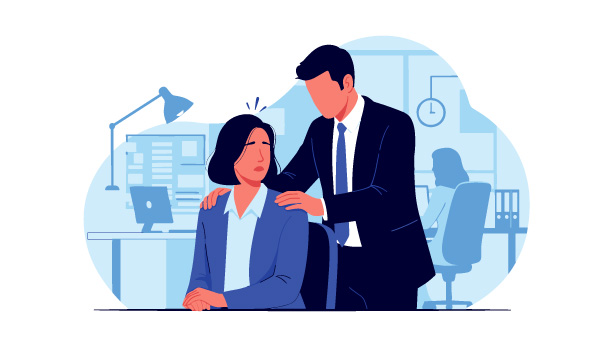
High-profile misconduct cases tend to prompt the same organizational refrain: “How did no one see this coming?” The uncomfortable truth is that warning signs are often present. They are simply normalized, excused or filtered through a culture that rewards output, charisma and status.


According to the NSVRC, approximately 70% of employees who experience harassment never even complain internally. Yet, for company leaders and human resources teams, the lesson is not that risk is unknowable.
The lesson is that institutions can become predictably bad at noticing what is predictable.
One of the most persistent myths is that there is a single “type” of person who engages in sexual misbehavior. In practice, offenders can be any age, gender, ethnicity, religion, socioeconomic background or occupation. The more useful frame is behavioral and organizational, not demographic. Individuals who abuse others often show boundary problems, poor judgment and maladaptive thinking patterns, but the early signals can be subtle. They may look like “extra support,” “mentorship” or “being invested” until a pattern emerges.
In workplace settings, overlooked red flags often include blurred professional boundaries and special exceptions to rules. A leader or high performer who insists on private messaging outside official channels, seeks repeated one-on-one time without a clear business purpose, or becomes overly involved in an employee’s personal life should raise concern. So should someone who goes out of their way to be near a specific person; initiates secretive interactions; or tests boundaries through “small” acts such as lingering hugs, frequent physical contact, flirtatious compliments, inappropriate jokes or provocative questions. Gifts, favors or special permissions can function the same way, creating a sense of obligation and confusion about what is appropriate.
It is also important to name what appropriate conduct looks like. Most professional relationships include warmth, support and praise. Healthy conduct tends to stay in plain sight, avoids unnecessary physical contact, and keeps compliments and feedback tied to performance rather than personal or provocative remarks. When boundaries are clear, accountability is easier for everyone.
Offenders Do Not Groom Only Individuals; They Can Groom the System
Institutions often prize deference to authority, politeness and compliance, especially when requests come from a respected executive or rainmaker. Over time, an offender may cultivate an image of trust and reliability, provide extra help privately, offer favors outside their defined role, and accumulate loyal allies through opportunities and “confidential” access. If concerns surface, they may preemptively frame a target as jealous, unstable or confused while portraying themselves as misunderstood. After disclosure, common strategies include denial, excuses, reframing the behavior, projecting blame, or leveraging status to push matters “internally” through informal channels that prevent patterns from being seen.
Effective prevention and accountability frameworks are not built on a single training session. They are built on structure. Studies show while 98% of organizations have a sexual harassment policy, only 51% have implemented new training or policies in response to societal movements like #MeToo. Furthermore, only 30% of women who reported harassment believe their employer handled the situation appropriately, and 56% of men think reported harassment often goes unpunished.
Organizations should provide clear education on boundaries and reporting, maintain a code of conduct aligned with stated values, and offer independent reporting channels that allow anonymity and prohibit retaliation, ideally managed by a third party. Leaders should track patterns over severity. Misconduct rarely begins with one major incident. More often, it escalates through minor complaints, vague discomfort, shifting assignments, or turnover around one person. Log every report, even if it seems small.
Finally, intelligence, prestige and professional status can mask risk rather than reduce it. When a person is seen as invaluable, allegations can feel unthinkable, and the institution’s instinct is to protect the brand instead of the people. To counter that bias, business leaders should limit power concentration so no one person controls both performance evaluations and complaint intake. When concerns arise, it’s important to ask open-ended, nonjudgmental questions such as: “How do you feel about the way this person acts around you?” “Do you interact outside of work?” “Is anything making you uncomfortable?” Systems that listen early, document consistently and respond proportionately do not just reduce liability. They protect culture, retention, trust and, ultimately, the people.
 Brecken Blades, Psy.D., is a fourth-generation Phoenician and licensed clinical psychologist who has served Arizona communities for more than a decade. Dr. Blades’ work centers on forensic psychology, high-risk behavior assessment, trauma-informed treatment and offender rehabilitation. In 2016, she became CEO at PCS Forensic, a woman-owned forensic practice, now with three Valley locations, and in 2025 was appointed vice chairwoman of the Arizona Sex Offender Management Board.
Did You Know: This year marks the 25th anniversary of Sexual Assault Awareness Month. What began as grassroots organizing has grown into a nationwide effort observed every April, shaping conversations around prevention, consent and survivor support across schools, workplaces and communities.