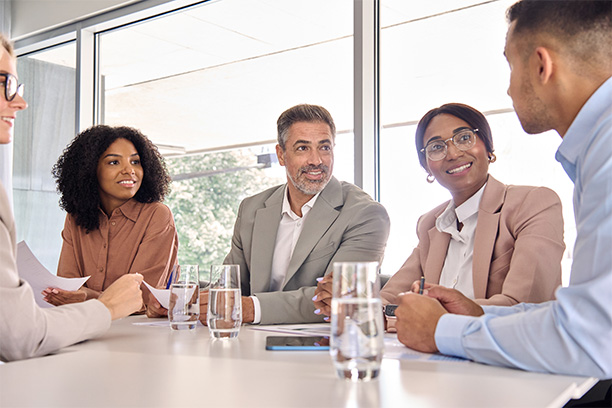
In today’s modern business landscape, many companies are looking to foster a stronger sense of connection amongst their employees and networks. In fact, 93% of employees say belonging impacts retention and engagement.







As this shift toward cultural connection is happening, organizations are finding the answer in affinity groups, structured communities that connect individuals across an organization or network through shared identities, interests or goals. Affinity groups have become a force behind some of today’s most effective organizations.
Whether it’s employee resource groups (ERGs) or purpose-driven networks of donors, volunteers and supporters, these groups can bring people together around shared commitments.
ERGs are structured, employee-led networks that connect individuals across an organization to drive engagement and professional development. Examples include women’s leadership groups, multicultural networks, early-career professional groups and more specialized communities such as working parents or mental health and wellness advocates.
While they may take different forms, the most effective affinity groups have something in common: they convene people in spaces where trust can grow.
Trust Is the Foundation
When individuals come together in a space where there is shared understanding, they foster relationships that go beyond surface-level interaction. Companies with high-trust cultures experience 76% more engagement and 50% higher productivity than those with low trust. Without trust, productivity can suffer and innovation can stall.
Affinity groups help close that gap. They can foster trust organically — peer to peer, across roles and beyond traditional workplace dynamics. Over time, that trust can become embedded in how people work together.
Additionally, that sense of trust doesn’t stay contained within the group; it carries into the workplace, into partnerships and into the broader community — not just shaping culture but boosting morale and external performance.
Stronger Networks, Stronger Organization
Affinity groups naturally create networks that cut across roles, industries and backgrounds.
Inside companies, ERGs connect employees who may not otherwise interact, strengthening collaboration and internal alignment. In the community, groups like donor or volunteer networks bring together individuals from different sectors who share a commitment to impact — strengthening cross-industry functions and creating a space where business leaders can engage with issues and other individuals. In doing so, they deepen understanding, strengthen community ties and align organizational values with meaningful action. For example, companies with military ERGs have been known to build gift boxes for overseas service members during the holiday season.
Why It Matters in Creating Leadership
Across both ERGs and community-based affinity groups, leadership often emerges organically.
Members step up to organize and convene. They gain experience leading initiatives, building community and driving change — skills that translate directly into professional growth. In fact, affinity groups are reported to have 87% more effective leadership development with a 50% reduction in turnover rates.
The result is a more connected and capable network of leaders taking charge in forms that can have a direct positive impact from a business standpoint.
The Business Behind Connection
Affinity groups work because they tap into something fundamental: People are more effective when they feel connected, trusted and part of a community larger than themselves.
They create spaces where relationships are built with intention, where ideas move more freely, and where individuals step into leadership in ways that break industry norms. Over time, that impact mobilizes — strengthening teams, deepening partnerships and extending into the communities’ organizations serve. This ultimately drives stronger business performance and long-term profitability.
In a business environment where culture and purpose increasingly define success, affinity groups are no longer an additional add-on. They are an imperative and strategic way to build the kind of trust and connection that drives organizations forward.
Lisa Harris is senior director of Communications & Donor Experience at Valley of the Sun United Way.