What should business leaders know about a FOAK? It might be the toughest thing they’ll ever do. But it also might be something they never have to do.


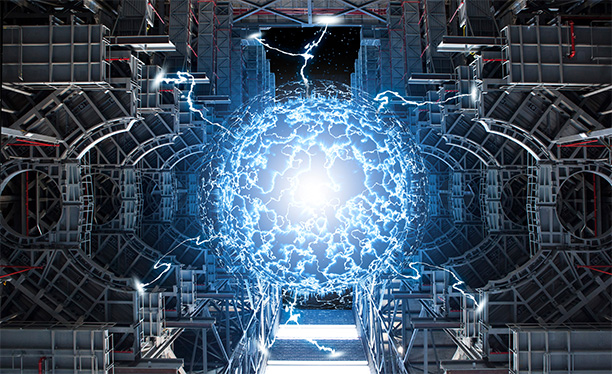
Before explaining why, it’s best to define what a FOAK is, and why leaders consider it. FOAK stands for first-of-a-kind production facility. It’s a physical asset that produces something in a way that has never been done before. It could be a novel way to produce a known commodity good, like a new geothermal power plant to make electricity. Or it could be making a novel entity, like autonomous vehicles.
Why do it? FOAK facilities can give companies a huge advantage in producing physical goods. Most of the known major industries in the world, from electricity to steel and cement, are massively inefficient (and thus insufficient) in their production methods. Novel ways to produce goods, through the construction of a FOAK, can give businesses enormous competitive advantages, including lower production costs and environmental benefits, simply through more efficient use of resources.
Why could it be the toughest thing leaders may ever do? There are two reasons. First, raising the money to finance a FOAK is difficult. These types of facilities typically require massive amounts of capital, which cannot be financed with debt. Debt financing generally requires two things: a guaranteed price on the facility and offtake agreements with guarantees. The guaranteed price comes from an engineering and construction partner, and it’s developed based on their knowledge from past projects. For a FOAK, by definition, there is no exact precedent. There’s too much risk to offer a guaranteed price.
Leaders need to ask if it’s possible to raise that quantum in equity. Three things need to align. First, this may be possible only for a select few industries, such as power generation, that are accustomed to massive capex projects and have large and steady revenue potentials. Next, the answer may be yes only for a select few individuals, those who are great fundraisers and experienced in scaling businesses. And finally, in terms of writing checks of that size, the answer may be yes only for a select few investors, who both have access to that amount of capital and want to invest in large capex projects.
The second reason it may be the hardest thing leaders do is they must do massive amounts of derisking before even starting to build the facility. Leaders have to prove the FOAK will be successful because companies get only one attempt to build a FOAK. It costs too much to get things wrong. Companies can’t easily undo a concrete pour or refabricate equipment. And their leaders can’t easily go back to investors to ask for a duplicate check.
The next questions to are, “Is the market demand there?” “Will the products win in that marketplace?” and “Will the company’s technology successfully make those products, reproducibly and economically?” These questions must be answered with validated proof points. Demand must be proven, with customers lining up to buy it. Products must be made successfully at an industrial scale, with a Rolodex of suppliers and equipment manufacturers guaranteeing on-time delivery at the right prices, specifications and quantities.
Why is it something that leaders don’t necessarily need to do? Like the proverb “Rome wasn’t built in a day,” so it goes with manufacturing empires. It’s a process: Production can be ramped, allowing simultaneous derisking of the supply chain, while building revenue and improving margin. This can be done by first manufacturing only a product’s key value-add and outsourcing the rest of operations through a supply chain, at a small scale. Then, a company can upsize capacity as demand begins to take off, and in-source auxiliary steps to improve margin.
To determine if this approach would work, it must first be determined how much of the company’s product can be bought from others. Perhaps a contract manufacturer can manufacture part or all of the product. In this instance, companies pay only for what they use and increase spending as customer demand increases.
If companies find they must build products internally, the “three shell” approach advocated by Tom Chi is a good option. Perhaps there are existing facilities that can be used, instead of building new facilities. That provides the first shell, the manufacturing space, and the second shell, utilities, which is typically two-thirds of the cost of a FOAK. The next step is finding if manufacturing equipment, the third shell, is available used or for lease.
Preparing for a FOAK is incredibly challenging, both the derisking and the fundraising. It’s important to make sure there’s no other way before heading down that path.
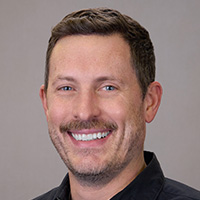 Tony Moses is VP of Manufacturing at At One Ventures, a venture capital firm committed to making humanity net positive to nature. He has 20 years’ experience in scaling hardware, including pharma (Merck), food and beverage (Conagra Brands), flavor chemistry (Givaudan) and building new manufacturing facilities (CRB Group). He holds degrees in chemical engineering from University of Nebraska (B.S.) and University of California, Santa Barbara (Ph.D.).