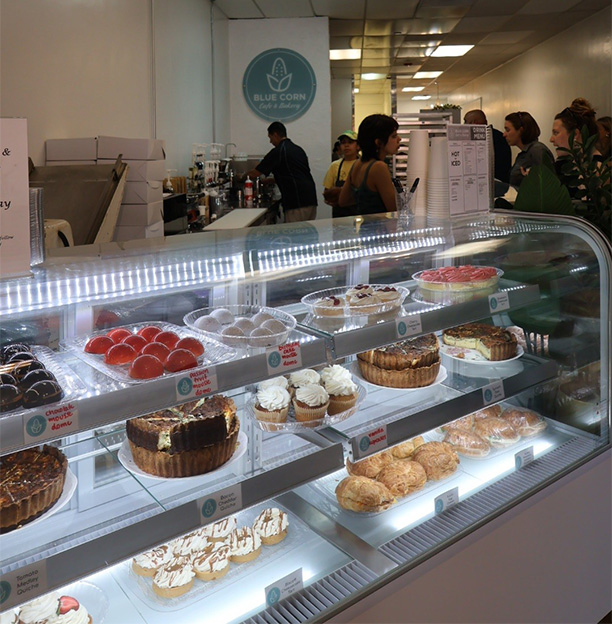
Blue Corn Café & Bakery; photo courtesy of Chef Nick
“Downtown gets cooler every day,” says Jimmy Cerracchio, executive director of Downtown Mesa Association, which was formed in 1985 by the commercial property owners of Downtown Mesa as a tool to help with the revitalization of the Downtown square mile. Noting the area is trying to grow in a smart and healthy manner by aiming to keep local businesses healthy, he says, “Most property owners are committed to having unique and locally owned commercial tenants, and the city is a great partner in helping businesses navigate processes to open and by providing a variety of housing options.”







“Downtown Mesa has transformed from a place that rolled-up the carpet at 5:00 p.m. to an active downtown with a vibrant, and uniquely local, business community supported by a growing number of downtown residents,” says Jeffrey McVay, MPA, manager of Urban Transformation at the City of Mesa, reporting that, over the past 10 years, more than 1,700 new residential units, more than 45 new small businesses and a 76-room Hyatt Unscripted boutique hotel have been added to downtown.
But he notes that downtowns are unique not just in how the public experiences place but also unique in how they need to be maintained, managed, and marketed, and credits the importance of an association like DMA as a close partner to the City to ensure these unique services can be provided efficiently and effectively. To this point, Cerracchio explains, “Downtown associations (or Business Improvement Districts) are essential to managing the economic health and growth of downtown areas. Organizations like ours provide enhanced services that normally will not be available from the municipality. Services include cleaning and safety programs; marketing for the area and businesses within it; event production, advocacy and, most importantly, a vision for positive growth.”
Noting the historic character combined with a clean and safe urban area is very unique and pointing out new hotels are slated to open in the coming years, Cerracchio says, “Downtown Mesa is positioning itself as a great neighborhood for living, doing business and tourism.”
Expanding on that, McVay shares, “Downtowns define a city. Having arts, education, innovation and entrepreneurship in addition to the local business community be how Mesa is defined is an important component of the future growth in downtown, as well across Mesa. Corporate site selectors often consider downtown vibrancy in their decision-making process. The City of Mesa has made, and continues to make, significant investments in the development of the Downtown Arts and Innovation District because those investments will be returned with continued investment and economic activity in downtown and across Mesa, increasing the quality of life for the residents of downtown and Mesa.”
And Cerracchio emphasizes the critical importance of local: “Having locally owned businesses brings many benefits to a destination. Locally owned businesses usually offer unique experiences you can only get at that location. Additionally, there is something about having local ownership present at a business that ensures quality, friendliness and a personal touch. Finally, local investment means that those business owners care about the community they are part of. They will reinvest their money in that community and take an active role in what that community does.”
Businesses Making It Work
Blossom on Main has been in downtown Mesa since 2005, and revamped and rebranded earlier this year. Owner Cameron MacNeille says, “I think the community is the biggest part of the Downtown vibrancy. We all really love and support each other down here and send business to our neighbors and vice versa. The new apartments that have gone up have made an impact on the added foot traffic as well. Building relationships with the neighborhood has been a huge benefit to us.”
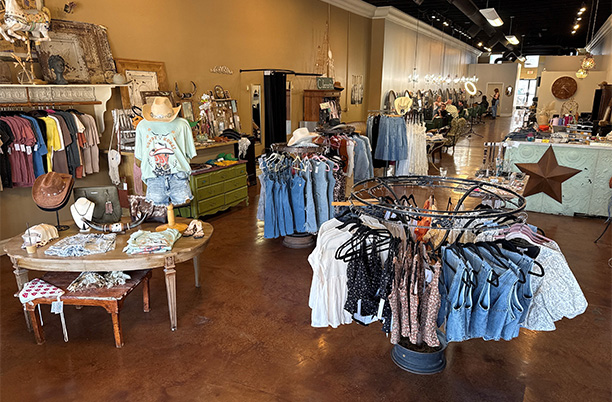
Photo courtesy of Blossom on Main
He speaks to a neighborhood connectivity. “Having a shop where customers can go from business to business and enjoy a coffee from Lonestar or Nile, get a haircut and shopping with us and continue on next door to Phantom Fox for pizza and beer is such an amazing flow. It seems to be a natural flow for anyone coming down here for one experience; most people will hang around the area and see what else we offer as a downtown area.”
As someone who has lived for years within walking distance of all the local shops and is “definitely a frequent flyer to all the local shops,” MacNeille says, “Everyone down here is just absolutely rooting for each other and wishing success for us all. It’s been an amazing thing to experience and feel and be able to reciprocate. I will always root for this downtown and do everything I can to lift my neighbors up and hope the future of downtown Mesa feels what has been happening down here!”
A newcomer to the scene will be AC Hotel by Marriott, which expects to be open for business in second quarter of 2028. “We are committed to investing in downtown Mesa because we believe in the area’s future,” says Blake Bunker, co-founder and CEO of Breakwell Group. “We also believe hospitality is an underserved component of the market. Downtown Mesa needs new hotel product that gives visitors a reason to stay in the area, enjoy its walkable amenities, and support the surrounding restaurants, cultural venues, businesses, and institutions. Rather than seeing that demand outsourced to other hotels and other markets, we want to help capture it within Downtown Mesa. The data shows significant visitor ‘leakage’ for hotel stays and we want to help give them a reason to stay in Downtown.”
Although he and his partners did not know exactly what they would build on the site when they purchased the real estate in 2018, he says, “We believed strongly in the vision and momentum of downtown Mesa. We were encouraged by the city’s commitment to the area, the growing energy downtown, and the long-term impact we believed ASU would have as it expanded its presence.”
His own connection to downtown Mesa goes back much further than 2018. “My family has been investing in downtown Mesa since the 1960s, when my grandfather purchased the funeral home adjacent to where we are now building the hotel. I spent much of my childhood going downtown with my father, who later bought the business from my grandfather. Mesa has been part of my family for decades and generations, and it has been rewarding to participate in the continued growth, development and success of a community that has meant so much to us.”
Bunker cites many factors driving the economic vibrancy in downtown Mesa today: the location of City Hall; the concentration of civic offices and services; ASU’s commitment to expanding its footprint and bringing world-class education, research and students to the area; and the continued growth of arts and culture. He also points to the Mesa Arts Center, future reinvestment in the convention center area, the unique food and beverage scene, and the presence of The Church of Jesus Christ of Latter-day Saints temple as a historic and spiritual anchor for downtown as contributing to a strong foundation. “The light rail is also a significant infrastructure asset, connecting downtown Mesa to downtown Tempe, the airport and downtown Phoenix,” he notes.
“We are excited to bring the AC Hotel by Marriott to downtown Mesa and believe it will be an important piece of the overall mix that continues to generate momentum and excitement in the area. Our hope is that the hotel not only benefits from the growth already happening downtown, but also contributes to it by bringing more visitors, more activity and more energy to the district,” Bunker says.
For Chef Nick, owner of Blue Corn Café & Bakery, “Downtown Mesa was a prime choice for our first East Valley location due to its historic nature, proximity to City Hall, Performing Arts Center and numerous tourist attractions. One look around the surrounding area, you can see the infrastructure investments made by the city, local business operators, property owners and local artists. There is so much growth, new developments and a diversity of customers that helps fuel more investment for the future.”
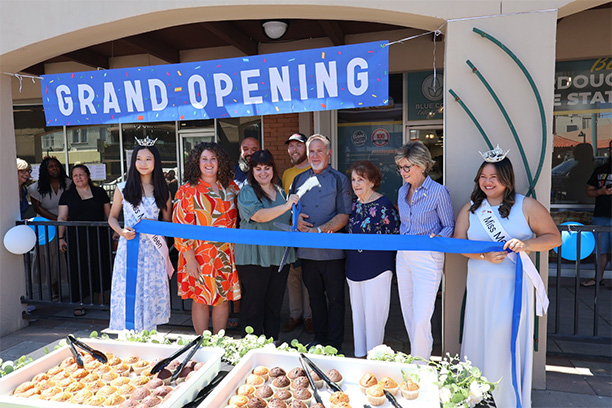
Photo courtesy of Blue Corn Café & Bakery
Although Blue Corn Cafe & Bakery is new to Historic Downtown Mesa, its location operator has “lived, worked and enjoyed the Mesa community for decades,” says Chef Nick. “Chris brings his local musician background to the location through art and music shared over great food!”
As a destination establishment known for its high-quality products made from scratch, unique flavor combinations and not-too-sweet pastries, Blue Corn Cafe & Bakery comes to Mesa with having achieved several recent awards: Retailer of the Year, Best Quiche in the City, Best Bakery in the Valley, #24 Coffee Shop in the Country, Best Sourdough in the State. To these, Chef Nick adds “well over 1,000 5-star reviews,” and says, “We are excited to work with the city and community of Mesa to see what new accomplishments we can garner together in 2026 and beyond!”
“It’s an emerging downtown and I also really like this particular location due to the charm of the building and the possibility of a large patio for guests to enjoy,” says Pedal Haus Brewery founder Julian Wright, who opened the restaurant in November 2024. “I think when new businesses open, it adds to the vibrancy, which in turn attracts more businesses.” While he believes the patio and biergarten, “large sign and a fun food trailer right on the hard corner of Main and Robson adds to the aesthetic of the downtown,” he says, “I think we’re just one small part of it.” Crediting the City of Mesa’s leadership for helping pave the way for revitalization, Wright says, “There are lots of individuals and companies investing in real estate in the downtown who are, in turn, motivated to find tenants.”
Another of the newer businesses is Mesa Padel Club, which held its grand opening in mid-April. “The first weeks and months have been really exciting,” says founder Jeroen Meefout, reporting strong community interest, a lot of first-time players and great early momentum.
“We are the first padel club on a Main Street in the U.S., which is incredibly meaningful for the growth of the sport,” Meefout says. “People walk by, see the courts, get curious, and discover something completely new. That visibility is powerful in helping grow the world’s fastest growing sport here in Mesa and across the Valley.”
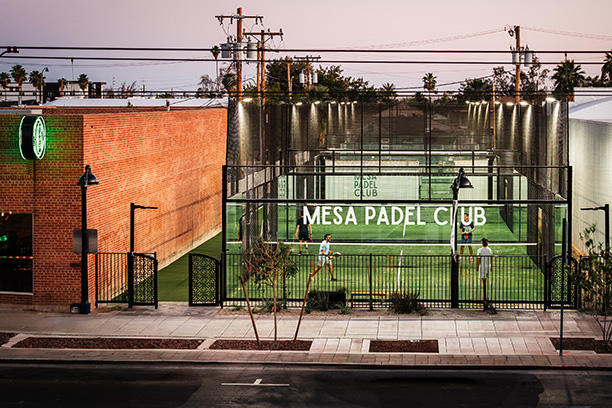
Photo courtesy of Mesa Padel Club
Explaining that downtown Mesa and Main Street were incredibly attractive because “we wanted to create a welcoming and accessible padel club connected to the city around it,” Meefout says, “We see ourselves as both benefiting from and contributing to downtown Mesa’s growth. We add another layer to the downtown experience by offering something beyond food and beverage. We bring together recreation, wellness, community and social connection. We also create natural synergy with neighboring restaurants, bars and coffee shops by bringing new people downtown and giving them another reason to stay, play, socialize and support surrounding businesses.”
On a more personal level, Meefout says, “One of the most rewarding parts of our first month has been seeing people try padel for the first time and then come back again and again. Some beginners are already becoming intermediate players, which has been awesome to watch. We have invested our own savings into creating a space where people can experience sport, community and a beautiful open-air environment right in the heart of downtown Mesa.”
And for business, “We really believe in a more connected and walkable model for downtown living. A place where someone can walk from their home to exercise, grab coffee, meet friends, have brunch or dinner afterward, and enjoy everything the city has to offer as one experience.
“By investing in Mesa,” Meefout continues, “we hope to build on the incredible foundation that already exists and help shape a downtown that is active, social, healthy and full of life. We are proud to be contributing something new to Main Street and helping pave the way for what the future of downtown Mesa can continue to become.”
Significant Trends and Strategies
McVay, observing that downtown’s uniquely local businesses/restaurants are what give downtown its character — what makes downtown an authentic place that provides experience for residents and visitors and makes them come back — credits local as a significant component in the transformation of downtown over the past 10 years. “Support of a resilient local business community is the reason that the City of Mesa is using American Rescue Plan Act funding to develop a Downtown Restaurant and Food Business Incubator, the Main Street Market,” he says. “Programmed and managed by our partner Local First Arizona, Main Street Market will help develop the next generation of successful and uniquely local restaurants needed to support downtown’s growth.”
Cerracchio notes downtown Mesa has also become a hub for the arts, such as the ASU Media and Immersive Experience (MIX) Center and other public art initiatives. Having a strong art and community presence is important, he believes, because art supports creativity; helps with unique business offerings, beautification of the area and activity to engage people; and adds flavor to that community. “These things drive people’s choices in where they want to live, work and invest,” he says.
“The transformation of downtown Mesa is in very early stages, and the future will see continued growth in residents, businesses, employers and entertainment options,” McVay says.
McVay reports there are more than 500 additional residential units currently under construction and more than 1,000 more units in planning, and notes construction on the above-mentioned 156-room AC by Marriott hotel is planned to begin in early 2027. And the city and DMA are communicating with developers on what kind of housing projects can help grow the area, according to Carracchio, who cites Culdesac as an example: “The city provided a high-level vision for a large project. Through RFP process and feedback from the community, the project saw the desire to have for-sale townhomes in our housing mix.”
On top of that, says McVay, “Continued City investment in the Arts and Innovation District and partnership with ASU will ensure that the future of downtown as a vibrant place that supports 18-hour activity and welcomes residents and visitors of all ages.”
Pointing out that most DMA are free, Cerracchio notes they provide affordable options for community members to get out and do something with friends and family. “It provides a gathering space for people. It introduces new visitors to our downtown. As those people are spending time in downtown, they tend to visit businesses for food, shopping, et cetera,” he says.
Larger events include Downtown Mesa Barbecue Classic, Noon Year’s Eve, Baseball Block Party and Mesa Amplified (a new event that attracted 27,000 attendees to downtown over two days). Smaller events include Storytime, Sunset Markets and the annual-tradition events for Halloween and Easter.
In addition to events, DMA offers marketing assistance to businesses as well as clean and safe services to make sure the environment is comfortable for people spending time there.
“The goals for the future development of downtown are too great to list,” McVay says. “Besides the goals around residential and business growth and the Arts and Innovation District that can be inferred from my earlier responses, one goal that has me excited is the growth of downtown’s live music scene. Already home to several venues, live music brings people together to experience culture and place. Live music can be a significant driver of activity that will only make downtown an even greater place for people to live and visit. The DMA plays a large role in this area. Planning and producing live music events such as Mesa Amplified and Barbeque and Bluegrass are key to establishing a live music brand for downtown.”
Says investor and developer Bunker, “We are also encouraged by the mayor and the city’s continued commitment to making sure downtown Mesa receives the support and investment it needs to thrive. Re-investment in the convention center, education with ASU, and arts/culture/entertainment is critical. That leadership is crucial as downtown continues to grow and reach its full potential.”
Read all the downtowns’ stories.