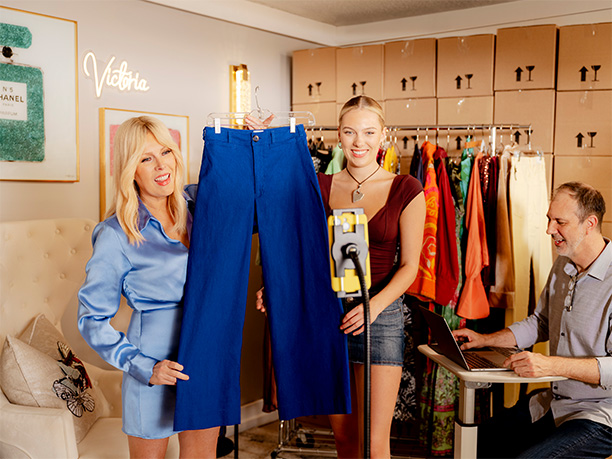
Photo of West Coast Shop, courtesy of Whatnot
On a Tuesday afternoon in Mesa, Ahmad Ali is standing behind the counter at Amigos Market, holding a bag of Japanese gummy candy up to his phone camera. Three hundred people are watching. He’s answering questions about flavor, texture and shipping while a steady stream of purchases rolls in. In 90 days of doing this, he’s sold more than $35,000 worth of snacks to customers who will never set foot in his store. He’s 26, he’s already hired two people, and he’s planning to bring on three or four more.





Ahmad’s business doesn’t look like what most people picture when they think about Arizona’s small business economy. There’s no SBA loan, no formal business plan, no ribbon cutting. He goes live on camera, sells to buyers in real time, and builds an audience that keeps coming back. It’s called live commerce, and it’s creating a wave of new businesses across the state that’s much bigger than most people realize.
The largest platform behind this wave is Whatnot, and it has its own Arizona origin story. In 2019, co-founders Grant LaFontaine and Logan Head started the company in a Phoenix garage, building a marketplace for collectors who wanted a better way to buy and sell. Six years later, Whatnot is valued at $11.5 billion, surpassed $8 billion in live sales in 2025, and Forbes ranked it No. 1 on America’s Best Startup Employers for 2026. Today, the company employs nearly 200 people across the Valley, and roughly 36,000 Arizonans sell on the platform. More signed up in 2025 than in all previous years combined.
The economics compound fast. Arizona sellers who go live at least once a week average more than $6,500 a month. Nationally, sellers who go live daily earn 100 to 250 times more than those who stream once or twice a month. Nearly 40 Arizona sellers have crossed $1 million in lifetime earnings.
Take Brandon and Bryson Yamamoto, who started Common Hype, a Tempe sneaker and streetwear business, by flipping shoes between locals during the pandemic. What began in a 1,400-square-foot strip mall space has grown into three brick-and-mortar locations across the Phoenix metro, including a 4,800-square-foot flagship near ASU. When they go live, they move roughly 100 pairs of sneakers per hour. In their strongest month, they hit $1.2 million in sales.
One of the most counterintuitive things about live commerce is how much of its impact shows up in the physical world. Nationally, nearly 80% of live sellers now operate from commercial spaces. One in four has rented additional space to support their business, and 15% have hired one to three employees. In Arizona, that means leases being signed, commercial real estate getting filled, and local jobs being created by a category of business that barely existed five years ago.
Last year, the Arizona Commerce Authority launched the Small Business Growth Coalition with a goal of starting 10,000 homegrown businesses by 2030. It’s an ambitious target worth pursuing. But it’s also worth recognizing the entrepreneurial activity already happening outside traditional channels. Thirty-six thousand Arizonans have started selling businesses through live commerce. Many wouldn’t call themselves entrepreneurs. They’d say they sell sneakers, or pet supplies, or snacks from around the world. But the economic output is the same: revenue, jobs, and tax base flowing back into Arizona communities.
Arizona has always been good at attracting companies from elsewhere. Live commerce is something different. It’s organic and homegrown, with tens of thousands of Arizonans building businesses that didn’t require a tax incentive or a relocation package. They needed a product they know well and the willingness to show up on camera.
 Armand Wilson is chief revenue officer at Whatnot, a live shopping platform founded in a Phoenix garage in 2019. Whatnot is valued at $11.5 billion, surpassed 1 billion orders to date, and was ranked No. 1 on Forbes’ America’s Best Startup Employers for 2026.