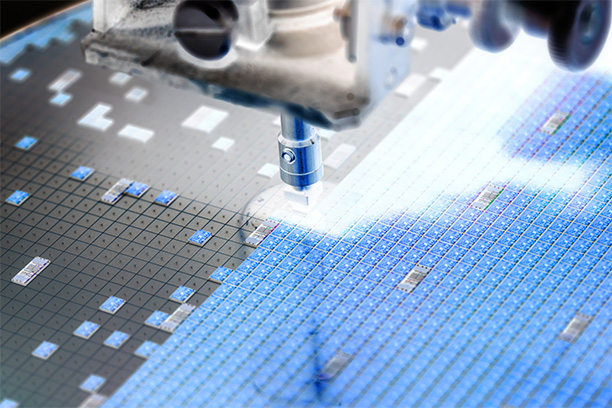
For the last few years, Arizona’s semiconductor story has mostly been told through fabs. New buildings going up in north Phoenix. Expansions in Chandler. Suppliers moving closer to chipmakers. It made sense; fabs are the most visible part of semiconductor manufacturing, the part people can see from the freeway or in construction photos. But the next part of the story is what happens after the wafer is made.







Taiwan Semiconductor Manufacturing Co. and Amkor Technology announced a 10-year agreement that brings the next step into sharper focus. Under the agreement, TSMC will procure advanced packaging and testing services from Amkor as the two companies work to expand semiconductor capacity in Arizona and strengthen more of the U.S. chip supply chain.
That may sound like a back-end manufacturing detail. It is not. Advanced packaging has become one of the most important pieces of modern chipmaking, especially as demand grows for artificial intelligence, high-performance computing and advanced electronics. The industry is no longer focused only on making chips smaller. Companies also need better ways to connect chips, memory and other components so systems can move more data, use power more efficiently and perform at the levels customers now expect.
TSMC is manufacturing advanced chips at its first Arizona fab and building three more fabs in north Phoenix. Amkor, a Tempe-based outsourced semiconductor assembly and test provider, is building an advanced packaging and test campus in Peoria, where advanced package manufacturing is expected to begin in early 2028.
The two sites put advanced chip fabrication, packaging and test capacity in the same metro area. That kind of proximity matters because chips do not simply leave a fab and go straight into a finished product. After fabrication, wafers often move between specialized facilities for back-end steps such as slicing, advanced packaging, final packaging and testing. Each handoff adds time, coordination and potential risk. Having more of that work anchored in the same region could make Arizona more important to customers looking for faster timelines and a more predictable U.S. supply chain. It also gives Arizona a larger role in the work that happens between producing silicon and delivering tested packaged devices ready for use in data centers, vehicles, consumer electronics, industrial systems and other end markets.
That is the point Amkor CEO Kevin Engel emphasized in the announcement: “This Agreement marks an important next step in our partnership with TSMC as we accelerate advanced semiconductor manufacturing in the U.S. to provide our customers a full U.S. supply chain from advanced silicon manufacturing to tested packaged devices.”
TSMC and Amkor already have a long history of working together globally in advanced packaging. Kevin Zhang, senior vice president and deputy co-chief operating officer of TSMC, says the companies are looking to build on that experience in the United States as they work together to serve customers.
The agreement gives packaging and test a more direct relationship to the advanced chips already being made in Arizona. Packaging and test may not get the same attention as a new fab rising out of the desert, but they could help determine how much of the country’s next semiconductor supply chain is actually built here. The TSMC-Amkor agreement adds another link to that chain.