For years, conversations about supportive housing for adults with intellectual and developmental disabilities (IDD) have largely centered on compassion, independence and quality of life. Those priorities remain critically important. But today, Arizona faces another consequence of its housing shortage that deserves equal attention: the growing impact on our workforce and economy.






This is no longer solely a disability services issue. It is becoming a business issue.
Across Arizona, thousands of adults with IDD continue living with aging parents because appropriate long-term housing options simply don’t exist. Families are left asking an impossible question: Who will care for my son or daughter when I no longer can?
That uncertainty carries significant economic consequences that extend well beyond individual households.
Four in 10 Arizona caregivers supporting a loved one with a complex medical condition or disability are balancing caregiving with work. Many parents spend decades balancing full-time careers with lifelong caregiving, and as those responsibilities extend into their 60s and 70s, more are scaling back their hours, turning down promotions, delaying retirement or leaving the workforce altogether as a result.
This emerging “caregiver cliff” is beginning to affect employers in ways that mirror the childcare challenges many businesses experienced during the pandemic. Employees who serve as primary caregivers often face increased absenteeism, higher stress levels and greater difficulty remaining fully engaged at work. Organizations lose experienced talent at a time when Arizona’s labor market is already tight.
For employers focused on recruiting and retaining skilled workers, supportive housing should be viewed as part of the state’s workforce infrastructure.
Arizona has invested heavily in attracting new industries, expanding advanced manufacturing, growing healthcare systems and supporting technology companies. Those investments recognize that strong communities require strong infrastructure that includes transportation, education and housing.
Supportive housing deserves to be part of that same conversation.
When adults with IDD have access to stable housing, they are more likely to participate in the workforce, volunteer in their communities and live with greater independence. Equally important, their family members often regain the flexibility to fully participate in their own careers.
The benefits extend across multiple generations.
Parents can continue contributing their expertise to Arizona businesses rather than stepping away prematurely. Employers retain valuable institutional knowledge. Families experience less financial and emotional strain. Communities become more inclusive while strengthening their economic resilience.
This is not simply a social investment. It is an investment in Arizona’s workforce.
Business leaders increasingly recognize that economic competitiveness depends on creating communities where employees can build sustainable lives. Affordable housing, childcare and transportation have all become business priorities because they directly influence talent attraction and retention.
Supportive housing belongs on that list.
Companies also have meaningful opportunities to become part of the solution. Corporate philanthropy can help accelerate innovative housing developments. Businesses can sponsor workforce training, employment programs and community partnerships that create pathways for adults with disabilities to participate more fully in the economy. Employers can also advocate for public-private partnerships that expand housing options while encouraging inclusive community development.
Arizona has an opportunity to become a national leader by demonstrating that disability inclusion is not only the right thing to do — it is also smart economic policy.
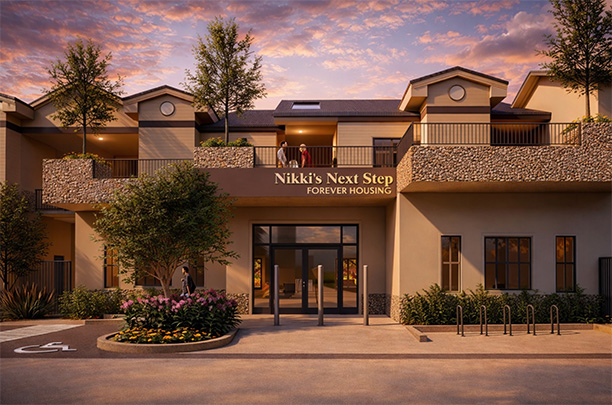
One example is Nikki’s Next Step, a new nonprofit housing initiative in Glendale that plans to develop an inclusive residential community specifically designed for adults with intellectual and developmental disabilities. While our One Step Beyond project addresses an urgent housing need, it also illustrates a broader shift in thinking. Supportive housing should not be viewed as a standalone social service. It is community infrastructure that enables individuals, families and employers to thrive together.
As Arizona continues to grow, our definition of infrastructure must evolve alongside it.
Roads connect workers to jobs. Schools prepare tomorrow’s workforce. Housing allows families to build stable lives. Supportive housing serves those same functions for thousands of Arizonans whose potential, and whose caregivers’ contributions to our economy, depend on having safe, sustainable places to live.
The question facing Arizona is not whether we can afford to invest in supportive housing.
It is whether we can afford not to.
Building stronger communities requires looking beyond traditional economic development strategies and recognizing that workforce participation depends on the systems that support families. By expanding inclusive housing options today, Arizona can strengthen its workforce, support employers and create communities where people of all abilities, and the families who care for them, have the opportunity to succeed together.
 Jeff Swanson is CEO of One Step Beyond, Inc., bringing more than 20 years of leadership experience to the nonprofit. A two-time Grand Canyon University graduate and former student-athlete, he previously spent 12 years with the Arizona Diamondbacks. Swanson is deeply committed to community service and has held numerous nonprofit board roles while remaining actively involved in youth baseball as a longtime Little League coach.