It’s no secret that global philanthropy is increasing. Arizona nonprofits are developing scalable, novel products that have reached across country borders. The state’s universities are partnering with alumni around the globe for financial support and combining worldwide funds to advance joint research and educational programs.





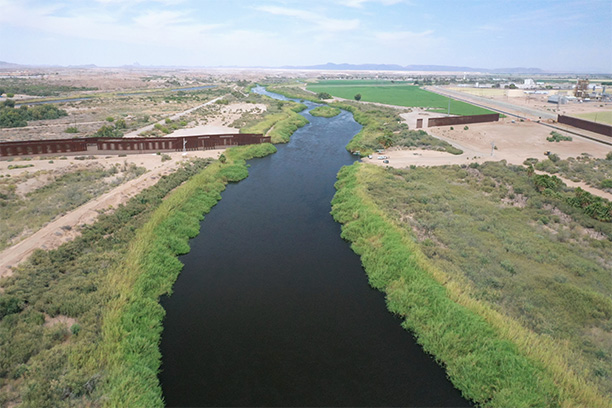
Situated in a borderland state, Arizona’s nonprofits are in a unique position to achieve similar gains closer to home, through cross-border partnerships and philanthropic campaigns in Mexico.
Andy Carey, executive director of the U.S.-Mexico Border Philanthropy Project, has the statistics to prove it. BPP has shepherded more than $24 million in charitable giving between the U.S. and Mexico over the past 12 years. “What’s exciting is that it is 50/50 — about $12 million coming into the U.S. from generous people in Mexico, and $12 million from generous people in the U.S. going to Mexico.”
Shared social, environmental, educational and economic issues — and the fact that nearly 40 million people of Mexican descent reside in the United States — give rise to U.S.-Mexico fundraising synergies that many local nonprofits aren’t considering.
“When you live in a border community, everything you can do to learn about the border — your partners on the other side — enhances what you can do locally with a population that crosses the border daily for their jobs, or that is relocating to your community, or asking for services,” says Anne McEnany, principal at Strategic Consulting and former president and CEO of California-based International Community Foundation.
“There are just a lot of shared borderlands issues,” says Carey. “We share the same water, breathe the same air, which means projects related to the environment appeal to both sides.” And, he says, “Don’t discount shared concerns about healthcare access, education and housing.”
Unfortunately, there also are quite a few cross-border myths to dispel. “It is fundamentally untrue that people in and from Mexico and Latin America don’t donate to causes,” says Carey. What is true, adds McEnany, is the very philanthropic way the Mexican community approaches and solves societal problems. “There is also a whole new generation in Mexico that understands formal philanthropy. They’re getting more engaged and are starting to form private foundations.”
So, how might executives sitting on nonprofit boards champion a cross-border jump for their organizations?
“What you’re doing is you’re extending your territory, crossing a boundary where you’re engaging other people from another community about your cause,” says Carey. Because building trust is key, especially across cultures, starting with partnerships is often the most logical first step.
Start small. A strategic partnership that provides more volunteers from the other side to engage in a nonprofit’s work not only bolsters mission and provides more hands on deck but also creates a potential future fundraising pipeline. “If you’re just a transactional bypasser” asking for money out the gate, “you might as well keep going,” says Carey. “People want to support those who roll up their sleeves and work together.”
Leverage key networks. When considering a cross-border partnership, it’s important that board members ask themselves a series of questions:
- Who are the best partners for what we’re trying to accomplish?
- How do our networks overlap with theirs?
- Do we know their board members? (Organizations should poll their board to find out who knows whom.)
“Find those points of intersection where you can start off the relationship on the right foot,” says McEnany.
Work with intermediaries. With its legal and tax structures that vary from country to country, cross-border philanthropy takes time and requires careful compliance: on the U.S. side, adhering to the Patriot Act; on the Mexico side, the Anti-Money Laundering Act. But there are also other considerations, including administrative support, like fraud monitoring, or tax receipts for gifts donated in pesos that come to the U.S., and the vetting of partner institutions. Nonprofits must also determine a partnership structure and know how to execute it: a formal or informal partnership or a subsidiary structure with money moving between organizations.
The good news is that organizations like BPP and ICF can provide guidance on these issues, as well as services, to those nonprofits wishing to expand across the border.
“Don’t be afraid to engage the border,” says Carey to executives sitting on nonprofit boards. “By engaging with volunteers and donors — with partners from the other side of the border — you can only grow your program.”
The Importance of Cultural Competency
Arizona nonprofits must make an effort to understand the cross-border culture. “People coming from the U.S. can often come across to Mexican partners as heavy-handed, so it’s important to be aware of those power dynamics,” says McEnany. “Even things we take for granted — data sharing agreements, confidentiality, transparency and accountability — the cross-border partner may not feel the same.”
In Mexico, in fact, management structures are often more formal, based on government reporting requirements. It’s also important to simply slow down. “In Mexico, people spend a lot of time slowly building social fabric and social capital before engaging in business partnerships.”
Having a Spanish-speaking representative within the nonprofit can also be pivotal, not only to navigate daily communications but also to assist in understanding business culture.
Richard Tollefson is founder and president of The Phoenix Philanthropy Group, an Arizona-based international consulting firm serving nonprofit organizations as well as institutional and individual philanthropists.
Resources for Learning:
- Stanford Social Innovation Review features articles on global philanthropy, innovation and leadership.
- Charities Aid Foundation is an international NGO offering research, including the World Giving Index, as well as advice on international philanthropy.
- The Council on Foundations includes country notes and nonprofit law insight.