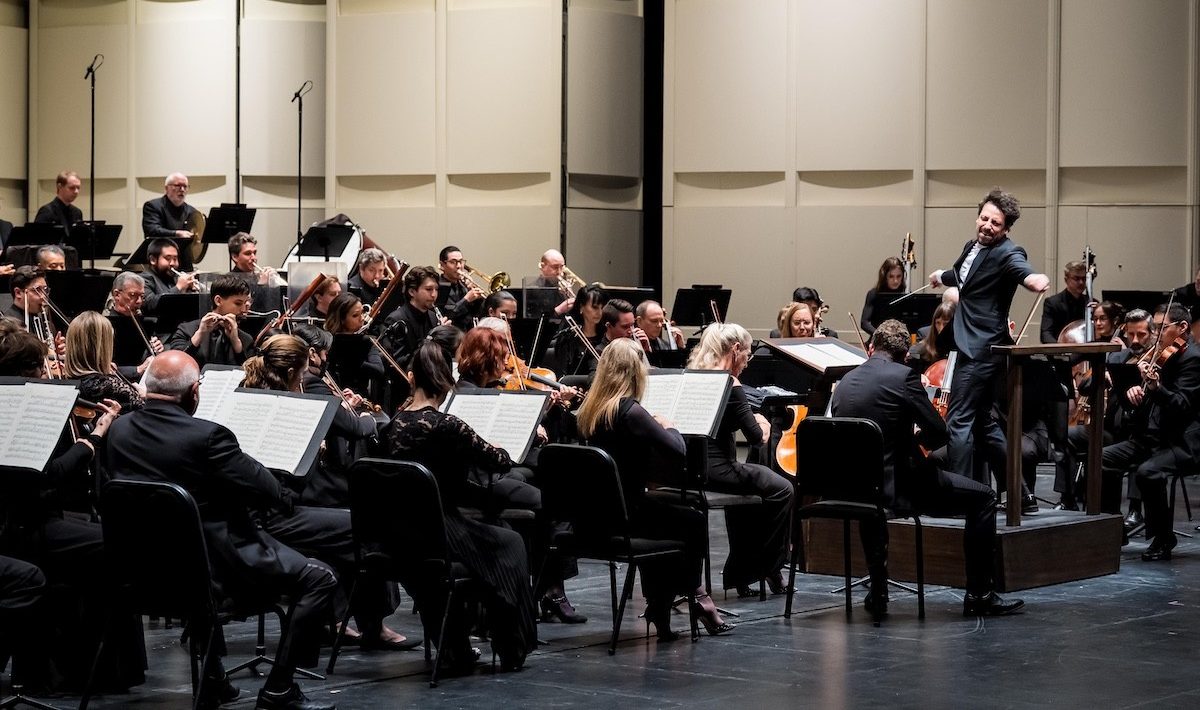
Image courtesy of Tavits Photography
For nearly 80 years, The Phoenix Symphony has been more than an orchestra. It has been a cultural institution, an economic contributor and an important part of the identity of Greater Phoenix. But even the most beloved organizations must confront the financial realities of operating a sustainable business.



On October 20, The Phoenix Symphony announced it would suspend its 2026–27 season following its November 1 performance, a difficult decision that underscores a growing challenge facing nonprofit arts organizations nationwide: maintaining a financially sustainable operating model amid rising costs, changing patterns of philanthropic support and the considerable expense of delivering world-class performances.
The decision, made by the Symphony’s Board of Directors and executive leadership, was not the result of a lack of effort, declining ambition or an unwillingness to make difficult changes. Rather, it reflects a fundamental responsibility of organizational leadership — recognizing when continuing operations without sufficient financial resources would jeopardize the institution’s long-term survival.
“This is the most difficult decision this Board has faced, and we did not make it lightly,” said Mo Stein, Chairman of the Board of The Phoenix Symphony. “We have diligently pursued measures to close the gap between operating costs and revenues, and our efforts have not yet been enough. Continuing the season without the cash flow to meet our immediate obligations would put the institution’s future at greater risk.”
When Revenue Growth Is Not Enough
Perhaps the most revealing aspect of the Symphony’s financial circumstances is that revenues have actually increased substantially.
Between fiscal years 2024 and 2026, the organization experienced revenue growth exceeding 50 percent. Ticket sales and philanthropic support increased, while leadership identified approximately $766,000 in administrative expense reductions.
In April 2025, the organization also launched its ambitious $60 million CRESCENDO fundraising and endowment campaign, designed to establish a more dependable long-term financial foundation.
Yet those efforts have not been sufficient to overcome continuing operating deficits, accumulated financial obligations and escalating costs.
The situation illustrates an important distinction familiar to business executives: Revenue growth does not necessarily translate into financial stability.
An organization can increase sales, attract new customers and generate greater philanthropic interest while continuing to experience negative cash flow. When operating expenses and existing obligations outpace available resources, even impressive revenue gains may not be enough.
The Symphony also faces a particular challenge common among nonprofit institutions: Much of the money raised for endowments is restricted and cannot be used to cover immediate operating expenses.
Consequently, long-term fundraising success does not automatically resolve short-term liquidity challenges.
For the Symphony, anticipated contributions for the current fiscal year have fallen below the levels required to continue operations. The resulting financial shortfall has made maintaining the current season untenable.
The Responsibility of Leadership
For business leaders, perhaps the most consequential aspect of this announcement is the decision itself.
Suspending operations is rarely the preferred outcome for any organization, particularly one with employees, customers, donors and generations of community investment.
But continuing to operate without sufficient resources can create even greater financial exposure, potentially exhausting the assets and relationships necessary for an eventual recovery.
The Symphony’s Board appears to have reached that critical point.
Rather than continue accumulating obligations it cannot confidently meet, leadership has chosen to suspend operations, evaluate its financial commitments and develop a restructuring plan.
The decision carries immediate and painful consequences. Musician layoffs will take effect November 2, and employees, subscribers, concertgoers and community partners will experience the disruption of a season that was already underway.
“We know the consequences of this decision on musicians and staff will be profound. They are the heart of the Symphony, and their artistry and dedication have deeply enriched this community,” said Peter Kjome, President and CEO.
The Board’s decision demonstrates one of the most difficult responsibilities of governance: balancing the immediate needs of employees and stakeholders against the long-term viability of the organization.
In this instance, preserving the possibility of a future Symphony has taken precedence over continuing a season without the financial resources to complete it.
A Business Model Facing Difficult Realities
The Phoenix Symphony’s circumstances also raise broader questions about the traditional business model supporting professional orchestras.
Unlike many commercial enterprises, symphonies generally cannot rely on ticket sales alone to cover the full cost of operations.
Professional musicians, rehearsal schedules, performance venues, production requirements, administration and educational programming create substantial recurring expenses.
Ticket revenue is supplemented by philanthropy, corporate sponsorships, foundations, endowment income and other contributions.
That structure requires a continuing commitment from individuals, businesses and institutions that recognize the value of maintaining a professional orchestra in their community.
While the Symphony reports increases in ticket sales and philanthropic support, those gains have not been sufficient to sustain its existing operations.
The challenge is not necessarily that community interest has disappeared. Rather, the financial support required to maintain the institution has not kept pace with its operating costs and obligations.
That distinction matters.
The traditional symphony model depends on a relatively small group of major donors and institutional supporters helping to underwrite an experience that benefits the broader community. As costs rise and philanthropic priorities evolve, maintaining that model becomes increasingly challenging.
For Greater Phoenix, the question is whether a region that has experienced extraordinary population growth, corporate expansion and economic development can establish a corresponding financial commitment to its cultural institutions.
A metropolitan economy of this size benefits from a strong arts community. Cultural amenities contribute to quality of life, workforce attraction, tourism and the region’s reputation as a sophisticated destination for businesses and residents.
But those benefits do not automatically translate into the sustained financial support necessary to operate an orchestra.
A Community Investment Worth Preserving
For generations, The Phoenix Symphony has introduced audiences to classical music, provided educational experiences for students and contributed to the cultural richness of Arizona.
Its musicians and performances have become part of the community’s identity.
That history represents something more than sentiment. It reflects decades of investment in artistic talent, institutional knowledge, relationships and community engagement.
Rebuilding such an institution from the ground up would be a formidable undertaking.
The challenge now is to determine whether that legacy can be preserved through a more financially sustainable operating structure.
The Board has emphasized that the season is suspended, not canceled, and that its intention is to resume performances as soon as circumstances responsibly permit.
During the suspension, leadership will evaluate outstanding financial obligations, review operating expenses, reassess revenue expectations and determine what level of verified financial support would be required to reopen.
“Any return to the season will depend on a realistic budget, verified support and the financial discipline to remain open,” Stein said.
That approach places financial accountability at the center of the organization’s recovery.
The Next Chapter Requires More Than Fundraising
The Symphony’s future will likely require more than a temporary infusion of contributions.
A sustainable recovery demands a realistic understanding of operating costs, dependable revenue sources, philanthropic commitments and the organizational structure necessary to support them.
It may also require renewed conversations among business leaders, philanthropists, corporations and civic stakeholders about the role they want a major professional orchestra to play in Greater Phoenix.
For the business community, the situation presents both a challenge and an opportunity.
Supporting the arts is often discussed in terms of generosity and community responsibility. But cultural institutions are also part of the infrastructure that helps a region attract investment, retain talented professionals and compete with other major metropolitan areas.
The Phoenix Symphony’s suspension is a reminder that even highly regarded nonprofit institutions must operate within the same fundamental financial constraints as other businesses.
The organization cannot indefinitely spend more than it generates, regardless of the importance of its mission.
For Stein, Kjome and the Board, the immediate responsibility is not simply to preserve the next concert. It is to determine how the institution can survive for the next generation.
The decision to suspend performances is undoubtedly painful, particularly for the musicians and employees whose livelihoods depend on the organization.
But recognizing an unsustainable financial position and acting before the consequences become irreversible can also represent responsible leadership.
The Phoenix Symphony has spent nearly eight decades enriching the lives of Arizonans. Whether it can continue that tradition will depend on a renewed business model, disciplined financial management and a community willing to invest in its future.
Editor’s note: The Phoenix Symphony has announced that it will provide additional information regarding its financial recovery plan and options for ticket holders as arrangements are finalized. Updates are available through The Phoenix Symphony. Rick McCartney, the publisher of In Business Magazine, is a member of The Phoenix Symphony Board of Directors.