Photo courtesy of New Visions Assisted Living
In Arizona’s senior housing market, scale has long been treated as a measure of success. Larger facilities, higher unit counts and operational efficiency have defined growth for decades. Now, that model is being challenged as smaller, boutique-style communities gain traction by prioritizing consistency, retention and resident experience over size alone.





In Scottsdale, New Visions Assisted Living offers a clear example. The ten-resident home operates on a micro-model built around individualized care, stable staffing and a residential setting that contrasts with traditional facility scale. While the smaller footprint may appear limiting, many in the industry point to a different set of performance drivers. Lower staff turnover, stronger relationships and more consistent care delivery can support higher satisfaction, more predictable occupancy and more stable long-term margins.
Arizona remains one of the country’s most competitive senior housing markets, with more than 650 assisted living facilities statewide, according to state data. At the same time, nearly one in five Arizona residents is age 65 or older, based on U.S. Census estimates, underscoring the scale of demand shaping the sector.
Much of that supply is concentrated in larger facilities. Boutique providers are approaching the market differently, treating experience not as an added amenity but as a central component of care delivery.
“Boutique living really just means keeping things small and personal,” says New Visions founder Wanda Forden. “At this size, our team can actually be present with residents, not just helping them through tasks.”
That approach is reflected in the model’s structure. With a 2:10 staff-to-resident ratio, the home is designed to support more consistent engagement and individualized programming. Daily routines are shaped by resident input, with activities and outings evolving around personal interests rather than fixed schedules.
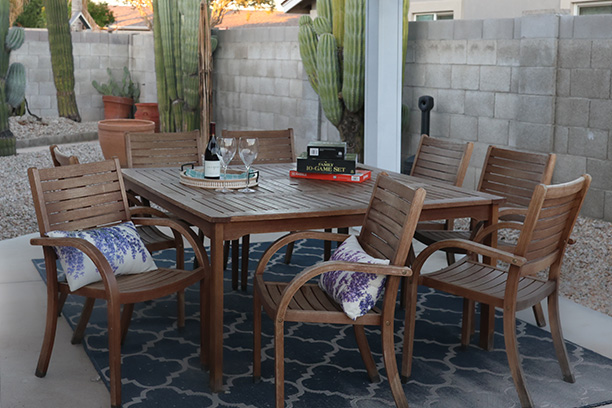
The setting itself resembles a residential home more than a traditional care facility. Wellness providers, including physical and speech therapy partners, deliver services on-site, while daily routines incorporate movement, outdoor time and social interaction. The goal is continuity in an environment intended to feel familiar rather than institutional.
The model aligns with broader shifts in senior living, where demand is moving toward personalization, wellness and relationship-based care. For families, decisions are increasingly influenced by quality of interaction as much as clinical support.
At the same time, the rise of boutique models reflects a broader change in how new concepts enter the market. In many cases, these approaches are shaped by founder-led experience rather than institutional expansion strategies.
For Forden, the origins of New Visions were personal. The loss of her mother to dementia and the experience of caring for an uncle with similar symptoms informed her view of senior care and contributed to a model centered on dignity, familiarity and connection.
“This didn’t start as a business plan,” Forden says. “It started with the realization that people deserve to be known and cared for as whole individuals.”
Forden brings two decades of experience working with vulnerable populations, including veterans, individuals experiencing homelessness and people with disabilities. That background informs a leadership approach centered on stability and dignity, themes gaining prominence in national conversations about care quality.
For the broader business community, the implications extend beyond care delivery. As Arizona’s population continues to age, the sector is likely to diversify rather than consolidate around a single model. Larger facilities will continue to play a role, but smaller, high-touch communities may capture a growing share of demand.
The question is no longer whether senior housing can scale. It is how it scales, and whether size alone remains the defining metric. In that context, boutique models suggest that smaller approaches may offer a different path to sustainability.