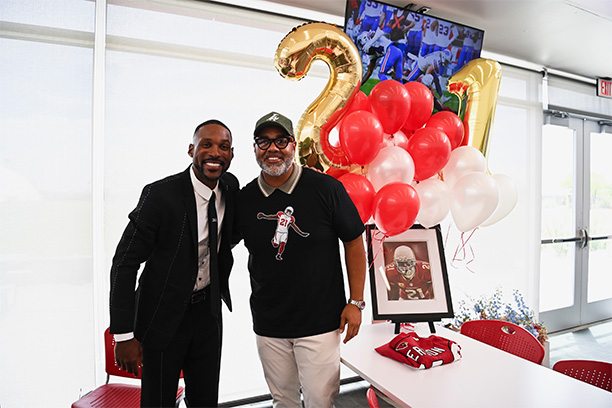
Patrick Peterson and Alex Guerrero
In the era of the influencer economy, athlete partnerships are everywhere. Business leaders, founders and investors have likely written a check, sponsored a team or partnered with an athlete having a shining moment, in exchange for cultural relevance, visibility, credibility or a spike in sales. But the smartest brands aren’t just paying for athlete endorsements –– they’re partnering with them. The real opportunity isn’t in paying for promotion, but in building alongside athletes in a true partnership.






That shift requires a fundamentally different approach from the one we’re used to seeing. One where athletes aren’t treated as endorsers, but as collaborators with a real stake in the outcome through equity, ownership and long-term alignment.
After 25 years in amateur and professional sports, including Boise State, the NFL, NFL Europe, CFL, AFL, and 14 years leading my branding and marketing agency, The Society, which has generated more than $50 million in partnerships, I’ve gained a unique perspective on what drives success for athletes and brands.
From Promoting to Building
I’ve seen Hall of Fame careers, average careers and talented athletes whose journeys ended in college. While those paths look different on the surface, one thing remains consistent: Most athletes never fully maximize the platform they’ve earned.
Part of the reason is structural. At its core, the traditional model is simple: Brands pay athletes for exposure. Social posts, appearances, campaign work. The deals are short-term, tied to specific activations, and measured by reach and visibility. For brands, it’s a marketing expense. For athletes, it’s a paycheck.
That model can create immediate value, but it rarely creates sustained profitability, let alone a legacy. It’s transactional by design, offering little incentive for deeper collaboration, limited long-term upside, and almost no connection to the business itself. Many brands treat athletes as media inventory, not strategic partners.
That realization pushed me to seek a better approach, one centered on lasting value and aligned with what athletes need both financially and personally. Exposure alone isn’t enough. Every athlete reaches a point where performance isn’t enough and they are forced to reckon with whether they’ll maximize their platform or waste it.
It all clicked when I connected with long-time friend and investor James McCabe and his private fund, The Placement Funds. McCabe’s approach — building networks, creating strategic partnerships and thinking long-term — wasn’t effective just in business; it offered a blueprint for athletes.
A New Philosophy
Through that lens, I began to see what was missing: a path for athletes to participate as owners, not just endorsers, with access to mentorship, capital and decision-making opportunities that extend beyond the playing field.
One of the clearest examples of this philosophy came years before the outcome was ever clear. Working with Jim Huether, now CEO of Hyperice, during his time at Xenith, we placed Arizona Cardinal players Patrick Peterson and Tyrann Mathieu into their helmets. There was no immediate upside, no guaranteed deal, just alignment.
Years later, that relationship evolved into an ownership opportunity, where Peterson chose equity over a traditional cash endorsement. What began as shares in a $20-million company is now tracking toward $1 billion. The real return wasn’t the multiple; it was the mindset: from promoting to building, from exposure to long-term value.
Another example of this philosophy in action comes from DeMarcus Lawrence. In 2021, the longtime Dallas Cowboys standout and now Super Bowl champion with the Seattle Seahawks, was introduced to a cryotherapy chamber at Cowboys Fit and quickly recognized the recovery benefits. We facilitated a partnership with CryoBuilt that included 1% equity, creating alignment with both his performance goals and personal values. For Lawrence, the partnership felt purposeful and allowed him to invest in a business he believed in. For CryoBuilt, having an athlete partner added credibility that helped the company grow, eventually positioning itself as the most trusted brand among NFL players.
This experience marked a pivotal shift for Lawrence from endorsement to ownership and sparked other ventures under his media company NinetyStudio, including DrinkSip, a non-alcoholic beverage, and Edge Zero, an anime-style football series. This illustrates how aligning athlete incentives with long-term outcomes can create value far beyond a single campaign and redefine what success looks like for both athletes and brands.
For brands, this shift changes everything. Instead of paying for short-term exposure, they gain a partner invested in the success of the business, contributing to storytelling, product development and long-term growth. I’ve seen this mindset with athletes like Larry Fitzgerald, who spent his entire NFL career with the Arizona Cardinals. His approach to investing mirrored that of a traditional Wall Street executive, not a professional athlete. Despite earning nearly $181 million on the field, he remained intentional about maximizing his platform through relationships, access and long-term strategic alignment.
This approach is no longer exclusive to the pros. Programs like Arizona State and others are seeing major increases in NIL (Name, Image and Likeness) valuations for top athletes. The rise of NIL represents one of the most significant shifts in college sports, but the real opportunity isn’t just monetization; it’s education.
College athletes are surrounded by boosters, alumni and supporters who’ve built successful businesses. The question isn’t just what they earn, but who they’re connected to and, more importantly, what they learn in the process. By approaching NIL strategically, these athletes can start building partnerships and ownership opportunities that mirror the long-term value model we see in the professional ranks.
When executed intentionally, these partnerships can take several forms:
- Equity-based collaborations: Give athletes ownership in the companies they support.
- Revenue participation: This ties compensation to business outcomes rather than just impressions.
- Athlete-led product or brand collaborations: Leverage their insight and creativity into an actual product or campaign.
These partnerships help athletes build wealth beyond their playing careers, align incentives with the brands they support, and foster deeper authenticity and loyalty for both sides.
The Future of Athlete Partnerships
At The Society and our new form of strategic partnership with The Placement Funds, we help athletes structure these kinds of partnerships. Rather than one-off endorsements, our approach emphasizes ownership, equity and shared outcomes. We connect athletes not just to capital, but to mentors, operators and decision-makers, ensuring each partnership builds skills, relationships and lasting impact, both on and off the field.
Over the next five to ten years, this shift will only accelerate. More athletes will step into roles as investors and co-founders, more brands will design partnerships with ownership in mind, and the measure of success will be relationships and long-term impact, not just immediate visibility. The next evolution won’t be defined by bigger deals; it will be defined by smarter, more intentional partnerships.
For those in the business community willing to lean in, the upside isn’t just in what they give but in what they gain: lasting relationships and long-term value built through true partnership, not limited by on-field performance or accolades.
 Alex Guerrero is the founder and president of The Society, LLC, a brand management and marketing agency established in 2012. A former professional football player with experience in the NFL, CFL and AFL, and a standout career at Boise State University, he brings deep industry insight. The Society helps athletes, entertainers, and brands build distinct identities through strategies that elevate presence and impact.
Photos courtesy of The Society, LLC