Nearly 70% of Arizona businesses say they are prioritizing making investments over cutting costs, according to new data released today by Columbia Bank. At the same time, half of Arizona business leaders say they plan to monitor current pressures from tariffs, inflation and rising energy costs for at least six months before making major decisions.







The findings are from Columbia Bank’s 2026 Business Barometer, an annual study examining the outlook, priorities and decision-making of nearly 1,200 small and midsize enterprises across the United States, including businesses with significant sales, employees and operations in Arizona.
Top Regional Priorities: What is Driving Decision-Making for Arizona Businesses?
Arizona businesses indicate strong appetite to invest in strategic priorities that promote efficiency and growth and strengthen their competitive edge over the next 12 months:
- Arizona businesses are more optimistic that the economy will improve over the next 12 months (60%) than most businesses (52% nationally).
- While Arizona businesses are not as optimistic as businesses nationally when it comes to revenue expectations (62% compared to 67% nationally), 72% expect profitability to increase (59% nationally), and 79% expect demand to increase (72% nationally).
- Arizona businesses are more open to acquisitions, with 52% saying they are very or somewhat likely to acquire another business (36% nationally). Three in five businesses (61%) say they are very or somewhat likely to increase their real estate footprint.
- As a result, 54% of Arizona businesses expect to increase headcount over the next 12 months (51% nationally).
AI is a top three priority for 60% of Arizona businesses and recent advances in AI capabilities are in part driving the positive growth outlook. Three in five Arizona businesses (58%) say AI will strengthen their business and 81% expect AI to help with employee satisfaction and retention.
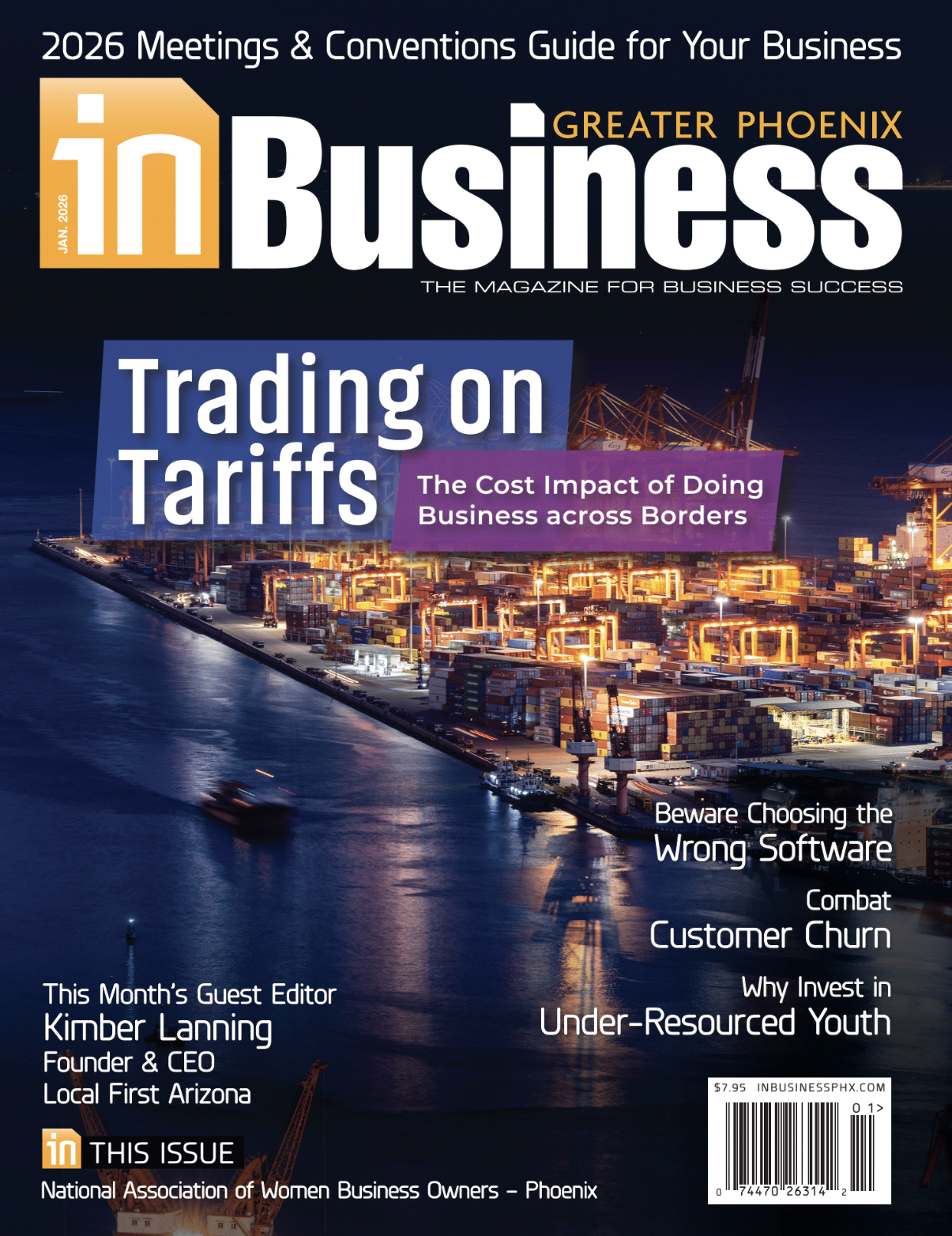
Tariff impact has fallen out of as a top concern for Arizona businesses since last year. Input from Arizona business leaders indicates that the unpredictability of tariff implementation has been more challenging than direct tariff costs, as delays, exemptions and shifting percentage amounts have made planning difficult.
- 60% expect trade volatility, tariff impacts to last one to two years.
- 73% will seek tariff refunds.
The Columbia Bank 2026 Business Barometer, conducted annually, surveyed 1,186 owners, executives and financial decision-makers from U.S. small and middle market businesses. The online survey was conducted in partnership with DHM Research, a public policy and business research firm, and targeted leaders at companies with $500,000 to $500 million in annual revenue. The survey, which did not filter for Columbia Bank customers, has a 2.7% margin of error and was fielded from April 28 to May 7, 2026.