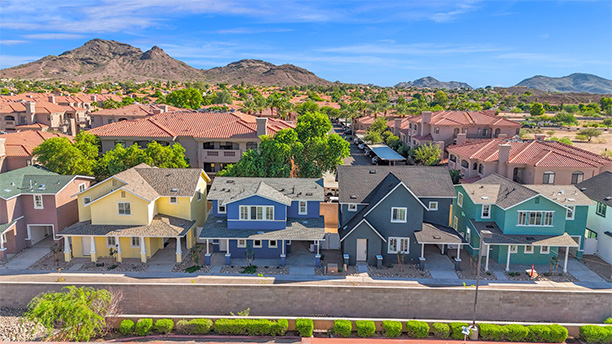


As the Valley continues to mature, we are beginning to see a generational shift as builders set their sights on infill development rather than the traditional large tracts of land where concrete tile roofs stretch as far as the eye can see. This shift is driven by buyers demanding shorter commutes, more services and smaller footprints — not just in square footage, but also in environmental impact. Compounding this is the double-edged sword of cities prioritizing urban core development while builders chase new potential revenue streams.
This isn’t just happening in downtown Phoenix. It seems that every city, large and small, is working toward “manufacturing” a downtown. Places like Gilbert, Chandler, Glendale and even Fountain Hills have spent the past decade or two working with developers to bring infill to reality.
The current wave of downtown development can be traced to the University of Arizona breaking ground on its medical campus in 2014. This was the culmination of efforts by countless individuals working to make downtown Phoenix a medical and education hub. When Arizona State University joined with 10,000 students, there was finally a critical mass. Developers, like RED Development, found a vibrant mix of students, young professionals and empty nesters clamoring for a lifestyle many believed didn’t exist in Arizona.
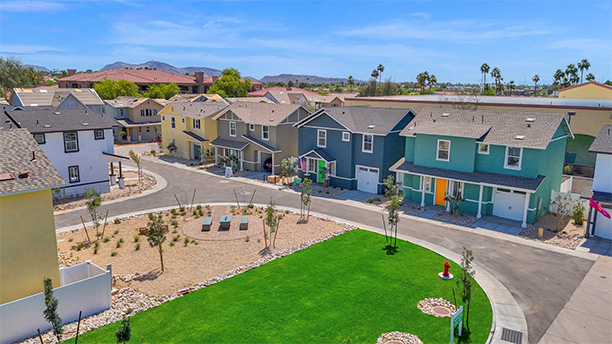
This sparked a wave of apartment construction that is only now beginning to crest. It was driven by a large cohort of consumers for whom the idea of a four-bedroom home in the suburbs faded during the downturn, leading them to abandon suburban life for something they had seen elsewhere. Suddenly, they wanted to be city dwellers. Places like Kierland have grown significantly, with more than 3,500 people per square mile. Apartment buildings are selling for more than $400,000 per unit. Luxury condos are averaging nearly $1,000 per square foot, and rents are approaching $5 per square foot in some buildings, leading to a new concept often referred to as the “millionaire tenant.” Downtown Phoenix has grown to more than 50,000 residents, with 245 restaurants and approximately 1.6 million square feet of retail. Downtown Chandler has become an actual destination. Tempe is competing with Old Town for the next foodie hotspots. Westgate has emerged as a hub of activity, and strolling downtown Mesa is once again a popular experience.
Buyers are demanding walkability, shorter commutes and highly amenitized neighborhoods. City planners are increasingly cautious about decade-long, master-planned communities, and builders are wary of the costs associated with large-scale developments and the risk of being caught in a down cycle.
As a result, homebuilders are working diligently to tear down single-family homes in affluent neighborhoods to maximize density. National players like Thomas James Homes aim to be the Toll Brothers of infill single-family homes, while local builders of all sizes compete to construct high-end homes in North Central, Arcadia, McCormick Ranch and beyond. At the same time, legislation such as HB 2720 (ADUs) and HB 2721 (allowing up to four units on single-family lots) is accelerating activity in established neighborhoods, introducing levels of density not previously seen.
Only a few builders, however, are able to deliver on what those laws intended. Builders like Justin Johnson with Encanto Living have consistently delivered attainable housing in Central Phoenix, Moon Valley and the Bell Corridor. Delivering infill single-family homes in the mid-$400,000 range is no small achievement. Recognizing that demand extends beyond well-heeled buyers seeking an urban lifestyle, Johnson identified an opportunity to balance profitability, scalability and sustainability.
In today’s environment, those nimble enough to navigate the entitlement process and respond to evolving buyer demands will succeed. The buyer profile has changed, along with what they value. Living in the urban core is no longer a niche preference — it’s a defining trend, and builders are taking note.

Cory Mishkin, who serves as COO and director of sales, is a seasoned real estate professional with more than two decades at Cambridge Properties, where he has transacted more than $600 million and brings expertise across development, renovations and new home sales.