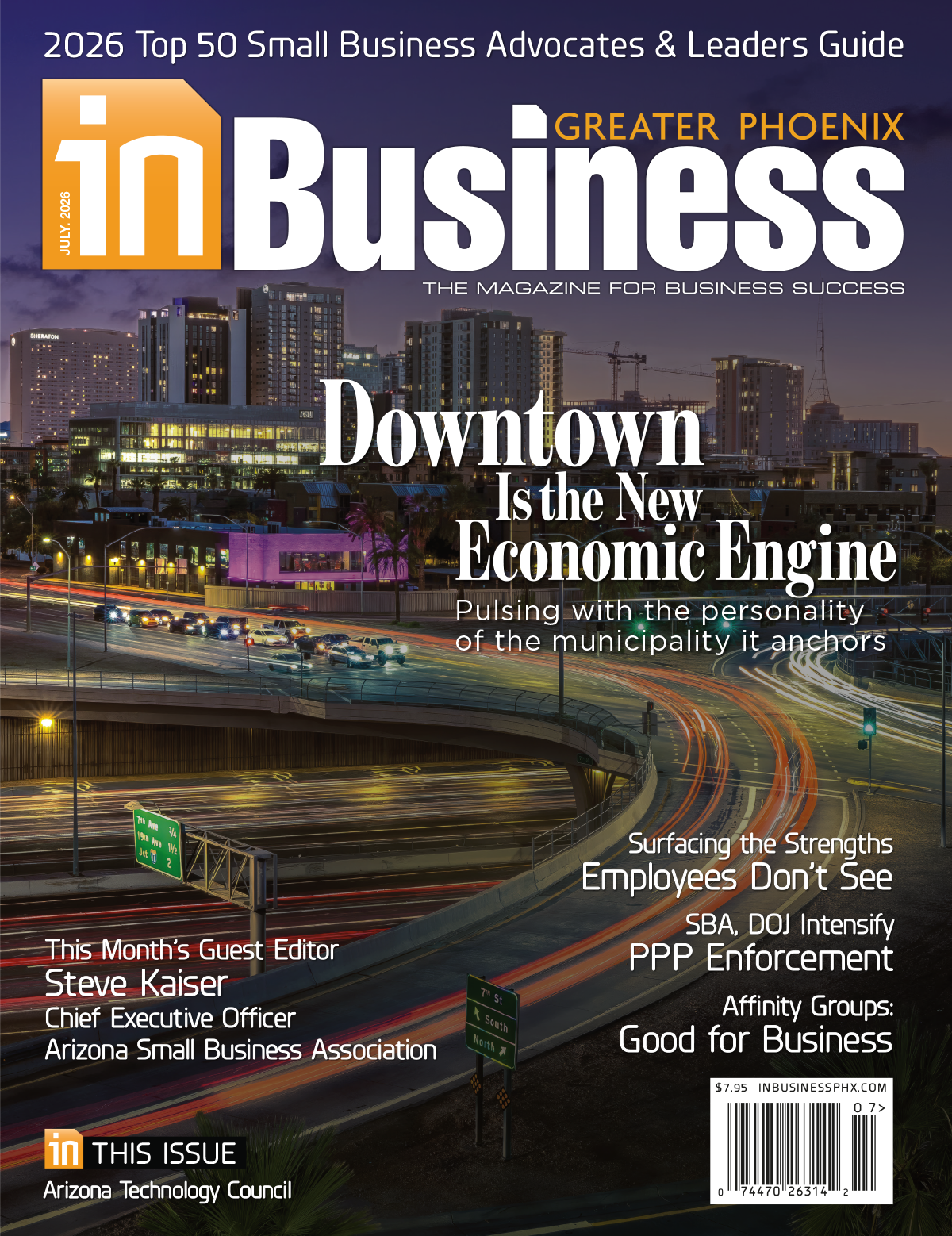
Metro Phoenix is more than a conglomerate “major metropolitan area” of economic activity. It’s comprised of individual cities, each making its own identity in the vibrant mosaic of the whole — and that vitality is especially evident in their downtowns.
Without a doubt, the heart and soul of a downtown are the people who live, work and play there. A good downtown has lots of activity and energy centered in a compact space. So, if people are the key to a vibrant heart and soul of a downtown, how do you get them there?






When I think of the transformation of downtown Phoenix as someone who has lived here my whole life, the changes to the downtown area have been profound. Bringing in young people, like the major universities did, has certainly attracted many businesses to downtown. Now, downtown has a mix of young, old and visiting touring the area looking for great food and nightlife.
However, all those people need a place to live that is close to that exciting downtown. Your businesses need employees to be able to live close. Those young students need affordable places to live, like multifamily high-rises. Young families, professional couples and retired individuals are looking for attractive and affordable housing as well that is close to the fun of downtown.
In order to power your downtown, you need people to be able to live and work in that immediate area. Once there are plentiful patrons, the businesses will arrive and the energy begins!
Great downtowns are built on vision and commitment and confidence. This month’s cover story gets in-depth on five Greater Phoenix cities, exploring the economic and lifestyle hub that is their downtown from the perspective of the businesses and economic development leaders who are creating their city’s distinctive vibe.
Perspective is a key point to Morgan Haynes’ leadership feature, “Surfacing the Strengths Employees Don’t See.” Making the case for leaders — especially in high-pressure sectors like healthcare — to actively dig deeper to see what employees can’t yet see in themselves, she discusses why and how to recognize and maximize their untapped potential.
In the Roundtable feature, “Collaboration over Competition in the C-Suite,” Haynes applies her considerable leadership experience to address another leadership imperative: How to disarm strained leadership when leaders start measuring their own success against one another instead of against the mission they share.
The COVID-19-inspired Paycheck Protection Program loans are under scrutiny as investigators are retroactively reviewing eligibility and ensuring full compliance moving forward. Dan Nelson and Amy Lewandowski consider key risks for borrowers and lenders in this month’s Legal feature, “SBA, DOJ Intensify PPP Enforcement.”
Other topics covered this month range from technology advances in enterprise resource planning systems to an insurance assessment of cyber risks businesses may not be covered for to a discussion of sleep as an undervalued asset in business travel. And a local restaurateur shines light on a serious employee issue as he shares valuable experience with Valley Leadership’s Opioid Use Disorder Business Toolkit.
And as a special section, this edition also includes the “50 Top Small Business Advocates & Leaders Guide,” In Business Magazine’s annual resource guide for top small business services, with an introduction by Corey Wunderlich, district director of the U.S. Small Business Administration, Arizona District.
It’s my pleasure to help bring you this July edition of In Business Magazine. Enjoy the read.
Sincerely,
Steve Kaiser
Chief Executive Officer
Arizona Small Business Association
 Steve Kaiser brings to his role as chief executive officer of Arizona Small Business Association a background spanning public policy and entrepreneurship.
He served eight years in the army, including deployment to Afghanistan as a civil affairs team leader where he worked to build relationships with Afghan government and tribal leaders.
Kaiser has also served three years in the Arizona legislature, most recently as the chairman of the Senate Commerce Committee.
Purchasing an existing junk removal business, Kaiser grew it in five years from one employee to 15 and increased revenue by more than 300%. He started a 501(c)4 nonprofit called Arizona Prosperity Project, through which he aims to increase prosperity for all Arizonans through smart public policy. And he started an independent government relations consulting company called Policy Forge, helping individuals and businesses lobby their government.