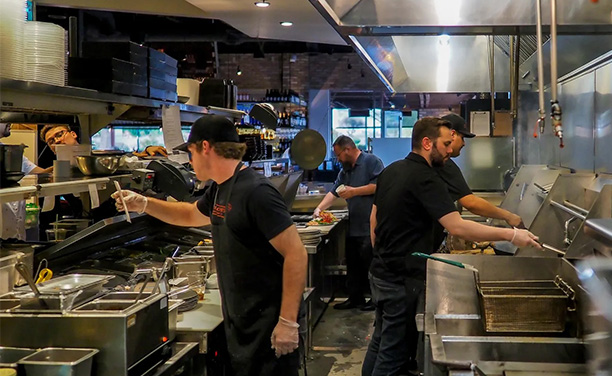
Photo courtesy of Ling & Louie’s Restaurants
In the restaurant industry, performance is measured in real time. Tickets move, guests wait and teams operate under constant pressure. In that environment, problems rarely announce themselves and often surface only after they begin to affect performance, safety or retention.





Opioid use disorder is one of those challenges. Nationally, hospitality workers rank among the highest for substance use rates in the U.S. workforce, yet many businesses have lacked the structure to respond before issues escalate.
At Ling & Louie’s Asian Bar and Grill and Ling’s Wok Shop, that reality has prompted a shift in how we approach opioid use disorder in the workplace. We recently adopted Valley Leadership’s Opioid Use Disorder (OUD) Business Toolkit to treat addiction as both a health and workforce issue, rather than a disciplinary one.
I’ve seen firsthand how addiction impacts this industry. There are teammates I still think about, and I wish we had been better equipped to support them. For years, substance use has been quietly absorbed into the culture of hospitality. The cost of that silence is measured in lost talent and missed opportunities for early intervention.
Developed by Valley Leadership, the OUD Business Toolkit offers Arizona employers a structured, evidence-based approach to building recovery-ready workplaces. It includes practical steps such as updating policies, establishing reporting pathways, training managers and assessing internal culture to reduce stigma.
For our organization, that has meant moving away from a zero-tolerance approach and toward policies centered on health, safety and accountability. It has also meant creating clearer avenues for employees to raise concerns and investing in leadership training so managers can respond consistently.
This is not a shift away from standards. It is a shift toward earlier, more effective intervention. In a high-pressure environment, clarity can make the difference between retaining a valued employee and losing them.
From a business standpoint, opioid use disorder directly affects workforce stability, productivity and long-term growth. Employees who feel supported are more likely to communicate openly, remain engaged and stay with the organization. That continuity strengthens operations and improves the guest experience.
As workforce challenges persist, organizations that invest in employee well-being are better positioned to attract and retain talent. Addressing opioid use disorder is part of that strategy.
Hospitality is built on taking care of people. Extending that commitment inward requires structure and leadership. Tools like the OUD Business Toolkit provide a way to move from awareness to action.
Creating a recovery-ready workplace is not simple, but it is a necessary step toward aligning how we support our teams with the expectations we place on our businesses.
 John Banquil Jr. is president and CEO of Ling & Louie’s Restaurants.
Did You Know: Valley Leadership’s Opioid Use Disorder Business Toolkit information is available at http://valleyleadership.org.