
Photo courtesy of Defyne Plastic Surgery
For decades, the playbook in elite medicine has been predictable: Innovation begins in coastal hubs, then spreads outward. A growing number of physician-led practices are reversing that flow, building advanced medical models in emerging markets and expanding into some of the most competitive healthcare environments in the country.







Scottsdale-based Defyne Plastic Surgery is one example.
Founded by Harvard-trained microsurgeon Dr. Oren Tessler, the practice reflects a model of clinical entrepreneurship where advanced training, academic rigor and operational strategy intersect. Rather than scaling quickly or relying on visibility, Defyne has focused on a tightly controlled model built around physician-led innovation, specialized procedures and long-term patient planning. Its recent expansion into Beverly Hills reflects not just geographic growth but a broader shift in where advanced aesthetic medicine is being developed and tested.
“People assume innovation has to start in places like Los Angeles or New York,” Tessler says. “What we’ve found is that building in a market like Phoenix allows for more deliberate development. You’re not chasing trends. You’re building systems.”
That philosophy shapes both the clinical and business structure of the practice. Instead of competing in a saturated aesthetics market, Defyne has focused on procedures that require specialized training and infrastructure. These include regenerative fat grafting techniques such as Enhanced Viability Fat Transfer, as well as fat banking, which allows patients to preserve their own tissue for future reconstructive or aesthetic use.
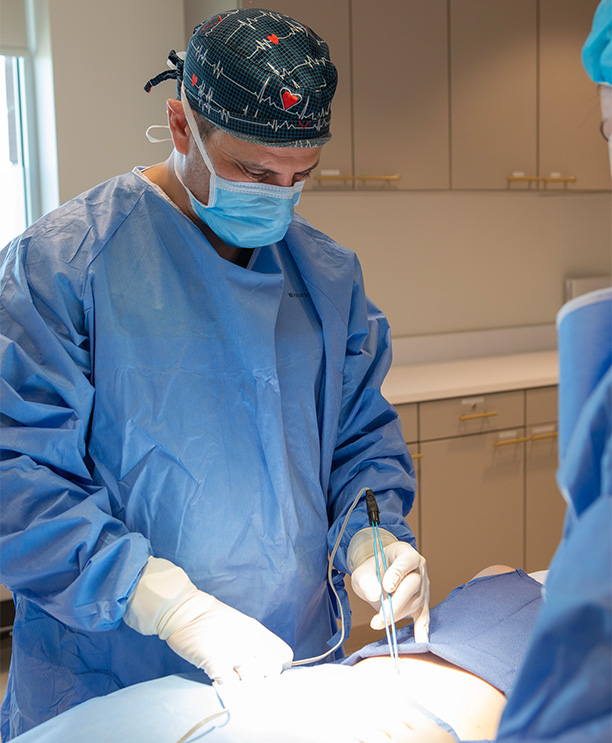
Photo courtesy of Defyne Plastic Surgery
In business terms, these offerings function less as one-time services and more as long-term medical assets, supporting continuity of care while strengthening patient retention and lifetime value. They also introduce clinical complexity that is difficult to replicate, reinforcing a differentiated position in a crowded market and creating a more defensible growth strategy.
“These are not one-off procedures,” Tessler says. “They reflect a shift toward thinking about care over time, not just a single intervention.”
Operationally, the model emphasizes efficiency and risk reduction. Many procedures are performed under local anesthesia, reducing recovery time and lowering risks associated with general anesthesia while enabling a more streamlined workflow.
In a category where many services are easily replicated, those choices are intentional. “Aesthetic medicine has become more accessible,” Tessler says. “But it does mean that differentiation has to come from expertise, not marketing.” That emphasis on specialization and physician-led innovation creates a higher barrier to entry than many traditional practices and supports more sustainable margins over time.
The practice has built a team of internationally trained surgeons, reinforcing a physician-driven structure in a field often shaped by branding and consumer demand. The result is a business model that prioritizes specialization and controlled growth, supported by the advantages of being built in Arizona.
Markets like Phoenix and Scottsdale offer population growth, operational flexibility and fewer legacy constraints than coastal cities. That environment allows practices to develop new approaches without the same level of competitive pressure found in more established hubs. “Phoenix gave us the space to build carefully,” Tessler says. “We could invest in the right technologies and refine how we operate before expanding into a more competitive market.”
With its expansion into Beverly Hills, one of the most competitive healthcare markets in the country, the practice is applying that model in a new environment. The move reflects a broader strategy: refining a high-complexity, physician-driven system in a lower-friction market, then extending it into settings where differentiation is harder to achieve.
More broadly, it reflects a shift in how medical innovation is taking shape. As physician-led practices invest in proprietary techniques and long-term strategies, the traditional concentration of innovation in coastal cities is beginning to evolve.
For business leaders, that shift points to a wider trend. High-value healthcare companies are increasingly being built in markets that support disciplined growth and operational focus. In that context, Arizona is emerging as a place where new models of care can be developed and refined before expanding outward.