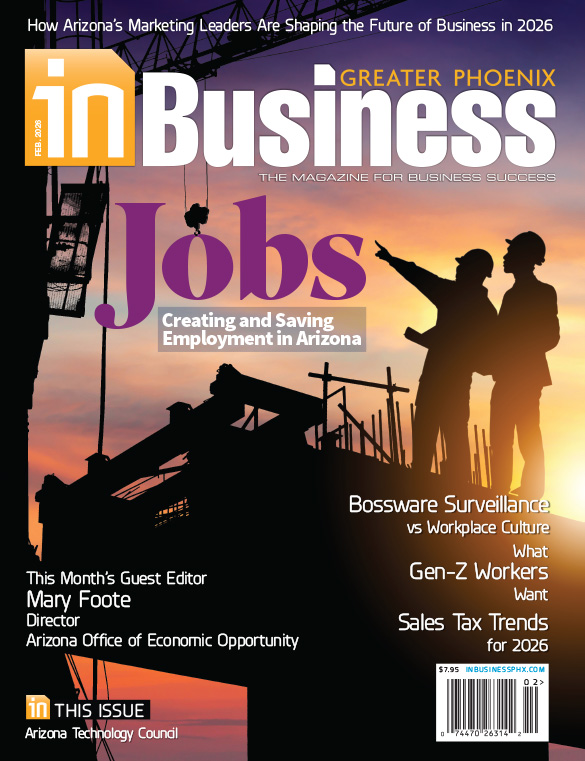
Sales taxes have come a long way since 2018, the year the Supreme Court’s landmark Wayfair decision opened the door for states to charge sales tax on purchases, even if the seller has no physical presence in the taxing state. Since then, sales tax responsibility and compliance have evolved considerably – expanding the definitions of “product”, “service”, and what it means to establish “nexus”. Unfortunately, these definitions remain far from uniform across the Country, creating a complex environment ripe for inadvertent overpayment.





The rapid commercialization of artificial intelligence represents the next phase of this evolution. AI offerings can be characterized as a product, a service or a hybrid of both – creating additional ambiguity for businesses that operate in multiple states.
Traditionally in sales tax practice, when a product or service has both taxable and non-taxable characteristics, one can conduct what is called a “true object test”, considered a legal standard in many states. The true object test answers the question, “what is a customer actually buying.” If an item is categorized as a product, it is usually taxable (although there are many exceptions). If defined as a service, it may not be taxable. However, defining AI isn’t always cut and dried – for example, would a company be buying and owning an AI driven robot itself, or is it buying the service performed by an AI robot, that it leases? The answer can vary from state to state and impact taxability.
“With over 13,000 taxing jurisdictions in the U.S., taxing AI has gotten very complex. It is often beyond the purview of most CFO’s and accountants, who can’t be expected to know the many laws and exceptions related to sales taxes,” said William Flick, Managing Director at EisnerAmper Advisory Group LLC. Flick observes that because sales tax applicability is so complicated, many vendors charge sales tax on every AI-related sale, as a precaution . . . and many bookkeeping departments routinely pay the amount billed, often causing companies to overpay sales taxes by as much as six and seven figures annually.
Flick, a thought leader in sales tax policy and process, advises companies to be vigilant in the following eight areas where overpayment risk is highest:
- 30 states classify AI as “software as a service (SaaS),” meaning companies access AI-driven software over the internet. Even so, actual definition of SaaS varies widely: some states treat SaaS as a taxable software product. Others classify it as a non-taxable service. And still other apply a hybrid approach. Companies must verify that the correct classification is being applied in each jurisdiction.
- When it comes to AI and taxation, it is also important to understand location. In other words, where is the AI sold, bought and utilized. For example, AI can be purchased by a headquarters, but utilized in another state where taxability is exempt. Proper definition of location determines taxability.
- Many states exempt custom AI services from sales tax. Companies should understand the standards by which a state classifies AI as custom and confirm whether those standards are being applied accurately to the specific situation
- Many states determine sales tax nexus by a company achieving a defined threshold of dollar volume or number of transactions within a state during the year. Be mindful of situations where states do not tax AI, per se, but its value can be applied to qualify a company’s reaching a taxable threshold.
- AI products are taxable when ownership is conveyed. If AI simply facilitates analysis or activity, it can be categorized as a service and not taxed. However, the definition in this area is continually being revised to ownership of “ideas”, as a result of AI, can trigger taxability.
- Many organizations automatically pay sales tax as invoiced. Conducting a forensic review of accounts payable processes can uncover significant refund opportunities where tax was incorrectly applied.
- Sales tax liability is rarely all or nothing. If exempt AI is bundled with other digital goods or services, the entire invoice may be taxed, while only a portion of the sales taxes billed are actually owed.
Companies undergoing sales tax audits often assume state determinations are accurate. Given the pace of change in AI taxation, challenging audit findings can reveal errors and lead to substantial refunds.
Said Flick, “We are at the very early stages of artificial intelligence taxation. As rules continue to evolve, businesses that proactively engage sales tax specialists can realize meaningful savings. Given that many companies operate with EBITDA margins in the 6-10% range, identifying significant sales tax refund opportunities can materially enhance profitability.”
 William Flick is recognized nationally as a thought leader on the subject of business sales tax nexus and compliance. He is in the sales tax leadership at EisnerAmper, one of the largest business consulting groups in the world, comprised of EisnerAmper LLP, a licensed independent CPA firm that provides client attest services; and EisnerAmper Advisory Group LLC, an alternative practice structure that provides business advisory and non-attest services in accordance with all applicable laws, regulations, standards and codes of conduct. Prior to merging with Eisner Amper, Flick owned FM Cost Containment one of the leading forensic tax recovery firms in the United States, specializing in tax confirmation and recovery of overpayments of sales and use taxes, as well as tax audit defense, utilizing proprietary research and knowledge of little-known technicalities in the tax laws of each of the 50 states, including over 13,000 tax entities throughout the United States.