On the surface, the national workforce appears to be on the mend after a significant dip in February. March’s national jobs report showed payroll gains of 178,000 and a slight drop (-.1%) in unemployment to 4.3%. On paper, those numbers suggest a strengthening labor market. However, wage growth continues to slow, and workforce participation has declined.


At the same time, Arizona saw a 5,400-job loss and an increase in unemployment to 4.6% (+.1 %). Regardless of whether you’re looking at national or state reports, the numbers are all pointing to a deeper disconnect between employment and long-term stability.
Because those numbers only tell part of the story. They show how many people are working, not how many can keep working.
The Gap Between Employment and Stability
Across the country, and right here in Phoenix, one thing is clear: fewer individuals are truly stable in their employment.
Stability, in this context, means more than simply having a job. It means being able to consistently show up, retain that position over time, and manage the financial and logistical demands that come with it.
The challenge is that the cost of stability—housing, transportation, childcare—has risen faster than wages. Between April 2019 and 2025, inflation in the Phoenix area surged more than 30%, and it continues to rise (+2.2%) in 2026, putting added pressure on everyday essentials. Without that foundation, employment becomes fragile.
That fragility is what many employers are experiencing in real time: missed shifts, higher turnover, and constant rehiring cycles. What is often framed as a labor shortage or pipeline issue is, in reality, a stability problem.
In practice, job loss is rarely about capability. More often, it stems from external pressures such as transportation breakdowns, unstable housing, or the cumulative stress of managing both without a financial buffer. These challenges manifest as attendance issues or inconsistencies, but the root cause lies outside the workplace.
For businesses, the result is a costly and disruptive cycle. Teams spend more time filling gaps than building momentum, productivity declines, and institutional knowledge is lost. Yet most workforce strategies remain focused on placement (i.e., filling roles as quickly as possible) rather than sustaining the people in those roles over the long term.
Stability as an Economic Strategy
What is emerging, both locally and nationally, is a different understanding of workforce development: stability is not a social add-on. It is an economic driver.
Research is beginning to support this shift. A three-year demonstration initiative, The Realization Project, found that when employment is paired with housing and comprehensive support, outcomes improve significantly. Participants experienced a 41% increase in employment and a 95% rate of stable housing after completing the program, with costs per participant roughly equivalent to the public cost of leaving individuals without intervention for a year.
In other words, investing in stability does not increase costs at the system level. It reallocates it toward more effective outcomes.
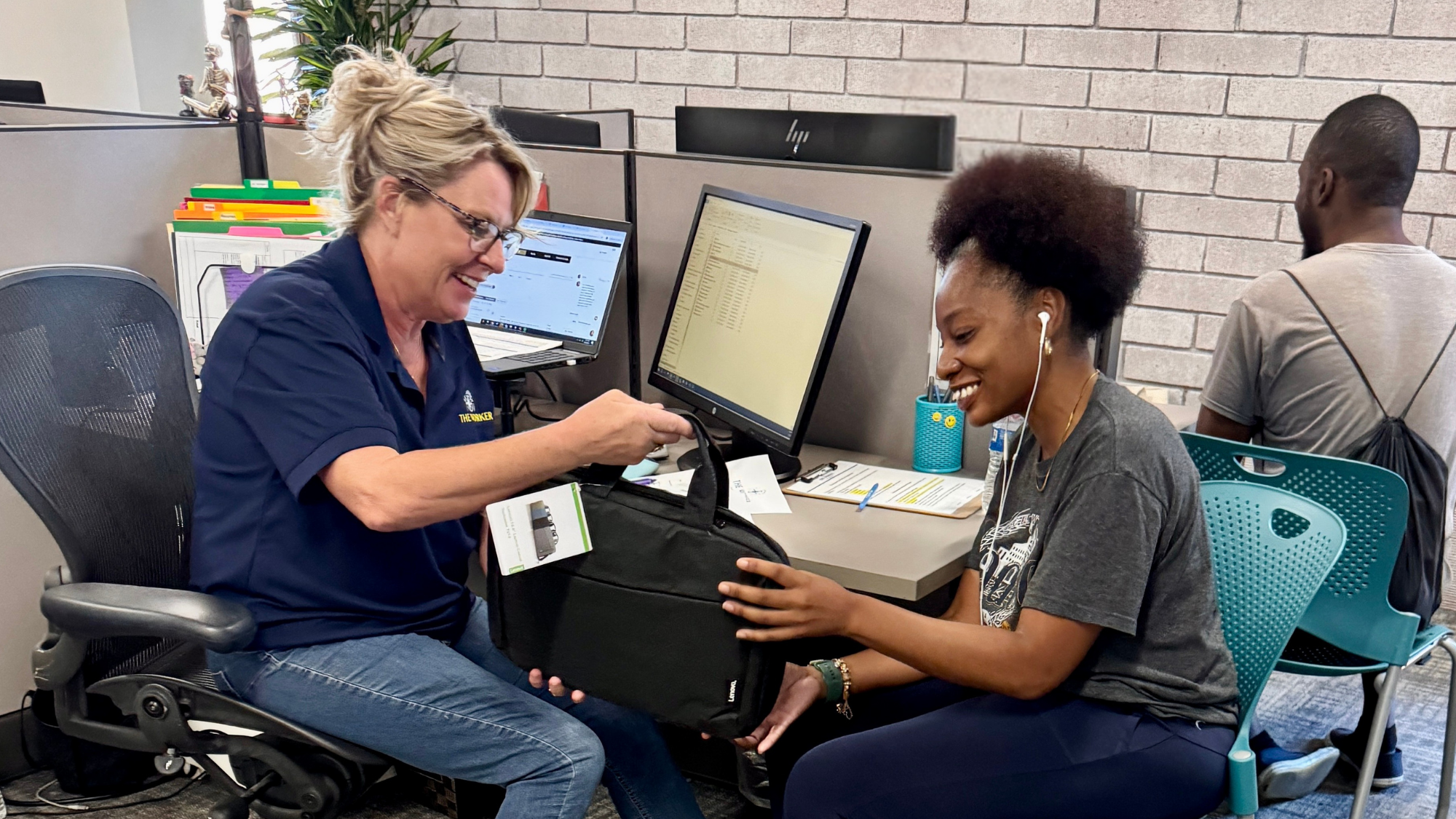
At the local level, basic employment support at The Worker (e.g., client intake, resume assistance, job placement) can cost less than $150 per individual per month, but on its own, that level of support does not lead to long-term success. The more significant investment comes in what surrounds employment.
At The Worker, providing 90 days of stable housing and support services can range from approximately $600 to $1,600 per participant per month, depending on the model and level of support. These costs (e.g., rent, utilities, case management, etc.) often determine whether employment lasts beyond the first few weeks. They are also the costs most often excluded from traditional workforce conversations.
At the same time, demand for these stability-focused solutions is increasing. More individuals are working but still struggling to get ahead, as the margin for error continues to shrink. A single disruption—even something as routine as replacing a tire—can quickly lead to job loss or housing instability.
A few years ago, there may have been more room to recover. Today, that buffer often does not exist, especially in high-growth regions like Phoenix, where rising costs continue to outpace wage growth for many workers.
Rethinking Workforce Development
If the goal is a stronger, more reliable workforce, the approach must evolve.
Placement alone is no longer a sufficient metric of success. Retention, stability, and long-term independence are what ultimately determine whether workforce investments are effective. That shift requires better alignment across sectors.
Employers, nonprofits, housing providers, and public systems all play a role in creating the conditions that allow people to stay employed. When those systems operate in isolation, the result is short-term wins followed by long-term instability. When they are aligned, outcomes improve not just for individuals but also for businesses and the broader economy.
This approach is already taking shape locally. Programs that connect employment with short-term housing and structured support are showing stronger retention and long-term outcomes. Since opening MOM’s House in Phoenix, The Worker has achieved an 89% success rate in helping participants transition to employment, permanent housing, and long-term stability. The success of this model has led to the expansion of similar efforts, including the opening of Joe’s House in Mesa, further signaling that stability-focused workforce solutions are not only effective but scalable.
For employers, this is not just a social issue; it is an operational one. A stable workforce reduces turnover, improves productivity, and enables organizations to scale more effectively, freeing time and resources from constant rehiring and directing them toward growth. At the community level, the impact is even broader, reducing reliance on emergency services, lowering long-term public costs, and contributing to a more resilient local economy.
Looking Ahead
As Phoenix continues to grow, so will the demand for a workforce that is not only available but also sustainable.
The next phase of workforce development will not be defined by the number of jobs created. It will be defined by how many people can keep them. That shift depends on whether we are willing to invest in what happens beyond the hire, building the stability that allows both individuals and businesses to succeed over the long term.
 Lindsay Brown is Chief Programs Officer at St. Joseph the Worker, leading workforce development and housing stability initiatives that help individuals secure and sustain employment. With a background in social work and homeless services, she focuses on addressing both immediate job needs and long-term barriers to stability.