
Global Semiconductor Hub, a semiconductor seminar held in Arizona, brought together industry leaders to discuss what comes next for AI, and much of the conversation focused less on software and more on the hardware needed to support it.







Arizona Commerce Authority President and CEO Sandra Watson opened the program, placing the discussion in the context of the state’s growing role in semiconductor investment. As expected, much of the conversation centered on AI.
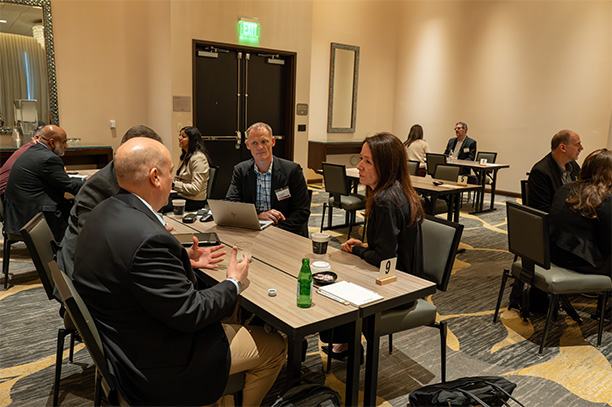
From there, the sessions moved quickly into what it takes to support that demand. One thread focused on how fabs are adjusting to more variable production cycles. Another looked at how low-power architectures are being designed with efficiency in mind, while separate discussions explored how packaging and materials are evolving alongside compute.
Manufacturing came up repeatedly. Speakers continued to rehash the industry’s push toward more automated, AI-driven fabs, along with the pressure that comes with it, including rising costs, energy use and ongoing supply chain constraints. At the same time, conversations around chiplet design and heterogeneous integration showed how system architecture is shifting as performance requirements change.
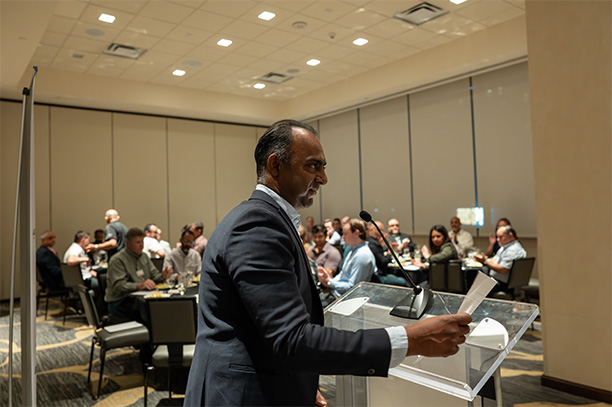
In the midst of all the sessions, two points kept resurfacing: power and what comes next. Brian McCarson of Microchip described the progression of AI as an “intelligence continuum,” linking advances in AI directly to changes in chip design. The next phase focused on inference, where systems transition from training to real-time decision-making. That shift is driving demand for purpose-built silicon designed to improve efficiency, reduce latency and manage power consumption.
All of these discussions are important to Arizona because of its rapidly growing ecosystem, but none more than power. Arizona has roughly 164 data centers statewide, either operating or in development, outpacing much of the country and ranking seventh nationally. To put that in perspective, a large data center can draw 20 to 100 megawatts of power, roughly equivalent to about 15,000 to 80,000 Arizona homes. That power demand is for a single large data center. Now, on top of that, there are nine major semiconductor fabs either approved, under construction or in operation in Arizona. It’s easy to see why this would dominate a conversation locally, let alone in another state.
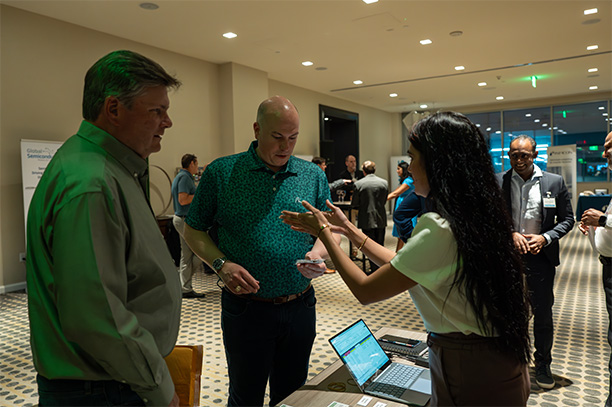
So, no matter where semiconductor investments continue to expand, the next round of development will depend not just on how chips are made but on whether there is enough power to support the next progression of the technology.
Photos courtesy of Data Edge Media Ltd.