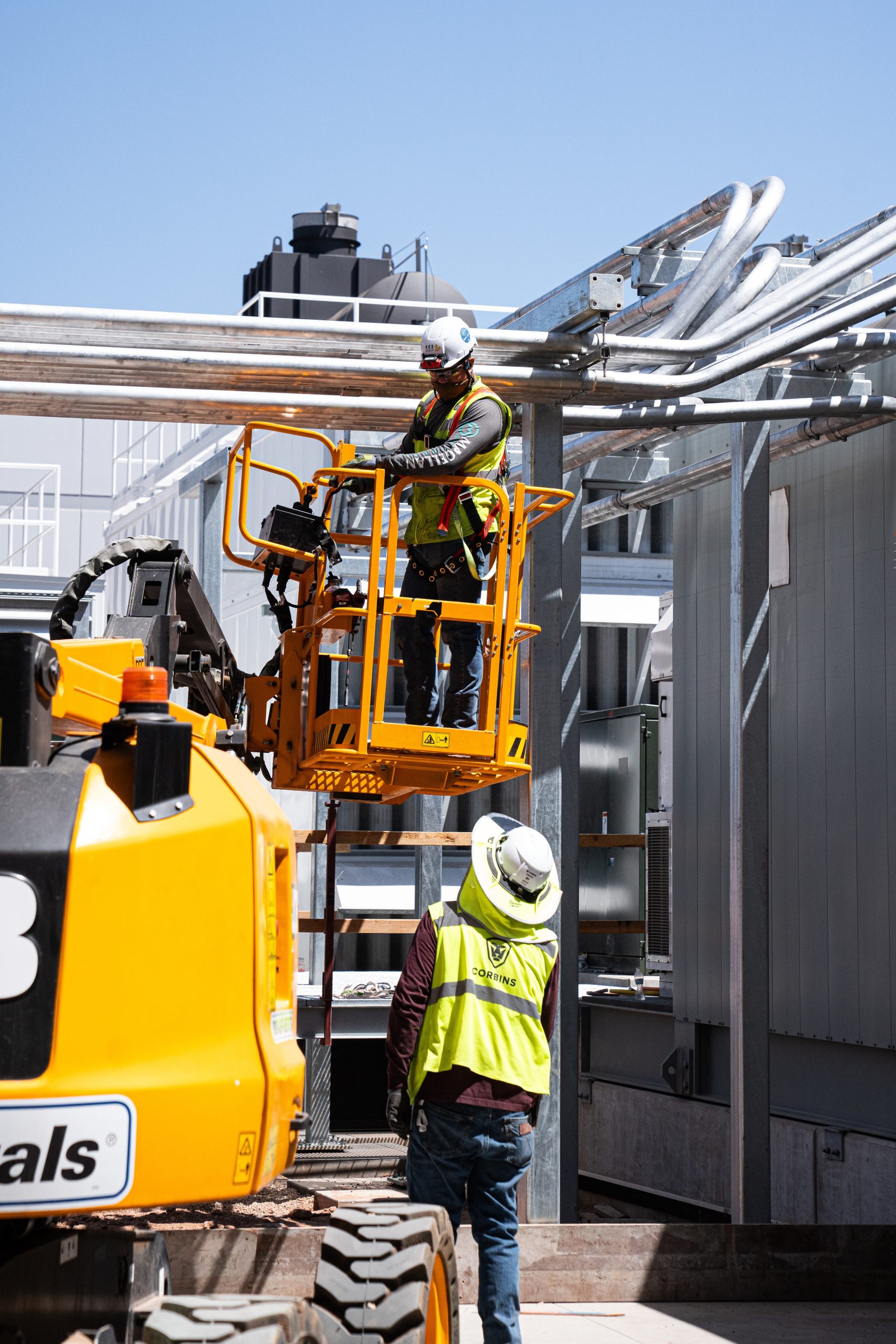
 In semiconductor construction, much of the attention goes to the size of the fabs or the dollar value of investment. But the real complexity lies in what happens after the walls go up: installing the advanced tools that manufacture the chips themselves. The tool install phase demands an extraordinary level of precision — microns of tolerance within ultra-clean environments. It’s one of the most specialized pieces of the construction puzzle, requiring deep technical expertise very few contractors possess, especially when it comes to building in UV environments.
Industrial contractor Nox Group has been involved in this work for decades, primarily through the enterprise’s electrical subcontractor, Corbins — witnessing the ebbs and flows of the Arizona and greater southwestern semiconductor market. Now, as the region takes center stage in the global chip race, contractors need to scale rapidly to deliver historic industrial growth while also meeting strict deadlines and navigating resource constraints.


U.S. Production Fuels Momentum
Arizona has long been home to major chipmakers, but activity has risen and fallen with global market forces. In recent years, as global supply chain disruptions and geopolitical concerns mounted, the pendulum began to swing back toward U.S. production. Federal incentives through the CHIPS Act reinforced that momentum, encouraging companies to expand manufacturing stateside.
The past few months alone have seen a notable increase in conversations around new fabs and tool-install programs — some involving international manufacturers evaluating Arizona as a strategic U.S base. Their interest goes beyond compliance and the state’s business-favorable conditions — it’s driven by competitiveness. Building advanced chips requires proximity to other critical assets: research hubs, skilled labor and reliable infrastructure. Arizona checks the boxes.
Data Centers Spur Semiconductor Growth
One of the strongest forces behind semiconductor expansion is data center growth. Every new hyperscale facility fuels demand for faster, more powerful chips. That connection creates a reinforcing cycle: As data storage and processing capacity increase, so does the need for semiconductors to handle the workload.
In practical terms, that means more fabs — and more highly specialized construction activity. It also means heightened competition for resources, from workforce to power to water. For those on the ground, it’s an “all boats rise” moment, with semiconductor, data center and other industrial projects advancing together.
Looking Forward
The surge in advanced manufacturing is already impacting Arizona’s economy well beyond construction. These projects bring high-paying trade jobs and long-term career opportunities, but they also introduce new challenges: ensuring adequate power and water, scaling workforce pipelines amid a historic construction labor shortage and balancing speed with sustainability.
From a contractor’s perspective, one of the biggest considerations is manpower. Tool install is not entry-level work; it requires highly trained crews who understand the precision and protocols of semiconductor environments. Scaling that expertise while maintaining safety and quality will be critical if Arizona is going to keep pace with the level of investment that’s being signaled today.
Even more, lean methods and digital construction tools have proven essential to navigating workforce challenges. Building information modeling, for example, allows teams to visualize every element of a project before work begins, catching potential conflicts early before tradespeople have boots on the ground. This is beneficial for both efficiency and safety, ensuring workers aren’t needlessly sent into harm’s way while also anticipating project roadblocks.
The coming years will test how quickly industry and state infrastructure can respond. For those of us who have worked in this space for decades, the next chapter feels bigger and faster than anything we’ve seen before, and its success will depend on planning, collaboration and a shared commitment to doing the work right.
At a Glance
Company name: Nox Group
Headquarters: Phoenix, Arizona
Number of Employees: 1,898
Years in Arizona: 50
Annual Revenue: $445 million
Did you benefit from the CHIPS Act? Indirectly (industry momentum)
What vertical(s) do you specialize in? Mission-critical infrastructure (semiconductors, data centers, water/wastewater); Nox Group is a large-scale industrial construction company focused on mission-critical infrastructure, including semiconductor facilities, data centers and water/wastewater treatment plants, in Arizona and across the U.S.
How do you fit into the semiconductor ecosystem? Electrical contractor with expertise in tool installation for semiconductor fabs
Photo courtesy of Nox Group
See all “SEMI Complete” company spotlights.