Arizona’s semiconductor employers are taking a direct role in preparing the people they hope to hire. At Arizona State University, that involvement extends into recruiting: Participants who complete the Foundations for Equipment Technician Program and meet its requirements are guaranteed an interview with TSMC Arizona.
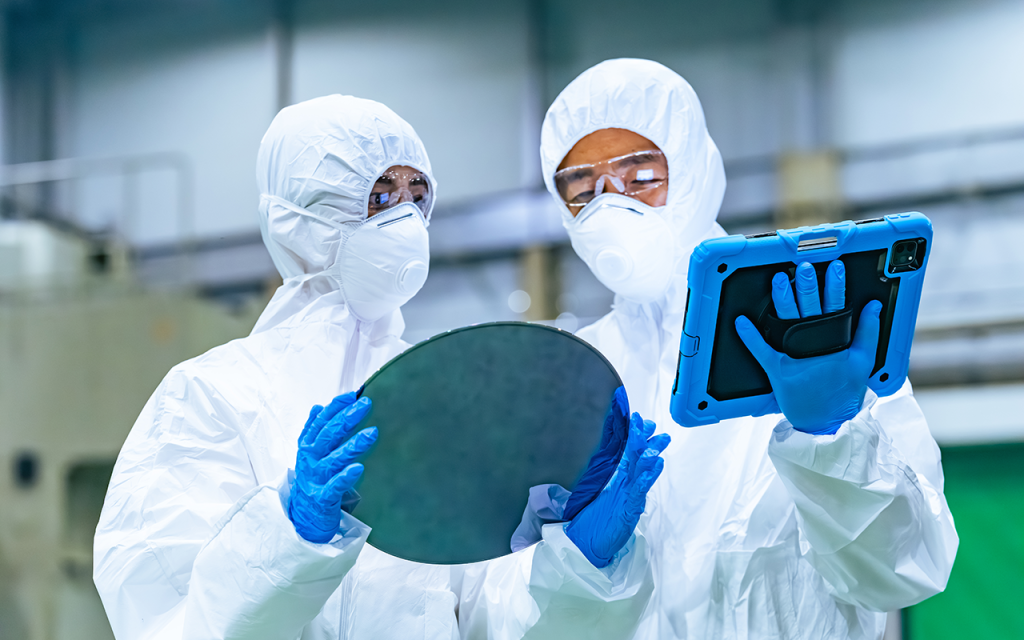
ASU announced the no-cost program in May, when TSMC Arizona outlined plans to hire more than 100 equipment technicians by the end of 2026. Participants train in laboratory and cleanroom environments designed to mirror fabrication facilities, learning about the tools, systems and safety protocols used in production. The program targets equipment maintenance and troubleshooting, with credentials intended to support opportunities across the semiconductor industry.




The connection between education and industrial work is also taking physical shape in northern Arizona. Northern Arizona University’s Microelectronics Processing and Characterization Testing Lab opened Oct. 17 with a shared-use model that gives students, researchers and companies access to advanced equipment in the same facility.
The Flagstaff lab has more than 35 instruments supporting materials analysis, measurement and electrical testing. Its capabilities include examining materials at the atomic scale, preparing samples and testing electrical performance. Companies can use the facility for research, testing and prototyping, bringing industrial applications into a setting that also supports workforce preparation.
The lab gives students “hands-on experience with advanced tools while connecting faculty and industry partners to tackle real engineering challenges,” Charles Chadwell, dean of NAU’s Steve Sanghi College of Engineering, said in the opening release.
ASU is also bringing industry experience into instruction through its participation in the national Foundry School. Announced in September, the advanced manufacturing initiative will have founders and CEOs teach subjects that include materials, precision production, automation and factory economics.
The initiative extends across advanced manufacturing rather than focusing exclusively on semiconductors. Its relevance to Arizona’s chip workforce lies in bringing practitioners into education about how industrial operations are built and run. ASU’s School of Manufacturing Systems and Networks prepares students for work across microelectronics, aerospace, medical devices and energy, according to the university’s announcement.
ASU engineering dean Kyle Squires linked that instruction to decisions made before production begins, including how an early design affects tooling and manufacturing yield. The initiative would put students alongside people who have faced those operating decisions, connecting technical education with the realities of producing a product at industrial scale.
Coordinating workforce preparation across institutions is part of the work of the Southwest node of the National Network for Microelectronics Education. Announced in May and convened by the Arizona Commerce Authority, the consortium brings together 47 members across a five-state region, including employers, colleges, workforce organizations and community partners.
Its industry participants include Intel, TSMC and Amkor alongside equipment companies Applied Materials and Lam Research. Planned work includes aligning curricula with employer needs, developing credentials that build on one another and expanding access to cleanroom training, internships and other work-based experiences.
The SEMI Foundation selected SemiSphere, an educational content-sharing platform developed at the University of Arizona, for use across the network. It is intended to bring instructors and semiconductor specialists together to develop and share teaching materials, extending the reach of their expertise beyond a single campus or employer.
These efforts give companies several points of involvement before a prospective employee submits an application. Employers can help define the skills a program teaches, contribute practical industrial knowledge and support access to specialized equipment. ASU’s technician program carries that involvement through to an interview. Its announcement does not establish how many participants have secured jobs, but it does identify a specific commitment from an employer seeking technicians: Eligible graduates will have an opportunity to meet with the company.