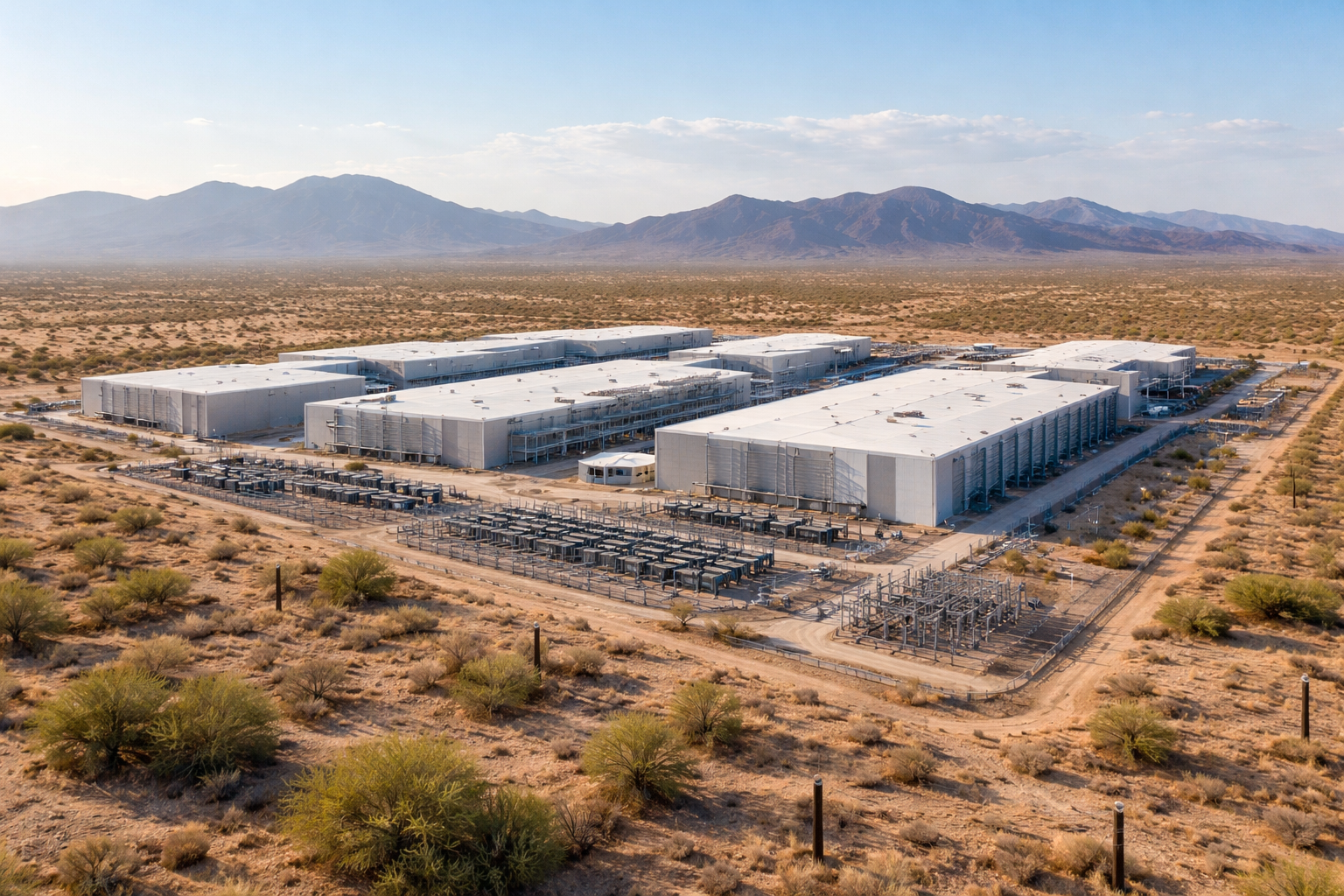
 Data centers are becoming one of the most visible and contested pieces of Arizona’s technology growth. As demand for cloud computing and artificial intelligence accelerates, communities across the state are weighing the benefits of large-scale digital infrastructure against concerns about water, power and long-term local impact.
Arizona’s appeal to data center developers is not difficult to understand. The state offers available land, relatively low natural disaster risk, strong utility infrastructure and proximity to major technology and semiconductor investments. Over the past several years, as chip manufacturing and advanced computing expanded in Arizona, data centers followed, supporting everything from cloud storage to AI model training.



But as proposals have grown larger, so has public scrutiny.
In cities such as Chandler and Marana, residents have turned out in force at public meetings to voice opposition to proposed projects. Many worry that hyperscale facilities could strain water supplies, increase electricity costs or change the character of their communities. Other questions center on whether data centers deliver enough permanent jobs to justify their footprint.
Those concerns are not abstract. Modern AI-focused data centers can require hundreds of megawatts of power at full buildout, comparable to the electricity demand of tens of thousands of homes. Critics argue that even if utilities say costs are covered by developers, the scale of demand raises questions about long-term grid planning, emissions from backup generators and whether ratepayers could eventually be affected.
Water use is another flashpoint. Arizona’s long history of water concerns makes any large industrial project a focal point for scrutiny. Residents often ask whether commitments made today will hold for decades, especially as technology and ownership change. Some have also raised concerns about air quality, noise and emergency power systems, particularly when diesel or natural gas generators are part of backup plans.
Developers and utilities counter that data center design has changed significantly over the years. In public hearings, developers have argued that newer data center designs rely on air cooling rather than traditional cooling towers, limiting water use. In several proposals reviewed by local governments, the estimated water demand was substantially lower than the water used for farming on the same sites.
Utilities have emphasized that large data center customers typically pay the full upfront costs for new transmission and distribution infrastructure. In regulatory hearings, utility executives have said that if new generation is required to serve a data center, those costs are borne by the customer, not residential ratepayers. In some cases, utilities argue that long-term contracts with data centers can help stabilize revenues and delay future rate increases.
The Arizona Corporation Commission has become a central forum for these debates. In approving energy supply agreements tied to data center projects, commissioners have pressed utilities and developers on ratepayer protections, power sourcing and contingency planning. Regulators have repeatedly stressed that their role is to balance economic development with consumer protection.
Commissioners have also noted that data centers are not new to Arizona. What has changed is their scale. Facilities built to support artificial intelligence, cloud computing and hyperscale operations are far larger and more energy-intensive than earlier generations, forcing regulators and communities to rethink assumptions about land use and infrastructure.
Economically, the stakes are significant. Developers point to multibillion-dollar capital investments, construction activity and long-term tax revenue for local governments. Construction trades and regional business groups often support projects for the short- and medium-term employment they generate. Opponents counter that once construction ends, permanent staffing levels are relatively small, sometimes numbering in the dozens rather than hundreds.
Questions about transparency have surfaced repeatedly during public hearings. Residents and local officials have asked who ultimately owns and operates proposed data centers, how projects are financed and whether commitments made during zoning and permitting remain in place if ownership changes.
Rather than approving or rejecting projects outright, some municipalities are turning to ordinances and zoning rules to guide future data center proposals. Several Arizona communities have adopted data center ordinances that set standards for water use, cooling methods, noise and setbacks. Others are considering due diligence requirements for large energy and water users.
Arizona checks many of the boxes developers look for, including land, power infrastructure and proximity to major chip manufacturing. At the same time, projects are prompting more direct debate over water planning, grid capacity and which commitments should be locked in before approvals are granted.
For now, outcomes have differed across Arizona. Some projects have been rejected after strong public opposition, while others continue through zoning and regulatory review, underscoring how local the decisions remain.
Our Data Center Landscape
- Arizona hosts at least 16 operating data centers, with more than 20 additional facilities proposed or under development, representing nearly 4,000 megawatts of planned capacity, according to data compiled by Cleanview, which tracks large-scale data center projects nationwide.
- Arizona’s data centers supported more than 81,000 jobs statewide in 2023, including both operations and related economic activity, according to a recent PwC industry analysis.
- Arizona’s largest utility, Arizona Public Service Co., has filed a rate application that includes a request for a nearly 14% increase in revenue tied in part to rising demand from data centers and the cost of grid upgrades.