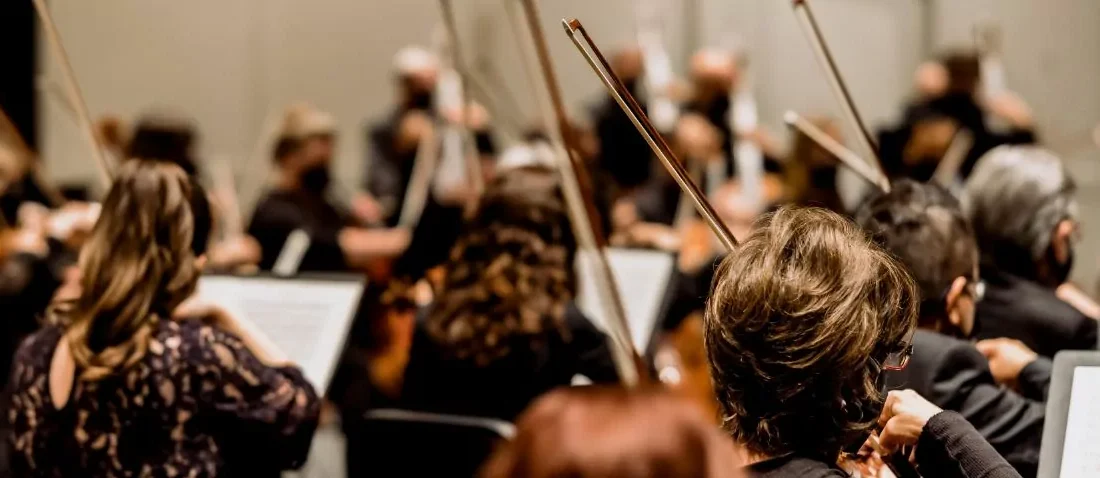
The Phoenix Symphony will resume performances Nov. 12 after a concentrated fundraising effort secured commitments to lift the suspension of the 2026-27 season.




The return comes less than three weeks after a severe cash shortage forced the Symphony to suspend its 2026–27 season.
The next concert will be a chamber performance of Brahms’ “Serenade No. 1” on Nov. 12 at the Musical Instrument Museum. Principal Pops Conductor Stuart Chafetz leads “Music of the Knights: Sir Andrew Lloyd Webber, Sir Elton John & Sir Paul McCartney” November 13-15 at Symphony Hall.
“If this challenge has reaffirmed anything for me, it’s that every corner of our city shares a deep passion for the Phoenix Symphony,” said Mo Stein, chair of the Phoenix Symphony Association Board of Directors. “We faced a crisis, and a small group of community leaders, organizations and culture lovers responded with remarkable generosity. Their fast action and commitment have made it possible to bring our musicians back to the stage, while giving the Symphony an opportunity to fundamentally rethink how we operate and build a future worthy of this community’s support.”
The Symphony also announced the creation of the New American Symphony Commission, an 11-member group bringing together independent civic and business leaders, musicians and Symphony representatives to reexamine the organization’s financial and operating model. The commission will be charged with developing a sustainable plan for the nearly 80-year-old institution, ensuring that the financial challenges that led to the suspension are addressed through meaningful, lasting change. It will be chaired by business leaders John Graham and Don Opatrny.
Graham, chairman and CEO of Sunbelt Holdings, is a former chair of the Symphony’s Board of Directors. He has held leadership positions in numerous Arizona civic and nonprofit organizations. Opatrny is a private investor and former Goldman Sachs partner and managing director. He has chaired numerous nonprofit organizations in arts and education. He is the immediate past chair of the Phoenix Art Museum and chairs the Arizona Community Foundation investment committee.
The commission will include two musicians selected by Local 586 of the American Federation of Musicians, along with Symphony and community representatives. Graham and Opatrny will select the remaining members. The group will examine the Symphony’s organizational structure, expenses, revenue opportunities and fundraising model, and submit recommendations to the Board for consideration and approval. Musicians’ compensation and working conditions remain subject to collective bargaining.
“Getting our musicians on stage again was our top priority,” Graham said. “Now we must build a financial and operating model that allows the Symphony to thrive, not simply survive from one season to the next.”
“We owe our musicians, donors and audiences a disciplined, realistic plan for lasting financial stability,” Opatrny said. “That work must begin as soon as possible.”
The Symphony plans to announce additional commission members and recognize the leaders and organizations whose support made the return possible in a subsequent announcement.
Meanwhile, the Symphony’s development team and musicians have begun collaborating on The Next Movement, a comprehensive fundraising campaign designed to sustain performances while building a stronger future for the Symphony. The initiative will invite individuals, businesses, foundations and community organizations throughout Arizona to help preserve an essential part of the state’s cultural identity and ensure that future generations can experience the power of live symphonic music.
The immediate fundraising commitments make it possible to resume performances, while the continued support of the community will be essential to sustaining the season and securing the Symphony’s future.
“Just days ago, we faced the heartbreaking prospect of a silent concert hall and an uncertain future,” said Peter Kjome, the Symphony’s president and CEO. “Now we can welcome our musicians and audiences back. All of us are grateful for their dedication and for the Valley leaders and organizations who helped make this return possible.”
Details about performances, tickets and the resumption of educational and community programs are available at phoenixsymphony.org.
“Now, more than ever, we need the community to be part of the Phoenix Symphony’s future,” said Stein, the Board president. “That means making a donation if you can, but it also means something simpler: Please come to our concerts. Be inspired by the sounds and emotion. Feel how music connects us. The best way to show that Phoenix needs and values its Symphony is to fill the concert hall and feel the experience.”