Businesses face a variety of legal risks every day, but many lawsuits can be reduced or prevented through thoughtful safety policies, consistent enforcement, and proactive risk management.





When a company takes time to identify hazards, train employees, document procedures and respond quickly to unsafe conditions, it not only protects customers and employees but also strengthens its position if a claim is later made against the business.
Proactive Risk Management
In the business world, liability is an ongoing concern that should be addressed before an accident occurs. A company may be exposed to claims involving customer injuries, employee conduct, vehicle accidents, unsafe working conditions or a failure to follow its own rules.
Strong policies are important, but policies alone are not enough. A business must also train its employees, monitor compliance, correct known hazards and keep records showing that reasonable safety measures were taken.
Key Areas of Potential Liability
Several areas deserve special attention when a business evaluates its potential liability. These include premises liability, employee use of company vehicles, and the creation and enforcement of safety policies and training programs. Each area presents different risks, but the same basic principle applies: A company is better protected when it can show that it recognized foreseeable dangers and took reasonable steps to prevent harm.
Here are two of the most common areas of potential liability employers face:
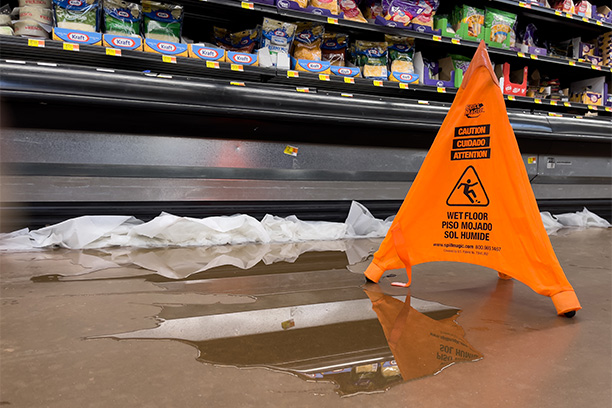
- Premises Liability — Premises liability is one of the most common sources of claims against businesses. These cases often arise when a customer, visitor or employee is injured because of a dangerous condition on the property. Examples may include an unsupported mirror in a clothing store, an electrical cord placed where customers walk, poor lighting in a hallway, uneven flooring, cluttered aisles or a water spill in a high-traffic area.
A business should regularly inspect its premises and make sure that obvious hazards are repaired, removed or clearly marked. However, not every hazard is immediately noticeable, so companies should also pay attention to patterns. If customers repeatedly stumble over the same display, if a locker room entrance frequently becomes wet or if a particular area creates congestion, those facts may put the business on notice that action is needed. Warning signs, wet floor markers, floor mats, barriers and employee monitoring can help reduce risk, but the safest approach is to eliminate the hazard whenever possible.
By documenting inspections and corrective action, a business can demonstrate that it took reasonable steps to maintain a safe environment.
- Employee Driving — Employee driving is another important area of risk. When employees operate company vehicles, or use personal vehicles for work-related tasks, the business may face liability if an accident occurs. A company should have a written vehicle-use policy that identifies who is allowed to drive, what qualifications are required and what conduct is prohibited while driving. The policy should address valid licensing, background checks, insurance coverage, seat belt use, distracted driving, impaired driving, accident reporting and vehicle maintenance.
Employers should also consider whether their insurance coverage is sufficient for the type of driving being performed. If coverage is too low, an injured party may have a greater incentive to pursue the company directly. Regular training, license verification, vehicle inspections and maintenance records can provide additional protection and help show that the company took driver safety seriously.
Effective Safety Policies & Consistent Enforcement
Safety policies and training programs are also essential, but they must be enforced consistently. Many businesses have written rules explaining what employees may or may not do, such as limits on lifting heavy items, requirements for using safety equipment or procedures for cleaning spills. Problems arise when managers ignore those rules or allow employees to violate them in practice.
For example, if a store has a policy stating that employees should not carry more than a certain number of boxes at one time but supervisors regularly permit employees to exceed that limit, the policy may later be used as evidence that the company knew the conduct was unsafe. To avoid potential injuries, businesses should train employees on safety expectations, discipline or correct violations when appropriate and make sure managers model and enforce the same standards. A policy that exists only on paper offers limited protection; a policy that is actively followed can reduce injuries and strengthen the company’s defense.
Make Safety Part of Your Culture
In addition to reducing lawsuits, strong safety practices can improve workplace culture and customer confidence. Employees are more likely to follow procedures when they understand that safety is a business priority rather than a formality. Customers are also more likely to trust a business that keeps its premises clean, organized and well-maintained.
Consistent documentation is especially important because it allows the company to show what was done before an incident occurred. Inspection logs, training records, incident reports, maintenance records and written corrective actions may all become valuable evidence if a claim is filed.
Building a Defensible & Resilient Organization
Overall, preventing lawsuits requires more than reacting after an accident. A business should identify potential hazards, create clear policies, train employees, enforce rules consistently and document its efforts.
By taking these steps, business owners and managers can better protect their employees, customers and financial stability while reducing the likelihood that preventable safety issues will turn into costly legal disputes.
 Eleanor “Ellie” Shaffer is an associate attorney at Gallagher & Kennedy in Phoenix. She focuses her practice exclusively in the areas of catastrophic personal injury and wrongful death cases involving product liability, medical malpractice, motor vehicle accidents and premises liability.