Most leaders think about legacy too late. They think about it when they are leaving a role, reflecting on a milestone or trying to determine whether their work really mattered. But legacy is not something that begins at the end of leadership. It is being formed in real time, every day, through decisions, habits, priorities and the way people experience us.






That is why leaders need to conduct what I call a legacy audit.
A legacy audit is an honest evaluation of the impact your leadership is having right now. It is not a branding exercise. It is not about image management, titles or public recognition. It is a process of examining whether your values, behavior, relationships and influence are aligned in a way that leaves something meaningful behind.
Too many leaders confuse achievement with legacy. They assume that if results are strong, their leadership must be sound. But results alone do not tell the whole story. A leader can hit goals and still damage trust. They can grow revenue and still create burnout. They can be admired publicly and feared privately. Legacy requires a deeper measure.
Holistic leadership teaches us to evaluate leadership as more than performance. It asks whether a leader is building people, creating trust, acting with integrity and helping others rise into their own capacity. Leadership is not only about what you accomplish. It is also about what remains in people because you led them.
A meaningful legacy audit begins with values. What do you say you stand for, and where is the evidence? If your stated values are honesty, compassion, accountability or service, can the people around you feel those values in your leadership? Legacy is built when values are not just spoken but practiced under pressure. Anyone can sound principled when circumstances are favorable. The real test is whether your values still guide your behavior when leadership becomes inconvenient, uncomfortable or costly.
The second area to evaluate is trust. Trust is one of the clearest indicators of leadership legacy because people remember how safe, seen and respected they felt under your leadership. Ask yourself: Do people experience me as credible? Do my actions match my words? Do I create an environment where truth can be spoken without fear? Do people leave conversations with me feeling clearer, stronger and more valued, or more guarded and uncertain? Trust is not built through position. It is built through consistency.
The third area is emotional intelligence and blind spots. Many leaders avoid this part because it requires humility. But blind spots are often the very things that distort legacy. A leader may believe they are empowering others while actually controlling every outcome. They may believe they are being direct while others experience them as dismissive. They may think they are protecting standards while their team experiences fear, not excellence.
A legacy audit requires the courage to ask, “What is true about my leadership that I cannot see on my own?” That means inviting feedback, listening without defensiveness and paying attention to patterns. Self-awareness is not a weakness in leadership. It is maturity. Leaders who refuse self-examination often leave behind confusion, while leaders who embrace it leave behind credibility and growth.
The fourth area is development. One of the clearest signs of healthy leadership is whether other people are growing because of it. If your leadership begins and ends with your own success, your impact will always be limited. But if your leadership consistently develops confidence, clarity, character and capability in others, your influence extends far beyond your role.
This is where legacy becomes powerful. Legacy is not just what you built. It is who became stronger, wiser and more prepared because they encountered your leadership. It is the employee who found their voice, the emerging leader who was mentored well, the team that learned to operate with trust, and the culture that became healthier because someone chose to lead with intention.
Finally, a legacy audit must examine alignment. Are your calendar, communication, relationships and decisions aligned with the kind of leader you claim to be? Misalignment is where legacy begins to erode. If you say people matter but never make time for them, people notice. If you say integrity matters but only practice it when convenient, people notice. If you say you want to develop others but hoard authority, people notice. Leadership always leaves evidence.
The good news is this: A legacy audit is not meant to shame leaders. It is meant to realign them.
It gives leaders the opportunity to pause, tell themselves the truth and make corrections while there is still time to lead differently. It reminds us that legacy is not reserved for the end of a career. It is built in meetings, in conflict, in feedback, in how we handle pressure, in how we treat people who cannot advance our agenda, and in whether our leadership leaves people diminished or developed.
Every leader will leave something behind.
The question is whether it will be a record of authority or a pattern of transformational impact.
A legacy audit helps leaders answer that question before others answer it for them.
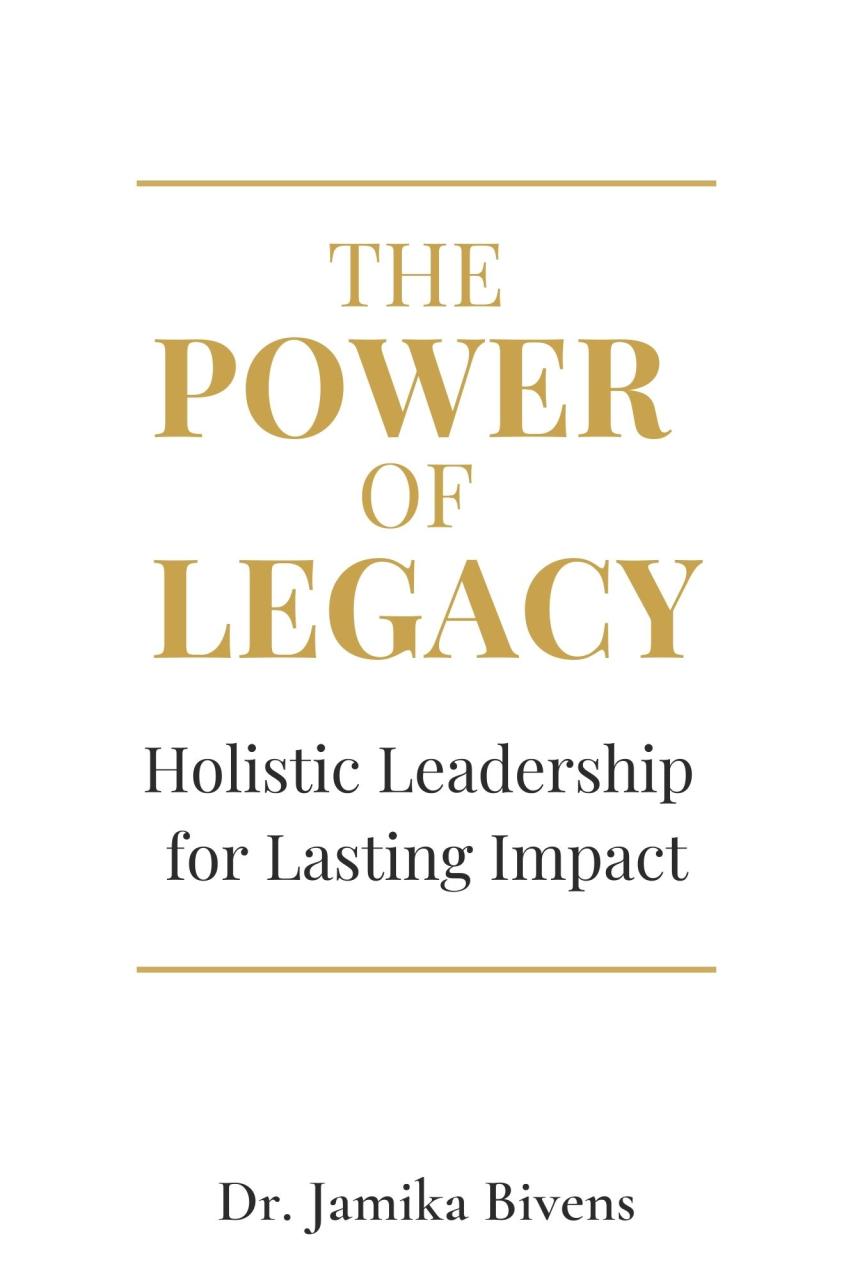
 Jamika Bivens, Ph.D., holds a doctorate in Strategic Leadership and an MBA, and works closely with organizations looking to develop leaders who can sustain both performance and people over time. In her new book, The Power of Legacy: Holistic Leadership for Lasting Impact (March 10, 2026), she introduces a practical concept leaders can apply immediately: the legacy audit.