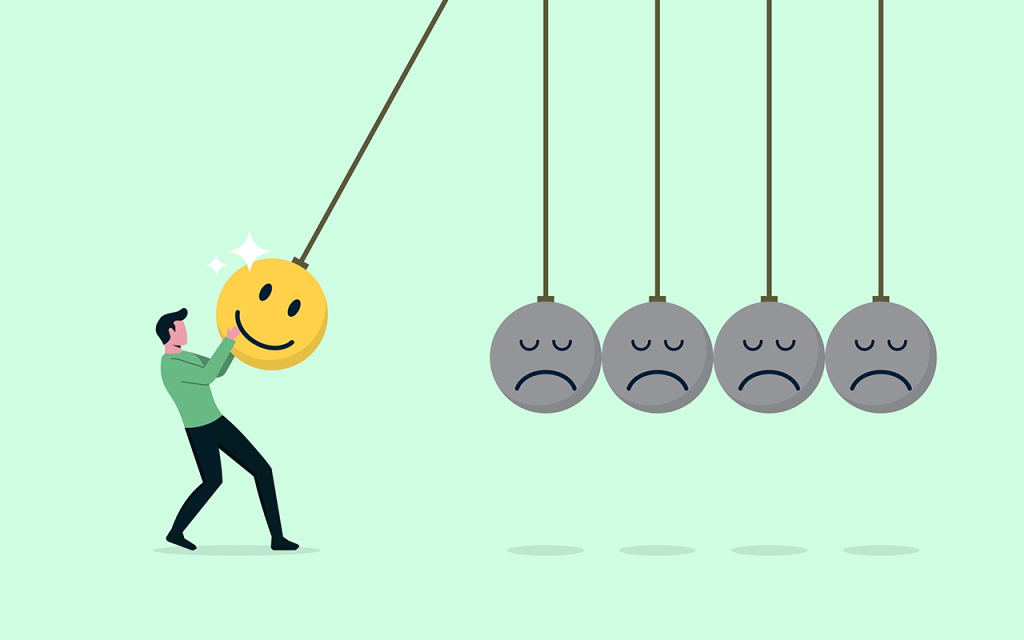
In general, optimism about the outcomes of any endeavor — whether it’s a business opportunity or a conversation — makes success more likely. That’s probably obvious, and I’m sure we all have anecdotal evidence to prove such a hypothesis. Nonetheless, plenty of scientists thought it important to support such an idea with data; indeed, there’s a whole lot of research to back it up. Across a variety of tasks and contexts, reasonable optimism (as opposed to unrealistic optimism or overconfidence), when compared with the absence of optimism or pessimism, has been shown to enhance goal pursuit and persistence; predict business and entrepreneurial success; improve interpersonal outcomes, including in conversations and negotiations; improve creative problem-solving and adaptability; and protect against stress and burnout, which enhances long-term performance and well-being.




These findings align with a body of research in positive psychology. For example, Martin Seligman’s work on learned optimism shows that cultivating optimistic explanatory styles improves resilience and well-being. Barbara Fredrickson’s broaden-and-build theory further demonstrates that positive emotions, such as hope and curiosity, expand our cognitive and social resources, making us more adaptable in conflict and better able to generate creative solutions.
From a neurobiological perspective, optimism activates dopaminergic pathways, particularly in the mesolimbic system, including the ventral tegmental area and nucleus accumbens, which are associated with motivation, reward anticipation, and goal-directed behavior. When we expect positive outcomes, dopamine release increases, which leads to numerous benefits: we become more likely to approach the situation rather than avoid it; we’re more open-minded; and, as can be expected, we’re more driven and persistent. Positive expectations also reduce amygdala reactivity. Remember that the amygdala is our salience and valence system, helping to tag experiences as emotionally significant. Reducing amygdala reactivity typically reduces emotional arousal and dampens threat perception, thereby lowering stress responses. This shift also allows for greater prefrontal cortex engagement, which further supports emotional regulation and social interaction.
So, what does this mean for conflict resolution processes? Well, you might be able to surmise that all of the aforementioned benefits of optimism (e.g., willingness to approach, open-mindedness, persistence, decreased threat perception, greater emotional regulation, and heightened capacity for social interaction) help people in conflict find mutually acceptable solutions more easily. That would make sense. So, does research support the use of optimism in conflict as well? Absolutely.
Studies have shown that when conflicting parties expect a positive outcome from negotiation or conflict resolution processes, they are more likely to engage in open dialogue and exhibit empathy. Those who approach conflict with an expectation of growth and positive change are also more likely to collaborate and communicate effectively. Research also suggests that optimism, positive framing, and belief in mutual gain increase the likelihood of negotiation success, even in entrenched or violent conflicts. In organizational settings, team cultures that frame conflict as an opportunity tend to foster continuous learning and adaptive systems, ultimately enhancing both individual and collective performance.
To test this yourself, simply imagine a world wherein you feel more positive about the particular conflicts you’re currently witnessing or experiencing. Think of a specific conflict. Go ahead, stop reading for a moment, and bring the conflict to mind.
Now imagine, just for a moment, that you became excited when thinking about it. And not excited in an “I’m excited to beat them” sort of way; but rather, excited in an “I think this is going lead to a better world” sort of way. Would you be more inclined to approach the situation in a productive manner?
I realize this visualization might be a large ask. Regarding any ongoing conflict, whether it’s with a family member, friend, or coworker, or even one of the many larger intergroup or social conflicts we hear about and see images of every day, how could we possibly see these as beneficial? How could we see these as anything other than stressful, uncomfortable, and possibly tragic situations that we just want to eliminate as soon as possible? The answers lie in our brain’s predictive plasticity and our ability to learn and recondition.
Getting stuck in ongoing cycles of conflict, including cynical perceptions and pessimistic predictions of others, is quite common. Behaviors to eliminate conflict as quickly as possible, such as those associated with conflict avoidance or aggression, are also normal. But our goal, if we’re looking for healthier relationships and ultimately less stress, is to resolve conflicts more constructively. Getting to this goal is all the more difficult if we do not believe there is any possibility for a positive outcome — for ourselves, others involved, or the world.
Excerpted from Wired for Peace: Using 7 Neuroscience-Based Principles to Resolve Conflicts by Jeremy Pollack, Ph.D. Reprinted with permission.
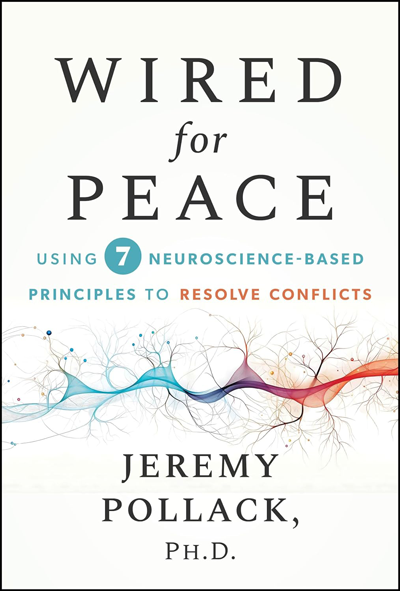 Jeremy Pollack, Ph.D., is a social-organizational psychologist and one of the leading voices in the field of workplace conflict resolution and peacebuilding. He is the founder and CEO of Pollack Peacebuilding Systems, an international conflict resolution consulting firm, and the co-founder and chairman of the Peaceful Leadership Institute, a 501(c)(3) nonprofit dedicated to advancing the model and theory of Peaceful Leadership. He is also the author of Wired for Peace: Using 7 Neuroscience-Based Principles to Resolve Conflicts.