Photo courtesy of Gensler
Every tenant in the Valley is doing the same math right now. Capital costs more than it did a few years ago, footprints are rightsizing, and leases signed in a very different market are coming up for renewal.
While most companies evaluate occupancy costs behind the scenes, mission-driven organizations must do so in public. This is because they answer to donors, boards and the communities they serve. That visibility has made them unusually good at addressing a question the broader market is only beginning to ask: What is each dollar of occupancy actually buying?
A Higher Bar for Every Square Foot
Occupancy is an overhead expense and, for a nonprofit, that spend is visible to its entire community. Every dollar allocated to space is a dollar that could otherwise support programs and services, meaning each square foot must justify its value against the organization’s mission. That is a significantly higher bar than most tenants apply to their own space.
Recent shifts in federal and state funding have made these occupancy decisions far more urgent for many Arizona nonprofits. Questions that normally could have been deferred for several years are being answered now, and organizations are needing to plan spaces that meet their needs today as well as decades into the future.
The current market is well positioned to support that level of scrutiny. According to JLL’s “Phoenix Office Market Dynamics | Q2 2026,” office vacancy remains at 20.4% while rental rates continue to increase. As a result, underutilized offices, recently renovated buildings and move-in-ready suites are becoming attractive alternatives for organizations seeking greater value from their real estate investments. For nonprofits in particular, these opportunities can reduce upfront occupancy costs, accelerate timelines and preserve more resources for mission delivery.
Three Moves Worth Copying
Let adjacency drive the location decision. A “prestige address” is often viewed as the benchmark for a desirable office location. Disciplined tenants, however, tend to ask a different set of questions: Who do we need to be near, who needs to reach us and what space best supports the communities we serve? Proximity to partner organizations, transit access, ground-floor visibility and a welcoming front door often deliver more operational value than a marquee tower. If a nonprofit chooses a repurposed property in an established submarket, it can redirect meaningful capital investment toward a workplace solution that improves performance, drives culture and creates true community impact.
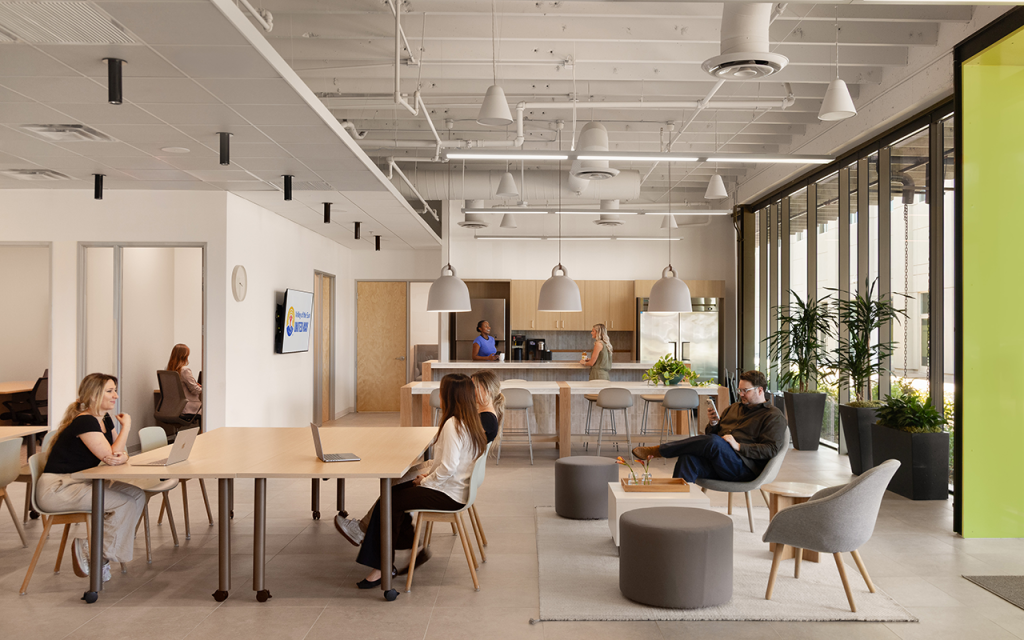
Make the existing asset do the work. When moving into a new space, the instinct is to start clean. However, the more disciplined approach is to inventory what functions well, like a base building in good condition, a floorplate that suits the work and furniture that still has a decade of life left in it. Repositioning concentrates capital in the few areas where design genuinely changes behavior, usually the entry sequence, the gathering space and the places where people collaborate.
Invest in flexibility. A right-sized footprint works best if the space inside can evolve. The office should be built from a flexible kit of parts that can be tailored to different workstyles with a goal to create solutions that deliver today and well into the future.
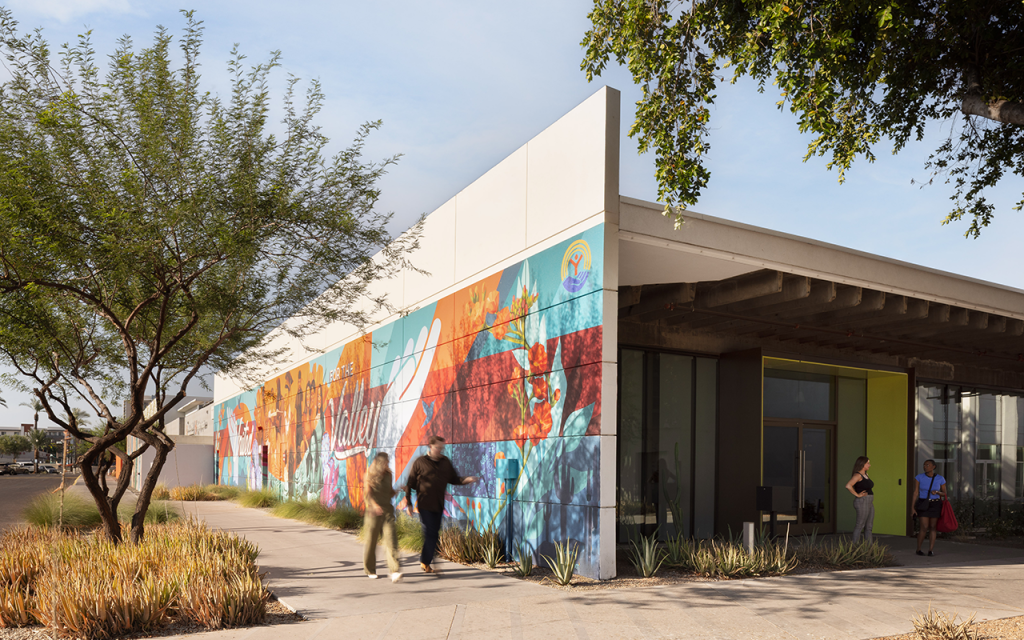
Photo courtesy of Gensler
Valley of the Sun United Way Goes Home
Valley of the Sun United Way applied all three moves as it approached its 100th anniversary. The organization returned to Park Central, the campus where it once ran its community fundraising campaigns, into a building named for a former board member. The move positioned the organization close to key partner organizations while providing a visible, accessible front door for the community it serves. Working with Gensler, the team retained 80% of the existing space and carried furniture forward from the previous office, concentrating investment in a few high-impact areas. Since relocating, the space has supported a significant increase in volunteer events, leadership meetings and community gatherings, demonstrating how thoughtful real estate decisions can create measurable community impact.
The Questions in Front of Everyone
The strongest real estate decisions are rarely defined by the newest building or the most recognizable address. Instead, they come from a clear understanding of what is already working, where investment will have the greatest impact and how today’s decisions can support tomorrow’s needs.
In that context, real estate is more than an operational expense. It is an opportunity to reinforce priorities, support performance and create lasting impact. The principle is simple: Every square foot should earn its place. Ultimately, the most effective workplaces are not defined by the prestige of their address but by how well they support the people, partnerships and outcomes that matter most. Organizations recognize that value is not created by starting over but by making thoughtful decisions about what to keep, where to invest and how to plan for change.
 Rory Carder is a principal and co-managing director of Gensler’s Phoenix office. With more than 28 years of experience in commercial interiors, she brings a thoughtful blend of design insight, strategy thinking and operational leadership to guide clients through complex challenges and achieve lasting business impact.
 James Bailey, design director in Gensler’s Phoenix office, creates design solutions that focus on experience, authenticity, hospitality and brand expression. He collaborates with his clients to thoughtfully translate the project goals into effective design solutions.