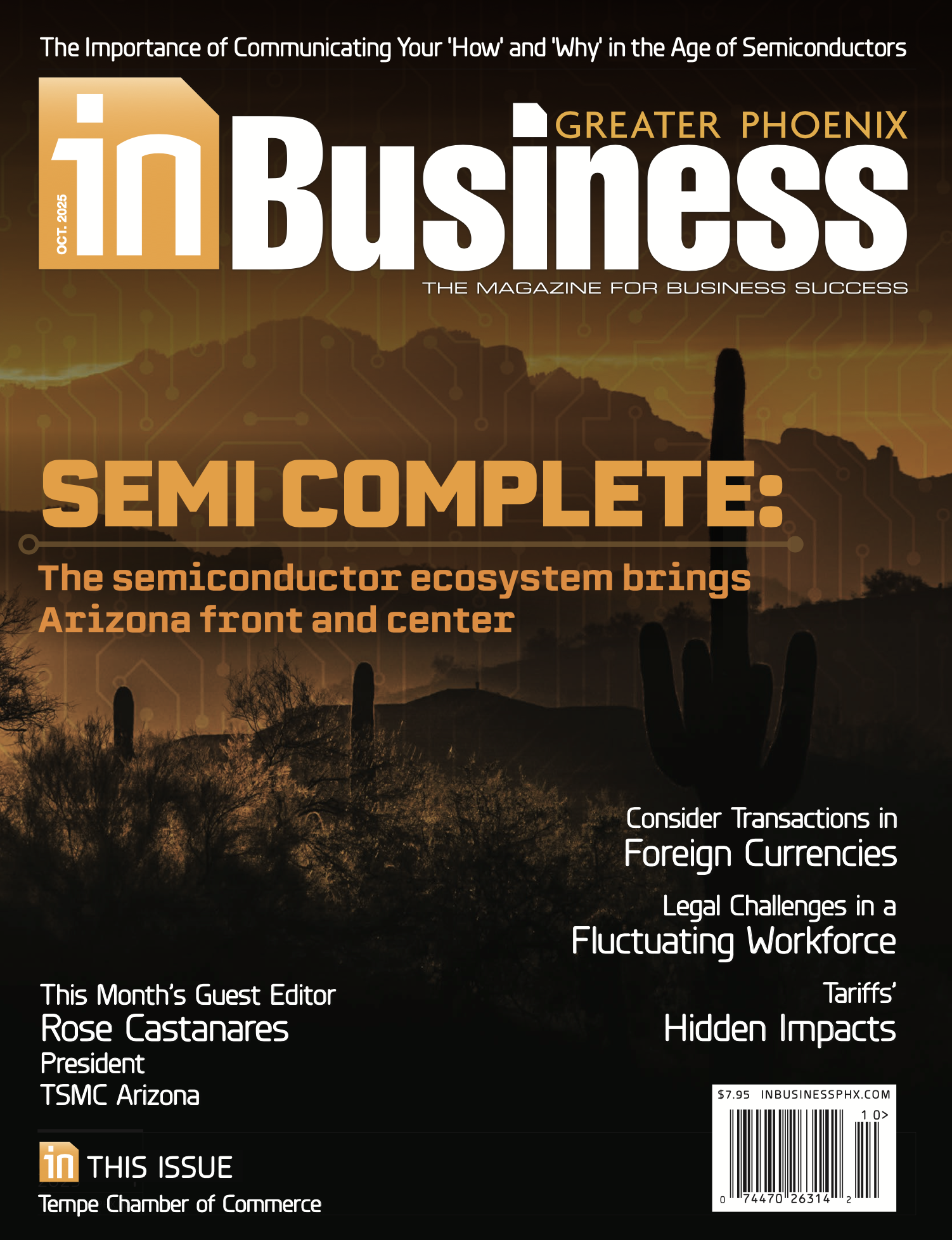
Taiwan Semiconductor Manufacturing Company’s presence in Arizona is often described in terms of scale, the multibillion‑dollar fabs, the global supply chain, the advanced technologies that power everything from electric vehicles to aerospace systems. But behind the cranes and construction milestones is a quieter, more enduring story: the company’s deep investment in people. As TSMC continues to expand in Phoenix, it is building a workforce strategy that prioritizes opportunity, skill building and long‑term economic mobility for Arizona residents.

With 3,000 employees already on board and a path to 6,000 by the end of the decade, TSMC understands that its success depends on a strong and sustainable talent pipeline. Rather than simply drawing from Arizona’s existing workforce, the company is helping strengthen it. That approach has earned praise from local leaders who see the impact firsthand. “TSMC’s investment in Phoenix is creating real opportunity for our workforce,” says LaSetta Hogans, deputy economic development director for the City of Phoenix and executive director of the Phoenix Business and Workforce Development Board. Her perspective reflects a broader truth: TSMC’s workforce strategy is not just about filling jobs; it is about creating access.
One of the strongest examples of this commitment is the company’s rapidly expanding engineering internship program. What began with just 16 interns in 2023 has grown to nearly 200 students from 60 universities in 2025, with about one‑fifth coming from Arizona State University. The program offers 10 weeks of hands‑on experience inside one of the world’s most advanced manufacturing environments, giving students a direct pathway into high‑skill roles. Northern Arizona University President José Luis Cruz Rivera sees the partnership as a model for how higher education and industry can work together to support upward mobility, noting that it provides students with the hands‑on experience needed to thrive while strengthening the state’s semiconductor talent base.
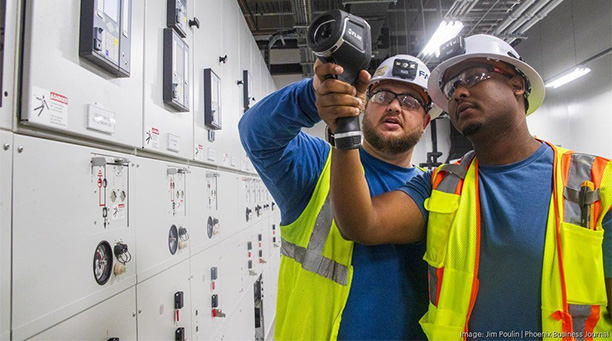
But TSMC’s workforce strategy extends far beyond engineering roles. The company recognizes the essential role technicians play in semiconductor manufacturing and has developed a Technician Apprenticeship Program that blends on‑the‑job training, technical instruction and professional development. The program draws from both U.S. apprenticeship standards and TSMC’s world‑renowned training programs in Taiwan, creating a pathway into high‑wage careers that do not require a four‑year degree. Maricopa Community Colleges plays a central role in delivering the related instruction, helping students connect theory and practice in real time, an essential component of advanced manufacturing, where precision and problem‑solving are learned through experience.
TSMC is also helping create onramps for individuals entering the industry for the first time. Grand Canyon University’s Manufacturing Specialist Intensive Program is one example, an 11‑week, industry‑funded training pathway that prepares participants for entry‑level technician roles while offering micro‑credentials and college credit. Programs like this expand access to high‑growth careers and ensure that the benefits of Arizona’s semiconductor boom reach a broader and more diverse population.
As TSMC continues to grow in Phoenix, its workforce partnerships may prove to be their most lasting contribution. By investing in people, collaborating with educators and creating clear pathways into advanced manufacturing, the company is helping shape a talent ecosystem that will serve Arizona for generations. In an era when technology is advancing at unprecedented speed, TSMC is demonstrating that the most important investment any company can make is in the people who will build the future.
Pathways into TSMC Arizona
Those interested in engineering, technician, or apprenticeship roles can connect directly with TSMC Arizona to explore current opportunities. A full list of open positions is available on TSMC’s Arizona jobs.
 Tyler Butler, a trailblazer in ESG and corporate citizenship, has led Fortune 500 sustainability programs, contributed to two IPOs and founded Collaboration for Good. With degrees from ASU, Boston College and Cornell, she writes for top publications and serves as a strategic CSR consultant for Omnicom.
Photo courtesy of Taiwan Semiconductor Manufacturing Company