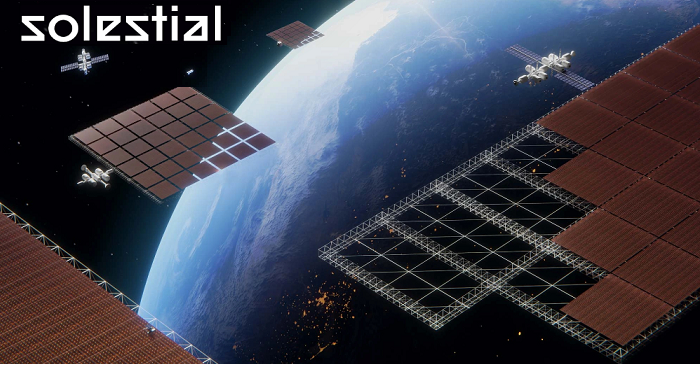
York Space Systems , a US-based national defense and commercial prime providing a comprehensive suite of mission-critical solutions, announced the close of its acquisition of Solestial, Inc., a leading provider of next-generation space solar technology. The acquisition secures a domestic source for critical space solar capability at a moment much of the satellite manufacturing industry remains deeply exposed to Chinese-controlled source materials, delivering a meaningful strategic advantage through a secured, U.S.-sourced supply chain.





“Controlling our supply chain is a core part of how York delivers for our customers, and space solar has been a critical gap the industry has largely ignored,” said Dirk Wallinger, CEO of York. “Solestial’s solar cells are produced in the U.S. and will ultimately source raw material from US suppliers creating a complete US solar cell production ecosystem and their solar cells are proven to self-anneal radiation damage on orbit. This acquisition positions York to meet the program timelines our customers require, without the supply chain vulnerabilities that put others at risk.”
The geopolitical risk embedded in the industry’s supply chain is significant. China controls 99% of the gallium and more than 60% of the germanium required for legacy III-V solar cells, and 93% of the polysilicon used in terrestrial solar panels is produced in China. York believes current solar panel designs will not be sustainable in the future, particularly given the large driving demand required for proliferation of systems. With trade restrictions escalating, satellite manufacturers without a domestic source face a growing vulnerability, one York has moved decisively to address.
Solestial’s technology is engineered specifically for the space environment, differentiating it from the terrestrial silicon cells other new entrants are attempting to fly. With approximately 95% of its supply chain already U.S.-based, Solestial draws on domestic sources rather than the Chinese-controlled inputs that put others in the industry at risk.
“Joining York accelerates everything we set out to build,” said Margo de Naray, CEO of Solestial. “We’ve proven on orbit that our self-healing solar cells outlast terrestrial solar alternatives. Now we’re positioned to scale that technology with a U.S.-sourced supply chain and deliver it at the volume the industry needs.”
Solestial’s differentiated radiation-curing technology sets it apart from every other space solar option on the market. Its thin and flexible silicon solar cells self-heal radiation damage at operating temperatures as low as 65°C as independently verified by the French Alternative Energies and Atomic Energy Commission (CEA). On-orbit telemetry confirmed that after one year in LEO, Solestial cells showed no additional degradation compared to adjacent III-V multijunction cells, a result terrestrial silicon cannot replicate. Legacy III-V solutions also carry lead times exceeding two years and face challenges to scale to meet accelerating demand.
The acquisition advances York’s strategy of owning critical subsystems rather than sourcing them from constrained, foreign-dependent supply chains, a competitive advantage that York expects will directly benefit customers across national security, civil, and commercial programs. Solestial will operate as a wholly owned subsidiary, continuing to supply solar technology to external customers while deepening integration across York’s spacecraft portfolio. Together, York and Solestial are positioned to meet the power demands of next-generation missions with technology that is flight-proven, scalable, and significantly reduces geopolitical supply chain risk that defines the rest of the market.
York closed the acquisition on June 4, 2026 with the issuance of 1,702,862 York shares using a negotiated value of $34.00 per share and paid with a mix of cash and stock for a purchase price of approximately $67 million paid to the sellers at closing. York shares were issued pursuant to one or more exemptions from registration under the Securities Act of 1933, as amended, including those under Section 4(a)(2) thereof or Regulation D promulgated thereunder.