The approach senior living communities take to dining has fundamentally changed. Where shared cafeteria-style spaces once dominated, today’s communities’ providers are embracing a hospitality-first philosophy that mirrors the variety, energy, and identity of a thriving restaurant district. Residents are arriving with higher expectations, and the industry is responding with design that prioritizes choice, connection, and a genuine sense of place.





According to a January 2026 analysis in Seniors Housing Business, the field is moving decisively toward modern aesthetics, distinct identities, livable and flexible spaces, and amenities that serve as social connectors. Wellness is no longer confined to a fitness center; it is woven into every shared space, including the dining room. Technology is no longer a nice-to-have; it’s a baseline expectation. The blurring of indoor and outdoor environments is becoming a defining feature of next-generation communities.
This shift is equally visible in how dining programs are being reconceived. As Greystone Communities noted in a recent industry analysis, “dining has become one of the most visible expressions of community culture in senior living.” Restaurant-style experiences are now the standard, complete with branded venues, live-action kitchens, and technology that enables both operational efficiency and resident independence.
The renovation of Royal Oaks in Sun City, Arizona is a compelling example of what this philosophy looks like in practice.
Situated in Sun City, Arizona, the 2025 renovation of Royal Oaks reimagines the community’s dining venues through a “Modern Desert” aesthetic—one that reflects the region’s natural beauty with a refined, contemporary sensibility. Spiezle Architectural Group and SCOPOS Hospitality Group worked in close partnership with the community to shape a cohesive vision, creating distinctive identities for each venue rather than a one-size-fits-all design. Spiezle provided the architectural framework for 10,466 square feet of renovated dining space, while SCOPOS provided food service design consulting, branding, signage, interior design, and procurement, creating optimized dining layouts and a cohesive atmosphere. The HUB Design Innovation and Hospitality Services, LLC contributed operational insights to ensure the design met both the client’s goals and the daily experience of residents. The result is not a single dining room. It is a neighborhood of experiences.
At the heart of Royal Oaks is the Expo Restaurant, “Sonrei” (Spanish for “I smiled”), an upscale, open-design full-service venue built around chef-driven seasonal dishes. A rotating grill anchors a live cooking demonstration program that transforms meals into events. Acoustic lighting fixtures manage ambiance, creating an atmosphere that feels as much like a high-end destination as a dining room.
The coffee shop, “Thrive,” reinforces the community’s commitment to health and wellness with a welcoming layout, a pastry display, and a multi-cook oven that offers quick, convenient and nutritious meal options. It serves as a starting point to the day and a social connector, providing a space where residents can gather, linger intentionally, or pass through on the go. “Oasis,” a grab-and-go market, features a self-checkout system and self-order kiosks designed to promote resident independence. This small but meaningful design decision honors autonomy while keeping staff available across adjacent venues. An online ordering platform further extends this flexibility, allowing residents to engage with dining services on their own terms.
“Wild Cactus,” the bistro and grill, serves as a go-to destination for casual, everyday dining. It captures the energy of the desert landscape through vibrant accents and a self-contained Kaliber and grill line that ensures consistent, flavorful meals. An advanced robotic busing system enhances both cleanliness and service flow, a technology investment that reduces staff burden and elevates the resident experience.
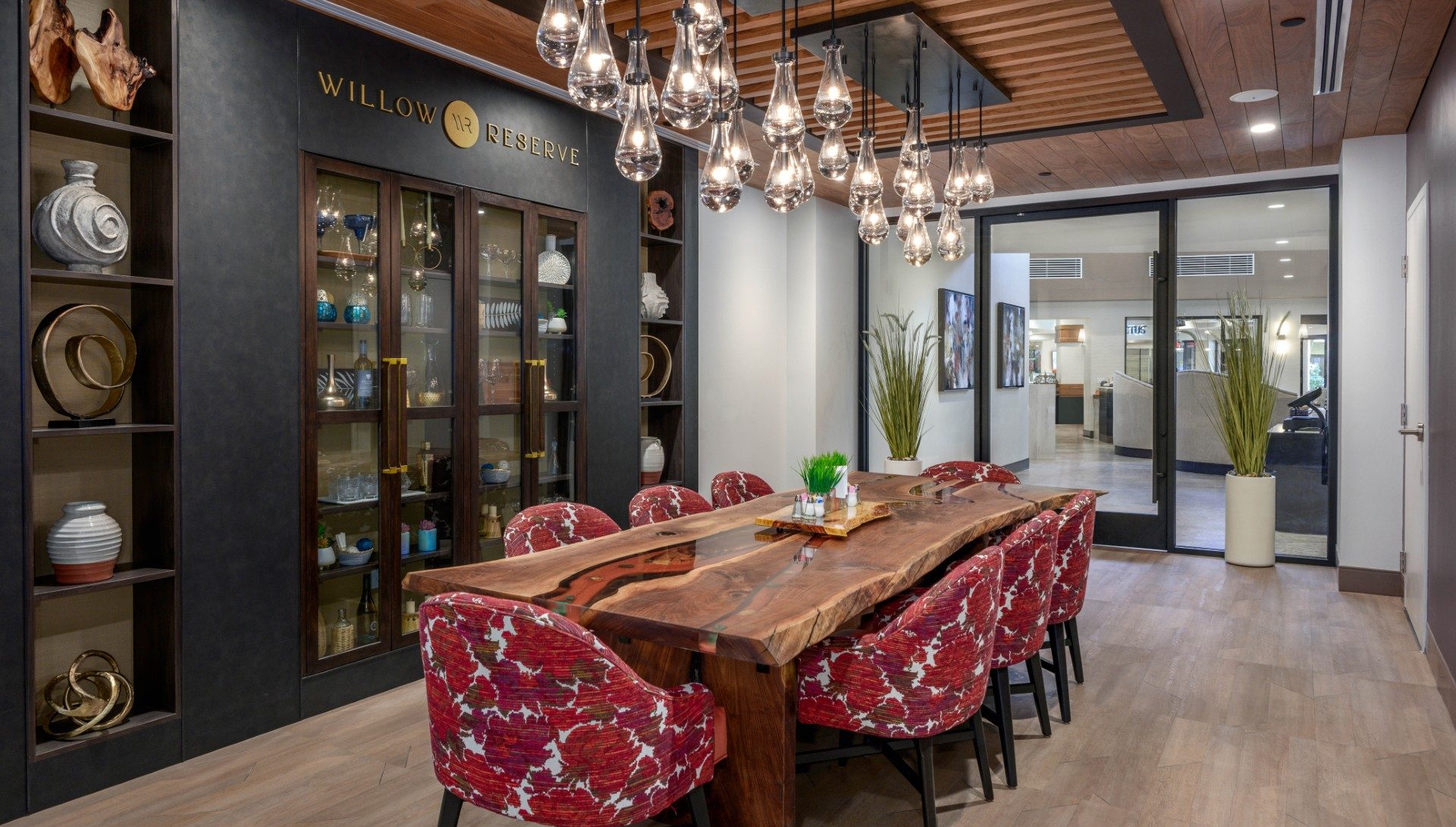
For more intimate occasions, “Willow Reserve” offers an elegant wine room anchored by a family-style table, ideal for private wine and chef tastings. And “1983,” the community’s upscale pub, offers a variety of seating options, including barstools, banquettes, and comfortable lounge chairs, in a refined yet relaxed atmosphere. An indoor-outdoor bar seamlessly extends the space, allowing residents to move between interior and exterior settings with ease.
Equally important was how the renovation was carried out. To minimize disruption to residents and staff, the project was completed in three carefully sequenced phases, keeping two-thirds of the dining venues operational throughout construction. Thoughtfully designed temporary partitions met all life safety requirements, and on-site construction management maintained continuous communication with ownership to ensure a smooth, safe process from start to finish.
What Royal Oaks illustrates is something the broader industry is beginning to articulate more clearly: dining design in senior living is not a secondary consideration; it is a primary one. Each venue at Royal Oaks was built to reflect a specific purpose, a distinct identity, and a genuine understanding of the people who live there.
The integration of advanced equipment, thoughtful branding, and flexible indoor-outdoor spaces demonstrates that operational efficiency and residential quality of life are not competing priorities; they reinforce each other. As the next generation of residents arrive expecting the same quality of experience they have always valued, projects like Royal Oaks offer an inspiring blueprint for what is possible when hospitality and design work together toward a shared vision.
 Richard C. Quinn, AIA, LEED AP, is a Principal at Spiezle Architectural Group, an award-winning full-service architectural, engineering, interiors, and design firm that is ranked among the Top 300 US Architecture Firms and serves clients across senior living, retail, education, and more.
 Andrey Teleguz is the president of SCOPOS Hospitality Group, a national culinary design and hospitality consulting firm that creates innovative, high-performing hospitality environments through integrated design, branding, and operational strategy, helping clients enhance their dining experiences while optimizing operations.