For years, commercial retail development lived under a single, exhausting headline: Is retail dead? In 2026, the answer is finally clear — and it’s neither yes nor no.




Retail didn’t “come back.” It evolved.
Nowhere is that evolution more visible than in Arizona, where population growth, climate realities and relentless suburban expansion have turned the state into a living example of what retail is becoming next. What failed here failed loudly. What survived adapted fast.
From Square Footage to Strategy
In 2026, retail development is no longer about how much space you build. It’s about how that space behaves. Arizona developers learned this lesson early. In fast-growing metros like Phoenix, Buckeye, Queen Creek and Surprise, speed once mattered more than strategy. Build it, lease it, repeat. That formula cracked when consumer behavior changed faster than construction timelines.
Today’s projects are designed less like static real estate and more like responsive systems. Floor plates flex. Tenant spaces are modular. White space is intentional. Vacancy isn’t panic — it’s runway. In a state where construction costs, labor shortages and extreme heat all have major impact, adaptability has become the most valuable amenity of all.
Retail as Infrastructure, Not Entertainment
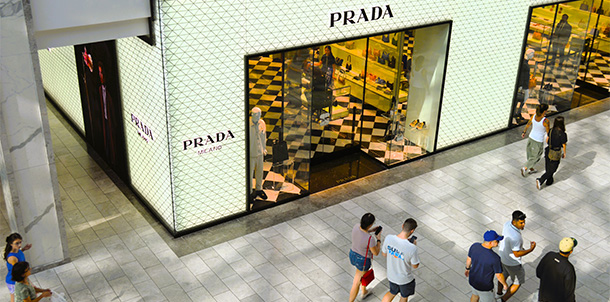
For a while, Phoenix-metro retail leaned hard into “experience.” Splash pads. Event lawns. Instagram backdrops fighting the sun in 115-degree conditions. In 2026, the winners look different. The strongest Phoenix-Metro retail centers are anchored by services people need weekly, not quarterly: healthcare, urgent care, dentistry, physical therapy, fitness, childcare, education and food. These uses thrive in Arizona’s growth corridors because they grow alongside rooftops — and don’t disappear when discretionary spending tightens.
Retail here has quietly become infrastructure.
A coffee shop next to a medical office. A fitness studio paired with physical therapy. A neighborhood market beside a school or municipal service. These aren’t accidents. They’re engineered adjacencies designed to survive economic cycles, consumer necessities and shopping center adaptation. In the Phoenix-Metro area, foot traffic isn’t always seasonal — it’s survival-based. The best centers understand that.
Leasing Got Smarter (and a Little Riskier)
Arizona’s rapid development pace forced leasing to evolve faster than in many coastal markets. Long-term, rigid leases struggled in areas where trade areas changed overnight and competition appeared across the street within months. In response, 2026 leasing models increasingly favor shorter terms, percentage rent, performance benchmarks and early exit clauses.
Developers aren’t just underwriting tenants — they’re underwriting behavior. How does this operator perform in extreme heat months (or winter, depending on the part of the state)? Do they drive repeat visits or just grand-opening traffic? Can they adapt pricing when inflation hits? In Arizona, resilience isn’t theoretical — it’s measurable. Risk didn’t disappear. It shifted. And in many deals, it’s shared.
The Parking Lot Identity Crisis (Arizona Edition)
If any state is emotionally attached to parking lots, it’s Arizona. And yet — even here — the cracks are showing. In 2026, parking ratios are shrinking across mixed-use and suburban retail projects, not just because land is expensive but because land is strategic.
Developers increasingly view surface parking as future density — housing, office, medical or expanded retail waiting for the right moment. Developments being over-parked is no longer the norm. Shade structures, solar canopies and multi-use plazas are replacing asphalt wherever possible. In a climate where heat actively repels dwell time, comfort has become currency. The irony is evident: Arizona retail once depended on cars. Now it depends on convincing people to get out of them — and stay.
Retail Is Theater – But with a Schedule
Arizona retail has embraced the truth faster than most markets: boredom is fatal.
Pop-ups, seasonal tenants, rotating food concepts, fitness challenges, workshops and local-maker markets are no longer novelty add-ons. They’re operational strategy. Centers now plan programming around weather patterns, tourism cycles and school calendars.
Winter visitors want novelty. Summer residents want necessity. Smart centers serve both — without pretending they’re the same customer. The question isn’t, “Who can lease this space for ten years?” It’s, “Who keeps this space alive year-round?”
The Big Evolution
The strangest thing about retail in 2026 isn’t what failed in Arizona — it’s what survived. Retail survived by becoming more human. More flexible. More honest about risk, climate and change. It stopped chasing trends imported from other markets and instead adapted to the realities of where it stands — sun, sprawl, growth and all.
Retail didn’t return to what it was. In Arizona, it became something leaner, smarter and better suited to the desert. And for developers willing to experiment, share risk and design for change instead of certainty, that evolution isn’t a warning sign.
It’s the future — wearing sunscreen, of course.
 Kim Ryder is a dynamic commercial real estate executive with extensive experience in managing multi-million-dollar, complex projects and the build-out of more than 54 million square feet of retail and commercial space. Ryder has started several business lines in her career, most notably launching Thrive Real Estate and Development groups. Her career in the thrift industry extends over 25 years and led her team to expand the Goodwill real estate portfolio by more than 100 locations, having leadership over more than 400 transactions. Her expertise in thrift real estate has made her a well-known resource.