A defining feature of the post-COVID-19 economy has been a broad push to bring manufacturing jobs back to the United States. For decades, leveraging inexpensive overseas labor was viewed as a smart business strategy. However, the pandemic exposed the vulnerabilities of overreliance on global supply chains. Add rising geopolitical uncertainty and increasing offshore production costs to the mix, and many American companies — particularly in high-tech and critical industries — are now looking to reshore manufacturing as a key risk-mitigation strategy.






However, making this transition is easier said than done. The U.S. manufacturing sector faces a critical shortage of skilled labor, with 79% of manufacturing executives reporting that a lack of skilled workers is their top barrier to growth. Years of underinvestment have also left the country short on modern, turnkey manufacturing facilities, prompting a race to build new, highly technical production plants. At the same time, the nationwide housing shortage makes it difficult to attract and retain the workers needed to operate these facilities — whether at existing plants or new ones.
For leaders in the construction and commercial real estate industries, meeting the demand for the infrastructure that will support this renaissance in American manufacturing capacity is imperative — not only for economic growth, but for long-term national security.
Greater Phoenix is a prime example of both the challenges and opportunities that exist. The region’s abundant land availability, access to reliable power generation, relative lack of disruptive severe weather and rapid population growth make for an ideal location for high-tech infrastructure such as data centers, advanced manufacturing facilities and semiconductor plants.
Crucially, this physical and economic growth must be tied to the development of the people who will build and operate these facilities, and will depend on creating a fluid, adaptively skilled workforce capable of transitioning from traditional sectors — such as oil and gas or warehouse distribution — into high-growth industries like construction, advanced manufacturing, and food and beverage production.
That transition will not happen automatically. It requires employers to invest in training and reskilling earlier in the project lifecycle, closer coordination with community colleges and trade programs, and public policies that support workforce mobility rather than constrain it. Without intentional planning, labor shortages will persist even as new facilities come online.
However, workforce development alone is not enough. Even the most effective reskilling efforts will fall short if workers cannot afford to live near where these facilities are being built. Housing availability is the next critical constraint on growth.
Fast-growing regions like Phoenix must align industrial development with intentional residential planning. That means prioritizing housing near employment centers, streamlining approvals for mixed-income projects, and ensuring that growth benefits the workers powering these industries — not just the facilities themselves.
Phoenix is undoubtedly one of the epicenters of America’s reshoring efforts, with the resources and human capital to meet the moment. But success will depend on timely investment in the people driving this growth. The ceiling for economic expansion in Phoenix and the broader Southwest is not defined by land or demand, but by the speed at which the next generation of talent can be developed. And this includes the infrastructure — and particularly the affordable housing — that will allow them to thrive in a rapidly evolving economy.
 Ryan Abbott is president of the Southwest Region for Clayco, one of the nation’s largest privately-owned real estate, architecture, and engineering design-build construction firms.
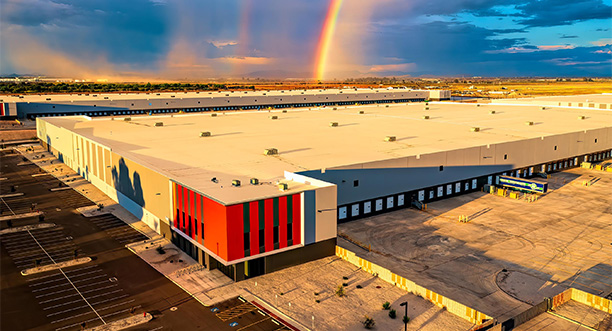
Photo credit: Cubes at Glendale; photo courtesy of Clayco