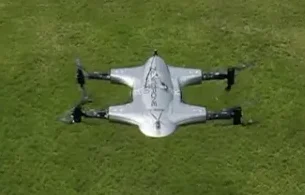
ZenaTech, Inc., a technology solution provider specializing in AI drone, Drone as a Service (DaaS), enterprise SaaS, and Quantum Computing solutions, announced that its ZenaDrone subsidiary has commenced the initial flight testing phase of its Interceptor P-1, the Company’s low-cost, one-way autonomous counter-drone platform designed to physically intercept hostile unmanned aerial systems (UAS).


The commencement of testing represents a significant step in expanding the Company’s Counter-UAS drone portfolio and integrated defense system. The Interceptor P-1 is designed as a vertical takeoff and landing (VTOL), one-way autonomous interceptor intended to provide an affordable alternative to traditional missile-based drone defense systems and asymmetric warfare combatting drone swarms with multi-million-dollar missiles.
“Our engineering team has reached an important milestone as we begin flight testing of the Interceptor P-1,” said Shaun Passley, Ph.D., CEO of ZenaTech. “This program is focused on validating the aircraft’s flight characteristics, autonomous capabilities, and system reliability before advancing to increasingly complex interception exercises. We believe the demand for affordable counter-drone solutions continues to grow globally as military organizations and critical infrastructure operators seek cost-effective methods to defend against rapidly evolving drone threats.”
The initial flight test campaign, to be conducted by the ZenaDrone engineering team at the company’s testing range near its Mesa, Arizona facility, will evaluate vertical takeoff and landing performance, high-speed maneuverability, target acquisition and tracking algorithms, guidance controls, and communications reliability. Subsequent phases are expected to include autonomous target pursuit, moving-target intercept exercises, multi-drone operational scenarios, and integration with the Company’s Zena AI Counter-UAS command software.
The Interceptor P-1 prototype was first disclosed in March 2026 which included a target selling price of under $5,000 USD, positioning it as a significantly lower-cost alternative to traditional missile-based and laser-based intercept systems for modern asymmetric drone warfare. In April 2026, ZenaTech provided a further update on its expanding defense manufacturing footprint, announcing the registration of Phoenix Aero LLC, a Ukrainian entity based in Lviv, which is being established to support future manufacturing and testing of the Interceptor P-1 and other counter-UAS systems as part of the Company’s EMEA operations. ZenaTech is in the process of setting up this office.
The Company believes that low-cost autonomous interceptors will play an increasingly important role in defending military bases, in maritime situations, at airports, energy facilities, government infrastructure, ports, border operations, and other critical assets against hostile drones and drone swarm attacks.
The Interceptor P-1 is being engineered to operate as part of ZenaTech’s broader Counter-UAS ecosystem, integrating with the Company’s AI-powered threat detection, classification, and autonomous swarm command software. The complete architecture is intended to enable a single operator to monitor, identify, prioritize, and respond to multiple airborne threats simultaneously using coordinated autonomous interceptor drones.
ZenaTech expects to continue expanding the testing program throughout 2026 as development progresses toward future operational demonstrations and customer evaluations. Further updates will be provided as additional milestones are reached.