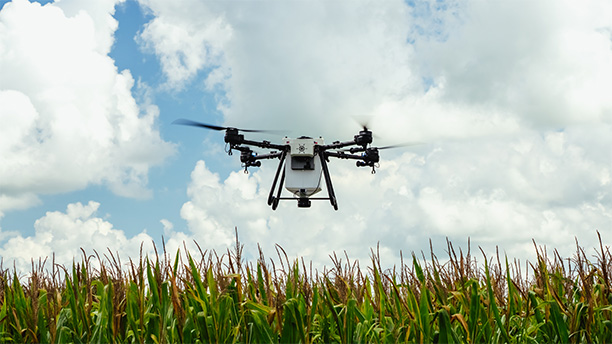
Drones are not a silver bullet for farmers, but in some cases they sure can feel like it. In heat-stressed agricultural environments, such as those in Arizona, stretching every drop of resource (water and beyond) further is the name of the game, and drones are the king of that game.





In the “upstream” sense, scouting drones can be utilized to detect heat stress more easily, more precisely and earlier than traditional methods. Using multispectral/hyperspectral sensors, for example, subtle changes to nutrient levels in the soil and crop, and even biological changes within the plants, can be detected with the help of ML and other AI tools, allowing farmers to take action sooner and “nip the problem in the bud.”
For the application operations, drones spray off of the EPA’s “aerial labels,” which usually means they mandate 5–10 times less total solution volume to be applied per acre. For example, an herbicide product mix sprayed from a traditional ground rig may legally call for 10–15 gallons of total solution (the majority of this volume being H2O as the carrier liquid) per acre, whereas a drone spraying the same product mix only calls for 2–3 gallons per acre and often achieves even better results when compared side to side. In areas where heat drives drought, making water an ever-scarcer resource, saving this much on water usage per acre often is the difference between being able to do an application or not in the first place.
Additionally, by detecting and pinpoint-treating problem areas early, farmers stand to spray far fewer acres overall and still accomplish the same overall yield protection and boosting as the less precise “blanket” treatments of yesteryear, again dramatically reducing input costs while achieving the desired effects, often better, thanks to the precision and proactivity the drones enable. For example, studies done by Texas A&M using Hylio, DJI and other brands’ unmanned aircraft systems (UAS), demonstrated a 45–90% reduction in herbicide usage compared to traditional methods, leading to a cascade of savings across the supply chain.
So, no, drones can’t solve every problem in the world, but as far as stretching agricultural inputs, including water, much further, they do an admirable job. While many still view the technology as a “niche” tool, its implementation first in the more dire situations where it’s most needed will likely lead to continued adoption for more conventional operations. Necessity is the mother of invention, as they say, and necessity is in no short supply at the moment.
 Arthur Erickson is CEO of Hylio, an ag drone manufacturing company