To date, $34.5 billion has been invested in Arizona’s semiconductor industry, with the promise of $100s of billions more to come. With that kind of investment, it is no wonder that the area near the TSMC site is beginning to attract more than just manufacturing.





Housing, infrastructure and support services are being planned alongside it. Developments like Halo Vista, a $7-billion project described by its developers as a “city within a city,” are being designed with that growth in mind, adding residential and community space near what is expected to become one of the state’s largest employment centers.
“The expansion of semiconductor manufacturing is creating demand well beyond the facilities themselves,” a Halo Vista representative said in announcing the project.
At the same time, companies that support semiconductor manufacturing are continuously moving to the Valley, establishing a presence in the region. The latest example of this migration is Japan-based TOCALO, which recently leased space in Chandler to work with semiconductor equipment manufacturers.
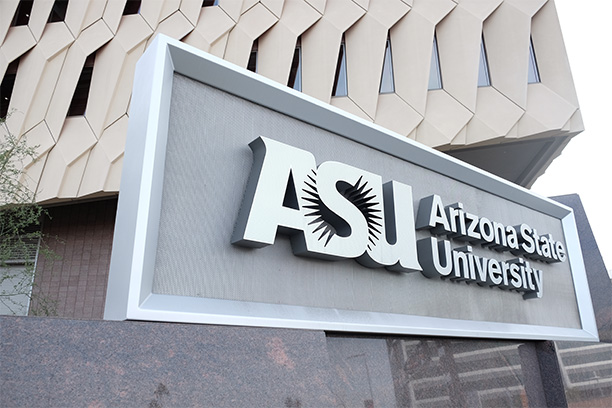
Another piece of that buildout is coming from Arizona State University as it looks to build its eighth “innovation zone” dedicated to international science and collaboration. The university has a series of “innovation zones” across the state where it operates alongside private industry. Research, workforce training and companies in the same place. This one they are looking to build near the Taiwan Semiconductor Manufacturing Co. site in north Phoenix.
ASU has used similar “innovation zones” in other parts of the state, placing university programs alongside private companies. The approach combines research, workforce training and business activity in one place. This would be the first time the model is being applied at this scale around semiconductor manufacturing.
ASU President Michael Crow has described the $165-billion TSMC project as the “single most important technological opportunity in Arizona since air conditioning.”
Plans for the zone are still coming together. ASU has not confirmed a site, but the focus is clear. ASU is looking at space for teaching, research partnerships and startup activity, along with room for other education providers. There is also an emphasis on startup incubation, which university leaders say is still limited for advanced manufacturing and technology companies. The idea is to bring more of that activity into one place. Community colleges and even K–12 partners could be part of it, along with other elements that would support people working in the area.
North Phoenix isn’t being built all at once. It’s happening piece by piece. A housing development here. A supplier there. Now a university is looking to be closer to it. Some of it will take years, even decades, to fully come together.