Arizona’s semiconductor buildout is no longer measured only in factories and cleanrooms. It is being shaped in classrooms, research labs and, increasingly, in cross-border partnerships.


The University of Arizona has formalized an agreement with National Yang Ming Chiao Tung University, an applied research powerhouse deeply embedded in Taiwan’s semiconductor industry. Together, the two institutions are launching a Talent and Innovation Hub designed to create a culturally immersive pipeline for students preparing for careers in high-tech manufacturing and research.
The agreement, signed by U of A President Suresh Garimella and NYCU President Chi-Hung Lin, ties Arizona’s workforce strategy directly to one of the world’s most influential semiconductor ecosystems.
“Formalizing the University of Arizona’s partnership with NYCU through this agreement marks a pivotal moment in our strategic engagement with Taiwan and our commitment to the global semiconductor ecosystem,” Garimella says. “By establishing the Talent and Innovation Hub with a premier institution that has deep connections to global leaders like TSMC, we are bringing the U of A’s world-class research capabilities to bear on the industry’s most pressing needs, including materials science and engineering, advanced packaging and photonics.”
The timing is deliberate. Billions of dollars have been invested in the local semiconductor ecosystem, transforming the state’s economic trajectory and shifting the pressure point from infrastructure to talent. The question facing universities is not simply how many engineers to graduate but how to prepare them for an industry defined by global supply chains, cross-border collaboration and increasingly complex manufacturing demands.
The Talent and Innovation Hub is structured to answer that question at multiple levels.
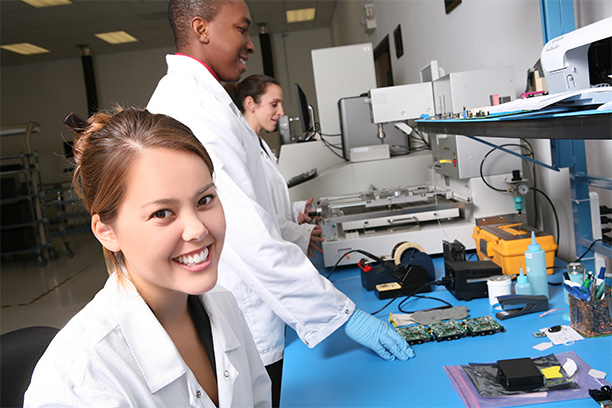
In Chandler, the University of Arizona is working with a local high school to launch what it describes as the nation’s first career and technical education program tailored specifically for semiconductor technician training. At the university level, students will have access to dual-degree programs, specialized minors and certificates aligned with industry needs. Research collaborations will link students in Arizona and Taiwan to the same real-world manufacturing challenges.
Krishna Muralidharan, director of the Center for Semiconductor Manufacturing in the U of A Office of Research and Partnerships, says the model was designed with industry input.
“Arizona is becoming a global hub for semiconductor manufacturing,” Muralidharan says. “We asked the question: What does it take for our students to be successful in this industry? The answer is in our industry-facing collaborative educational hub with curated curricula specifically for the semiconductor industry. We are creating pathways focused on workforce and research and development needs, for the semiconductor industry and beyond.”
A distinguishing feature of the program is its emphasis on cultural fluency alongside technical rigor. U of A students will take Mandarin for Industry, while NYCU students will study English. Exchange programs, internships and collaborative projects are designed to immerse students in the management structures, communication styles and working habits of each country.
“This is training for students to get jobs in the global semiconductor industry, which could mean they work in the U.S., Taiwan, Germany, India or Japan. We want to make them globally successful,” Muralidharan says. “We want to ensure cultural adaptability.”
State leaders see the partnership as an extension of Arizona’s broader economic strategy.
“Through international partnerships and bold innovation, Arizona is pioneering the technologies that will define the future,” says Sandra Watson, president and CEO of the Arizona Commerce Authority. “This collaboration between the University of Arizona and NYCU is a powerful example of how Arizona is building a world-class semiconductor talent pipeline — connecting education, research and global expertise.”
The program is rooted in semiconductors, but university leaders say it is designed to evolve into adjacent fields such as photonics, quantum technologies, artificial intelligence and digital health.
Factories may anchor the industry. But the workforce that keeps them competitive is being built long before a hard hat ever touches the production floor.