Buildout expenses, improved financing and elevated vacancies are creating a prime scenario for those wanting to own their metro Phoenix industrial real estate. Phoenix developers are taking note of this trend as well, and it is quietly (or not so quietly) shaping 2026 strategies.




While leasing offers advantages like speed-to-market and flexibility — factors that are critical for some tenants — buying gives a company control of their building investment.
That’s an increasingly important consideration in an industry where users often have to invest $10 million, $20 million, even $50 million or more to create modern, competitive facilities. From state-of-the-art manufacturing equipment to automated racking and picking systems, it’s no surprise that businesses use ownership as a way to minimize their risk-to-investment ratio.
That desire to own sparked some of the market’s largest industrial transactions of 2025. At Lincoln Property Company’s Park303, Dollar Tree purchased a 1.25-million-square-foot, Class A industrial building for $147 million, establishing its first-ever Phoenix distribution facility. Less than two months later, Walmart purchased a 1.27-million-square-foot, Class A building at Luke Field (also by Lincoln) for $152 million.
The most notable buyer activity, however, is happening in the small- and mid-bay sector (300,000 square feet or less). That trend is buoyed by pockets of overbuilding and sluggish absorption, leading to elevated vacancies. According to JLL Q4 industrial data, Phoenix since 2021 has seen a 72% vacancy increase in mid-bay buildings.
But there is light on the horizon, with JLL data also showing more than 39 semiconductor-related suppliers expanding into the Valley post-TSMC. This, combined with booming aerospace, energy and advanced manufacturing sectors, is attracting a wide range of mid-sized suppliers and logistics users who are creating a new wave of demand.
What should the market do with this data? For owners with mid-bay projects, consider that a dual lease + sale approach could elevate results, attracting buyers who want to protect their CapEx improvements.
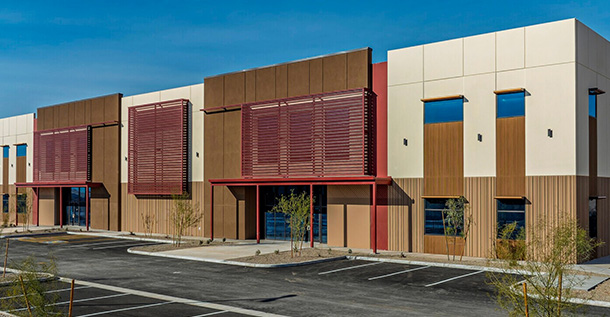
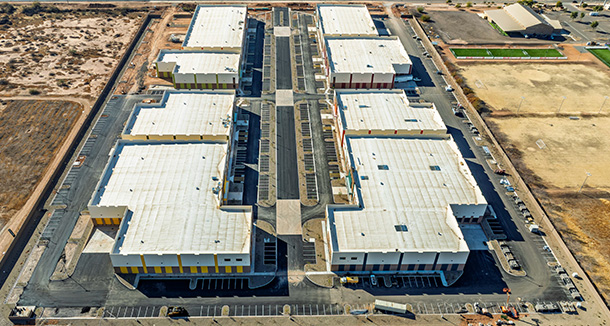
We’re taking this approach at Sossaman Business Campus, a development by Silver Creek that spans eight industrial buildings ranging from 23,000 to 60,000 square feet in Mesa’s Elliot Tech Corridor. JLL initially brought this property to market as a lease opportunity, but, after a flood of inquiries to buy, we revised the listing to include for-sale options — and our interest list quadrupled overnight.
That pattern repeated in Gilbert, when ViaWest sold one 13,547-square-foot building within a larger, six-building East Valley industrial portfolio. Again, JLL brought that building to market as a lease, but inquiries trended toward purchase. The sale allowed ViaWest to secure an opportunistic return on investment while giving this owner-user-buyer a reduced-risk growth opportunity.
Buying isn’t right for every company, but for many, control is a powerful incentive. With Phoenix’s economic outlook strong, we expect the desire to own will continue to play a prominent role in the local industrial ecosystem.
 Jason Moore is a managing director at JLL.
Photos courtesy of JLL