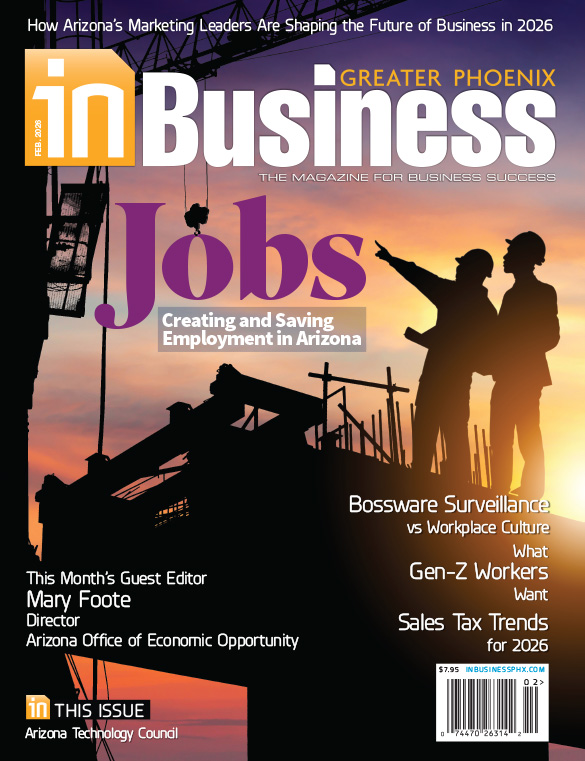
Bossware — surveillance software that tracks, analyzes or flags employee activity in real time — didn’t appear out of nowhere, and it didn’t start with the pandemic. For years, companies in logistics, retail and call centers quietly have used monitoring tools to evaluate workers minute by minute. But over the last several years, especially with the rise of hybrid work, these tools have exploded into the mainstream.




Today, keystroke tracking, screen recording, mouse-movement alerts, webcam activation, AI meeting analysis, email scanning and app tracking have become everyday management tools. By some estimates, eight in ten companies with hybrid or remote employees now use some form of digital monitoring.
It’s a trend fueled by uncertainty, but it fundamentally misunderstands how trust, performance and culture actually work. And we don’t have to look far to see how it’s landing: People are making TikToks and posts about what it feels like to be monitored or scolded about productivity at work.
Because here’s what no productivity dashboard will reveal: Business leaders cannot build a high-performing workplace on skepticism and wariness.
Surveillance may pull numbers and feed dashboards — but it wears down the very foundation of great teams: trust. A 2024 meta-analysis of more than one million participants found that interpersonal and institutional trust are directly linked to psychological well-being, safety and long-term performance.
Meanwhile, monitoring workers creates the opposite effect. According to the American Psychological Association, 56% of monitored employees report feeling tense or stressed, compared to 40% of those who are not monitored. And Workspan Daily reports that one in nine employees has quit due to excessive surveillance, while 90% said it negatively affected how they felt about their work.
If organizations hope to build teams that innovate, commit and adapt, they must understand this simple truth: Culture cannot be managed by treating everyone like a suspect.
Bossware Screams Distrust
We may be tempted to kid ourselves into thinking that monitoring software is somehow neutral. But the moment a leader implements keystroke logs or informs employees that their messaging status went from green to yellow, the leader sends a message that shapes everything else:
“We don’t believe you’ll do your work unless someone is watching.” In other words, employees are more like children that need oversight than capable adults.
Bossware formalizes suspicion. It replaces trust with compliance. It trains managers to observe instead of support. And most deleterious, it teaches employees to perform for (or outwit) the tool instead of owning their work.
I urge leaders, in my book Quick Leadership, to emphasize and live the real levers of accountability: promoting clear expectations, shared ownership, and structured check-ins — not 24/7 oversight.
When leaders do these things well, bossware becomes unnecessary.
Surveillance Undermines Motivation
Leaders are creating a new and unnecessary problem for themselves. When every email, tab or calendar block is tracked, employees begin performing activity instead of meaningful work. They play it safe. They stick to the script. They avoid risk. And research backs it up. The ScienceDirect systematic review on workplace surveillance confirms that heavy monitoring delivers weak or inconsistent productivity gains while creating substantial cultural damage.
Motivation science is clear: People perform best when they experience autonomy, mastery and meaning, not micromanagement.
If leaders want real performance, they should be:
- setting meaningful goals and being transparent about the “why” behind employees’ work;
- celebrating progress and effort, not just results; and
- giving teams control over how they achieve outcomes.
Notice what’s not included? Obsessing over green status dots and mouse activity.
Micromanagement in Disguise
What many organizations call “productivity intelligence” is simply micromanagement with better branding. It’s a high-tech version of hovering like a helicopter parent.
And the outcomes mirror the research on micromanagement:
- Burnout rises
- Engagement drops
- Turnover increases
- Trust collapses
Leaders don’t need algorithms to hover. They need better habits:
- Clear and definitive handoffs
- Empowering team decisions
- Timely, respectful feedback
- Being a buffer against fake urgency and constant distractions
When leaders strengthen these practices, culture improves — no surveillance required.
Culture Dies on Dashboards
Dashboards can track compliance, but they can never cultivate connection.
Yes, employers might gain metrics like hours worked, but dashboards tell us nothing about psychological safety, bold thinking, creative risk-taking or inclusive dialogue.
This matters because when people feel watched, they protect themselves. They censor their ideas. They become cautious instead of courageous. In short, surveillance breeds silence and over-calculation, not high performance.
Leading in a Monitored World
“Bossware” isn’t going away. The real question is whether leaders will let surveillance define their culture or whether they’ll rise to the challenge of leading differently.
The leaders who succeed in this new era will do three things:
- Clarify roles and expectations with precision so accountability is built into the structure, not enforced through surveillance.
- Check on people before checking on the work, recognizing that wellbeing and trust drive performance far more than monitoring ever could.
- Coach instead of control, shifting from suspicion to support, and proactively building peoples’ problem-solving muscles.
The bravest leaders won’t simply implement bossware, they’ll resist it. They’ll practice internal activism, pushing back against mandates that harm trust, morale and culture.
Because the truth is simple: Bossware doesn’t fix poor leadership. It exposes it.
 Selena Rezvani is an internationally known leadership speaker and author, TEDx-er and award-winning journalist with MSW and BS degrees from NYU and an MBA from Johns Hopkins University. Forbes recently named her the premier expert on advocating for yourself at work.
She trains some of the brightest minds on leadership development at places like The World Bank, Microsoft, Under Armour, Pfizer and Nestlé — helping emerging leaders enhance their presence and self-confidence and build trust. Rezvani’s advice has been featured in Harvard Business Review, Oprah.com, Today, Los Angeles Times, and ABC and NBC television. Her book, Quick Confidence, a Wall Street Journal bestseller, is the culmination of a viral newsletter she started on LinkedIn, where she shares bite-sized tips on boosting confidence. Her latest book, Quick Leadership, was recently released.
Rezvani creates daily video content on leadership that reaches a wide audience across social media. Having amassed a following of more than 500,000 followers across platforms, she was honored as a Fast Company Top Content Creator. In addition to coaching and consulting emerging leaders, Rezvani offers workshops to teams and conferences, including her sought-after “How to be a Fierce Self-Advocate” and “Quick Confidence: Own Your Power” workshops. Today, she writes a column for MSNOW’s Know Your Value on the most pressing leadership and career issues.