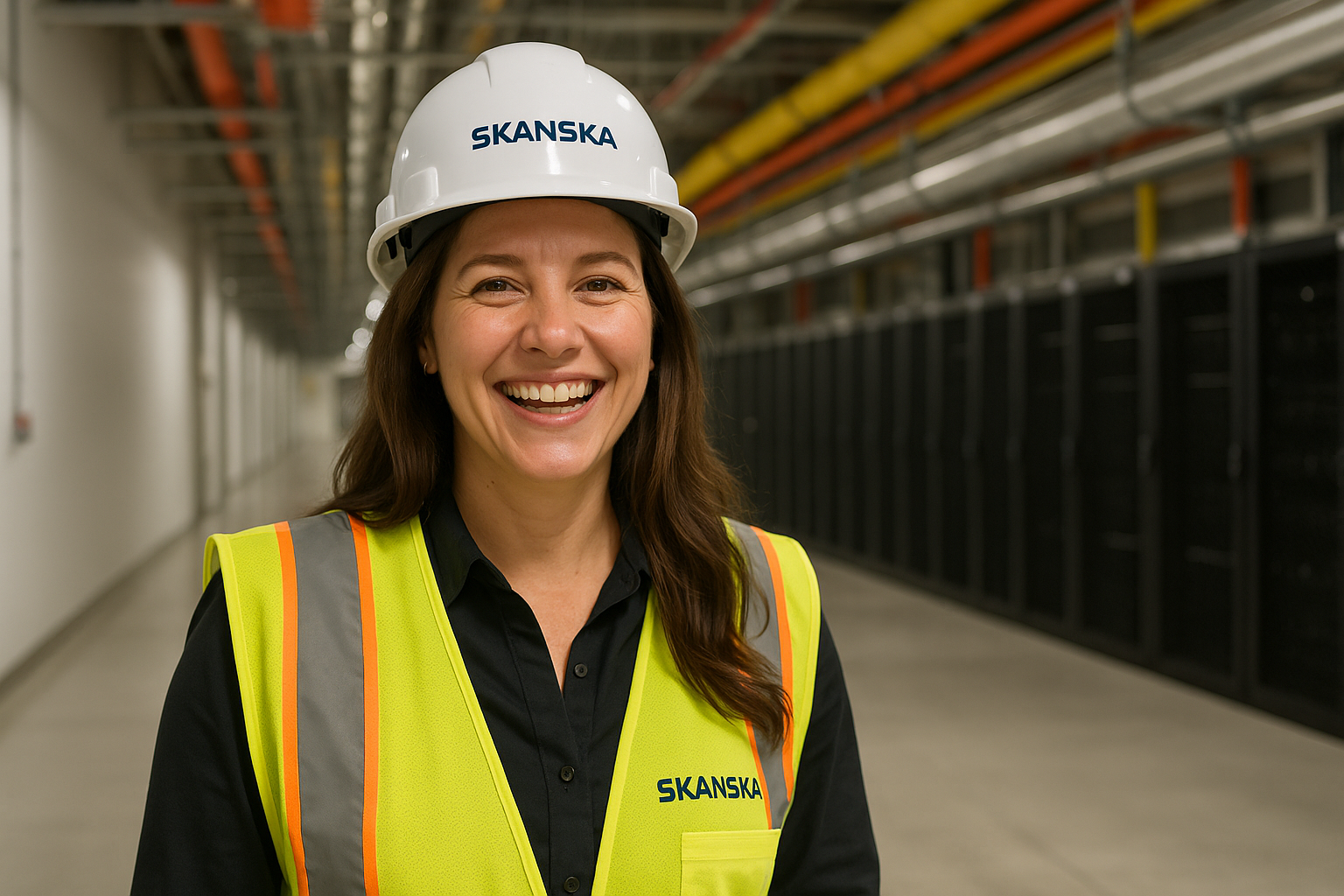
 Data centers and semiconductor fabs are rising at record speed in Arizona, and Skanska is moving to meet that demand by bringing its chip and data-center teams under one roof.
The global construction firm has expanded its Advanced Technology division into a unified group, known as Skanska Advanced Technology. This realignment streamlines operations nationwide, enabling the faster delivery of high-performance environments, such as fabs and data centers, supported by deeper technical expertise and standardized execution.


Arizona’s infrastructure boom helps explain the timing. According to CBRE, Phoenix now ranks fourth in the U.S. for data center capacity, with inventory growing 67% year-over-year to more than 600 megawatts. That surge, combined with the state’s multibillion-dollar investments in semiconductors, has made it a hub for next-generation infrastructure. In July, Skanska secured a $241-million data center contract in Arizona, the type of SAT-led project the company plans to replicate across the country. It’s a pattern that’s playing out across the state as global builders race to keep pace with Arizona’s rapid transformation.
“Phoenix has rapidly become a cornerstone of today’s fast-changing technology landscape, which is why Skanska Advanced Technology has a strong presence here,” says Anita Nelson, executive officer for SAT and Skanska Integrated Solutions. “In Phoenix and across the U.S., unprecedented growth in data center, semiconductor and technology manufacturing is reshaping local economies by driving innovation and attracting long-term investment.”
According to Skanska, the SAT division brings together technical experts in cleanroom environments; mechanical, electrical and plumbing (MEP) systems; and fabrication workflows to support complex facility builds nationwide. The ability to mobilize across regions supports Skanska’s goal of scaling consistent, high-tech environments across the country.
The rise of artificial intelligence, edge computing and semiconductor precision is transforming how facilities are built. Developers are turning to modular construction using skid-mounted MEP systems, precast shells and plug-and-play electrical rooms to shorten build times and replicate proven designs at scale.
Construction keeps evolving, and so do the materials that make it possible. More crews are turning to low-carbon concrete and recycled steel to improve both performance and sustainability. New composites are helping manage heat and cut energy use. And inside semiconductor fabs, where even a speck of dust can stop production, builders rely on antimicrobial finishes and clean polymers to keep operations steady.
According to market research from firms such as Grand View Research and Global Market Insights, demand for data center and cleanroom construction is projected to grow steadily through the decade, with U.S. data center construction expected to expand around 10% annually. The surge underscores how technologies like AI and advanced manufacturing continue to drive global demand for high-performance, sustainable facilities.
“SAT is uniquely positioned to lead in this evolving landscape of data center and high-tech manufacturing construction because we’ve spent decades building the expertise, systems and partnerships that these trends demand,” says Katie Coulson, SAT’s executive vice president and general manager. “As these industries move toward modularity, sustainability and AI-ready infrastructure, our unique mix of experience, innovation and customer-centric execution ensures we’re doing more than keeping pace — we’re setting the standard.”
Skanska currently operates 28 U.S. offices and reported $8.2 billion in domestic construction revenue in 2024, according to its latest annual report. With SAT as a national platform, the company aims to deliver scalable infrastructure that meets the complexity, speed and sustainability needs of next-generation industries.
The signs are all around us of Arizona’s next chapter taking shape. Fabs and data centers are changing what the region builds and who builds it, drawing in local suppliers and a new wave of technical talent. Across the Valley, construction cranes mark the skyline — a visible sign of how Phoenix has become a proving ground for the high-tech economy and a glimpse of what’s still to come.